The air hangs heavy and still over Lakes Park on this August morning, a deep, humid silence broken only by the gentle lapping of water against the banks. Here, beneath the canopy of vibrant green foliage, a profound sense of ancient stillness settles over the aquatic environment. It is in this tranquil setting that we witness a creature perfectly attuned to the rhythm of its world: the American Alligator, a silent sentinel resting within the waters of Lakes Park.
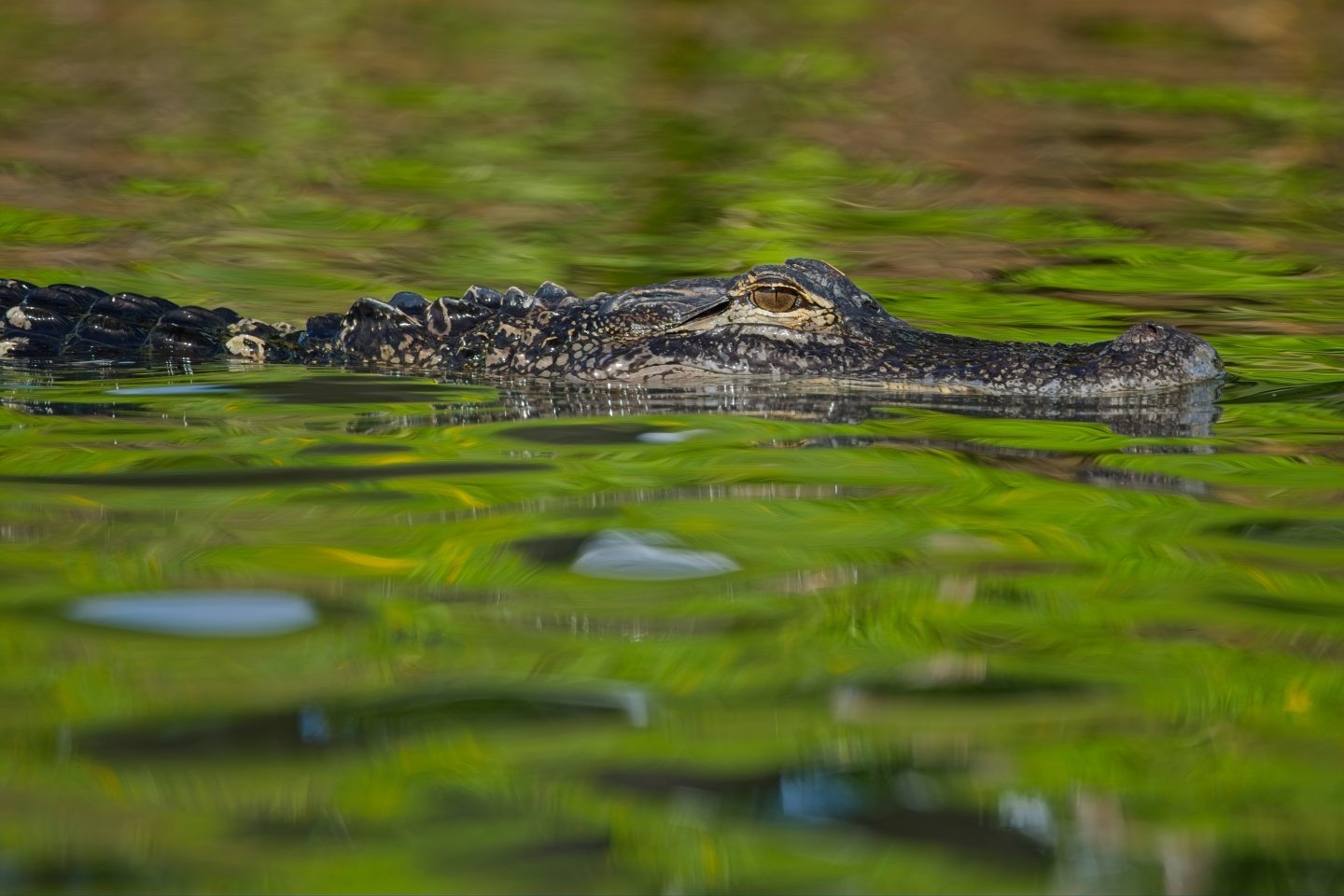
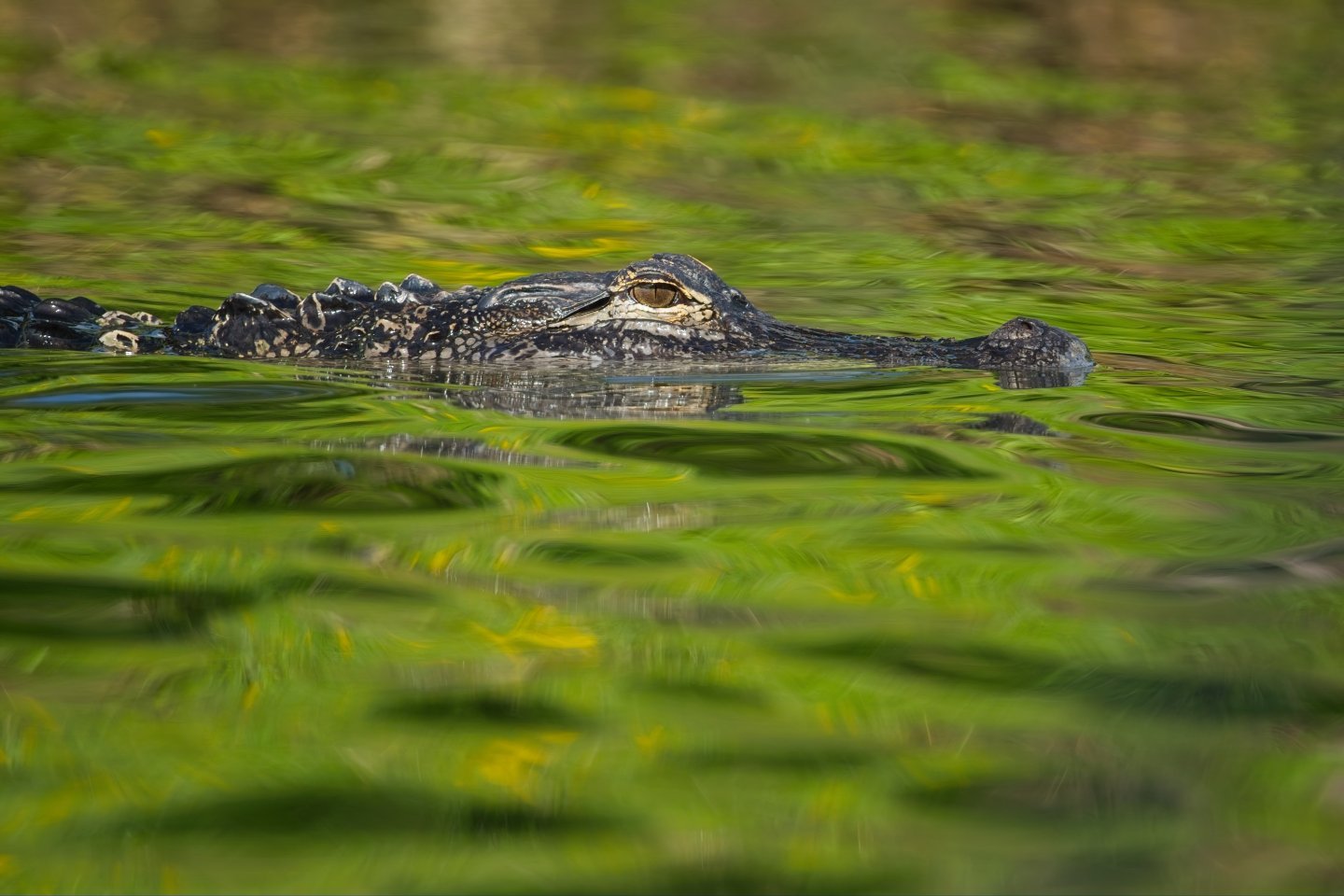
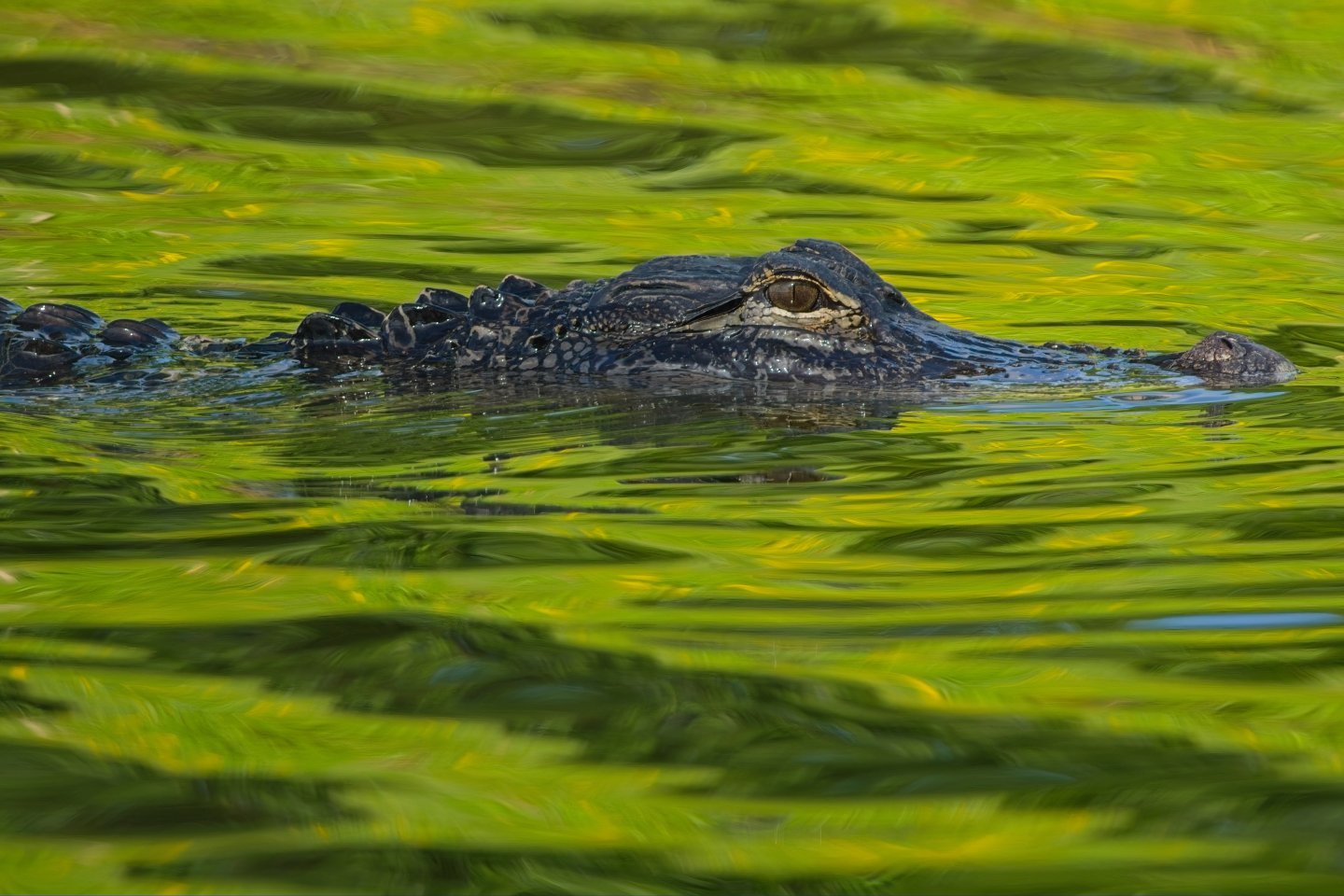
A close-up shot captures this magnificent presence partially submerged in the rich green water. The light filters through the surface, casting shifting patterns on the water below, transforming the surface into a dynamic canvas of light and shadow. Only the head, showing its textured, scaly skin and that deep, watchful eye, and part of its powerful, scaly back are visible above the surface, illuminated by the bright morning light. The water itself reflects a rich, saturated green, likely sourced from the surrounding lush foliage or the algae thriving in these depths, creating a striking interplay between foreground and background—a scene of natural drama and perfect camouflage. The alligator appears utterly calm, subtly observing its environment from the cool embrace of the water, embodying the deep patience of the wild.
To understand this moment, we must look deeper into the life sustained by these freshwater systems. American alligators often remain largely submerged, a masterful strategy that allows them to survey their surroundings discreetly, remaining hidden beneath the surface while engaging with the world around them. This posture speaks to an instinctive mastery of the aquatic domain; it is not merely resting, but actively participating in its environment, using the water as both a shield and a medium for life.
The physical reality of this reptile is built for survival in this specific habitat. The rough, scaled skin visible on the alligator's back is more than just surface texture; it is a complex biological marvel. This protective layer is reinforced by bony plates called osteoderms, structures that provide vital defense and play a crucial role in helping the animal absorb or release heat efficiently within the water. These features speak to a design for resilience in the wild, enabling the alligator to thrive amidst the dynamic conditions of Lakes Park.
The environment itself plays a critical role in the alligator's existence. Alligators utilize aquatic environments, such as the waters within Lakes Park, as essential tools for regulating their internal body temperature. Whether basking in the sun or submerging in the cooler depths, these interactions allow them to maintain the optimal thermal balance necessary for life. This ability to manipulate the water temperature is central to how they navigate and survive in this ecosystem.
The beauty of the American alligator is also found in its masterful camouflage. The dark coloration of its skin, often appearing olive green or black depending on the light and environment, allows it to blend seamlessly with the murky or heavily vegetated waters common in its Florida habitats. This natural blending enhances its stealth, making it an almost invisible force within the dense aquatic landscape. It is a living example of how nature designs organisms to harmonize with their surroundings, utilizing shadow and color to disappear into the environment.
Beyond mere camouflage, the alligator possesses sophisticated sensory abilities that allow it to perceive the world in ways we often overlook. While appearing placid and still, this creature is filled with intricate biological mechanisms for awareness. Alligators possess excellent vision, particularly adept at perceiving details even in low light conditions, an ability enhanced by a special layer known as the nictitating membrane. This transparent membrane protects the eyes while submerged, allowing them to see clearly underwater, granting the alligator a unique perspective on its hidden world beneath the surface.
When viewed from this still vantage point, one can appreciate the complex architecture of its head and back. The arrangement of scales and bony plates across the skin forms a unique pattern, a signature that researchers sometimes use for individual identification within a population, hinting at the unique history etched into each creature’s form. These patterns are not random; they are coded with the history of its life lived in these waters.
The way the alligator interacts with its environment extends far beyond personal comfort and observation; it is deeply woven into the ecological fabric of Lakes Park. As apex predators within this system, American alligators play an indispensable role in maintaining the health and balance of the freshwater systems. Their presence contributes significantly to the overall ecological health of these park lake systems through remarkable actions like digging "gator holes." These carefully excavated depressions serve a vital function by retaining water during dry seasons, providing crucial refuge and essential habitat for other aquatic wildlife that depend on this water source.
Furthermore, as apex predators, these magnificent animals find ample food sources within the rich aquatic environment of places like Lakes Park. They hunt successfully, feeding on various fish and different types of waterbirds, demonstrating their role as a key regulator in the delicate food web. This predatory behavior is often masked by the calm exterior we observe, yet it is the engine that drives the continuation of life in this ecosystem.
Submerged beneath the surface, even when appearing motionless, the alligator’s senses are highly tuned to its surroundings. It possesses highly sensitive pressure receptors located on its jaws and around its head, known as integumentary sensory organs, or ISOs. These specialized organs allow the alligator to detect minute vibrations in the water, enabling it to find prey even when completely submerged, transforming the aquatic medium into an extension of its own sensory network. This subtle detection capability is a testament to the incredible biological adaptations that allow life to flourish in this environment.
The posture itself—the partial submergence—is more than just a state of rest; it is a highly effective ambush hunting strategy. From this concealed position, blending perfectly into the shimmering green depths, the alligator can launch a surprise attack on unsuspecting prey lurking at the water’s edge. It embodies the ancient wisdom of patience and stealth, waiting for the perfect moment to engage with the world around it.
Lakes Park is more than just a recreational space; it is a vibrant ecosystem where these powerful creatures navigate their existence daily. The presence of the American alligator underscores the deep connection between predators and prey, water and land, and the intricate web of life that sustains this beautiful place. Observing this silent sentinel reminds us of the profound beauty and complex biological strategies that govern life in the wild.
Follow Adventures in Southwest Florida for more hidden wonders.
No comments:
Post a Comment