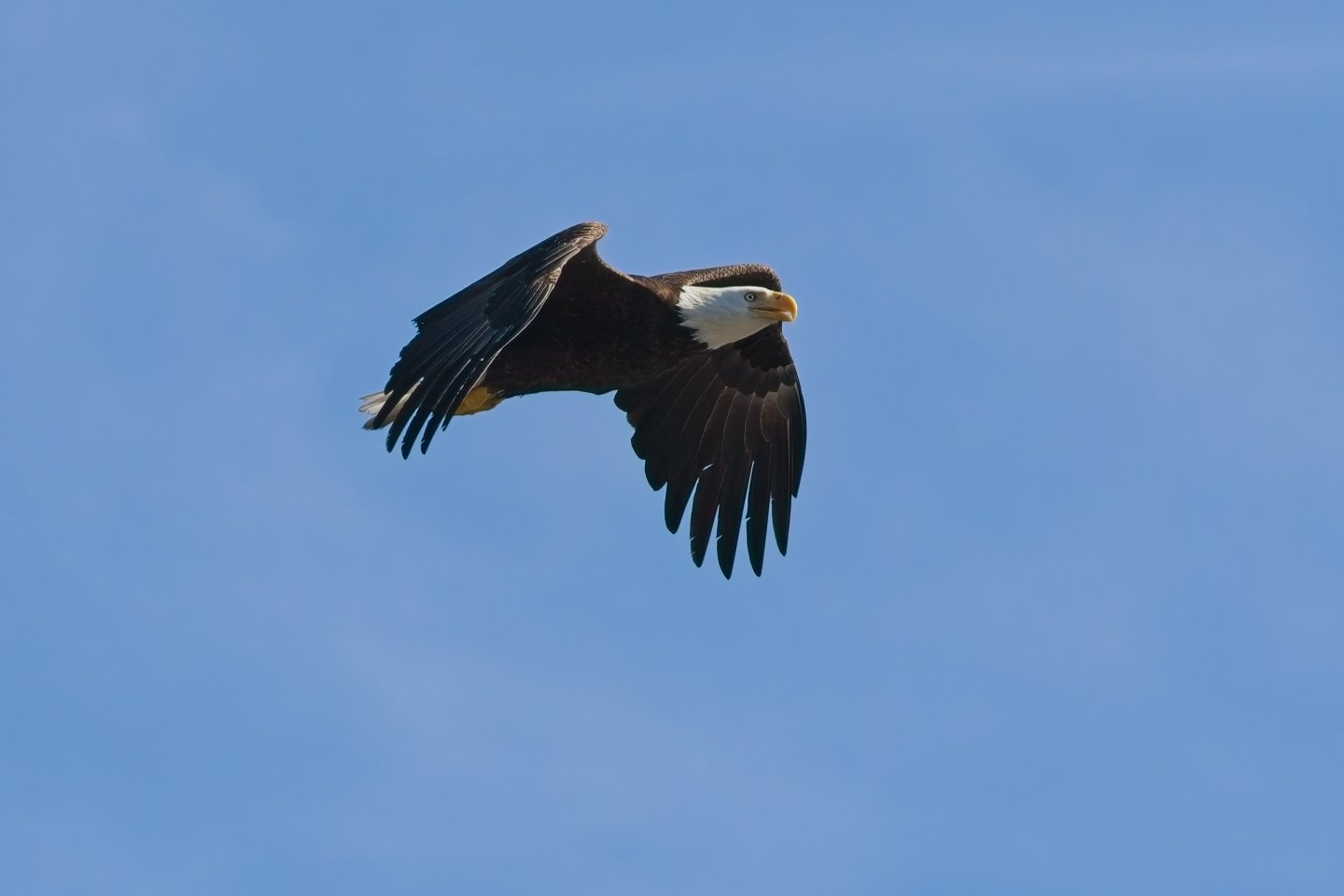
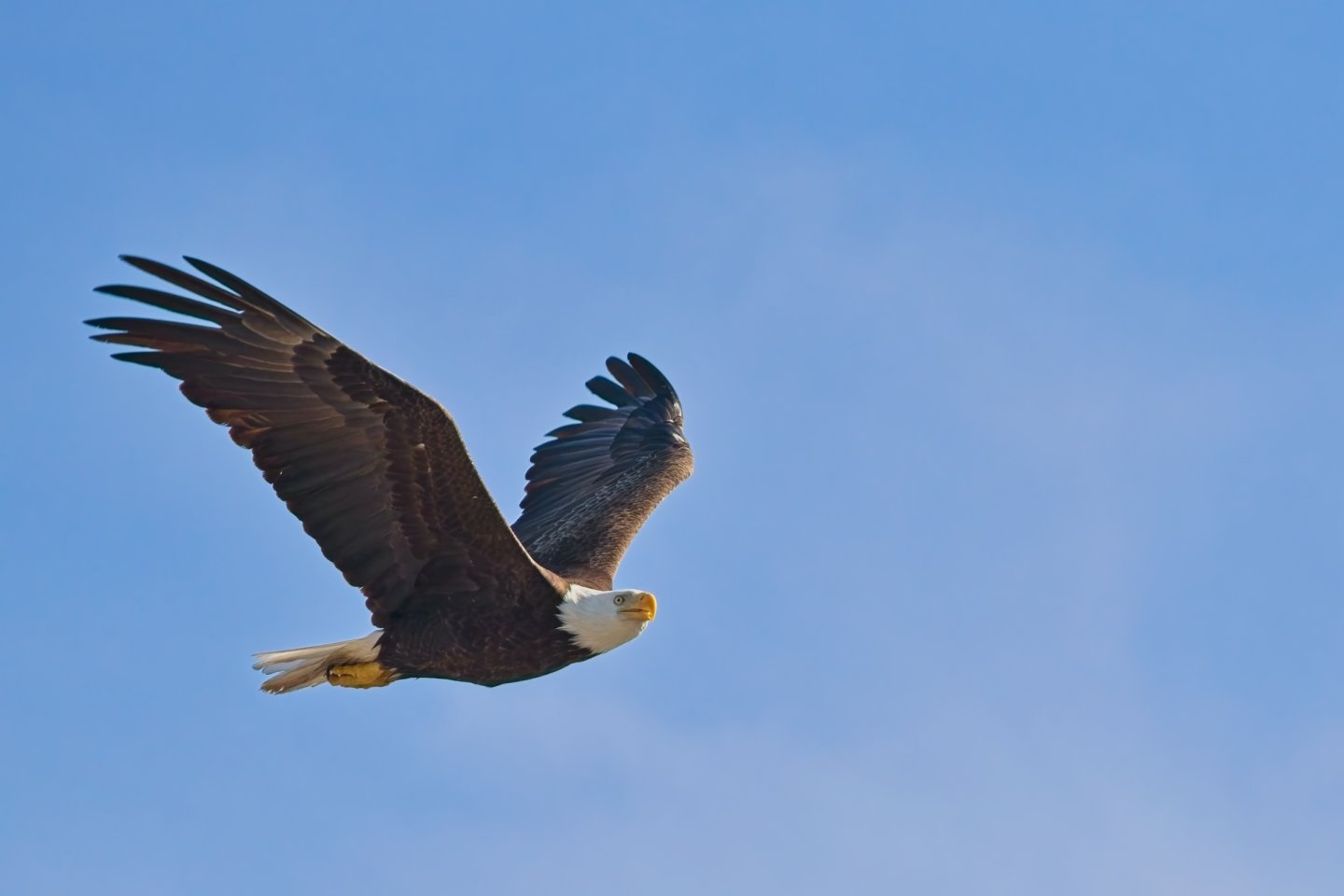
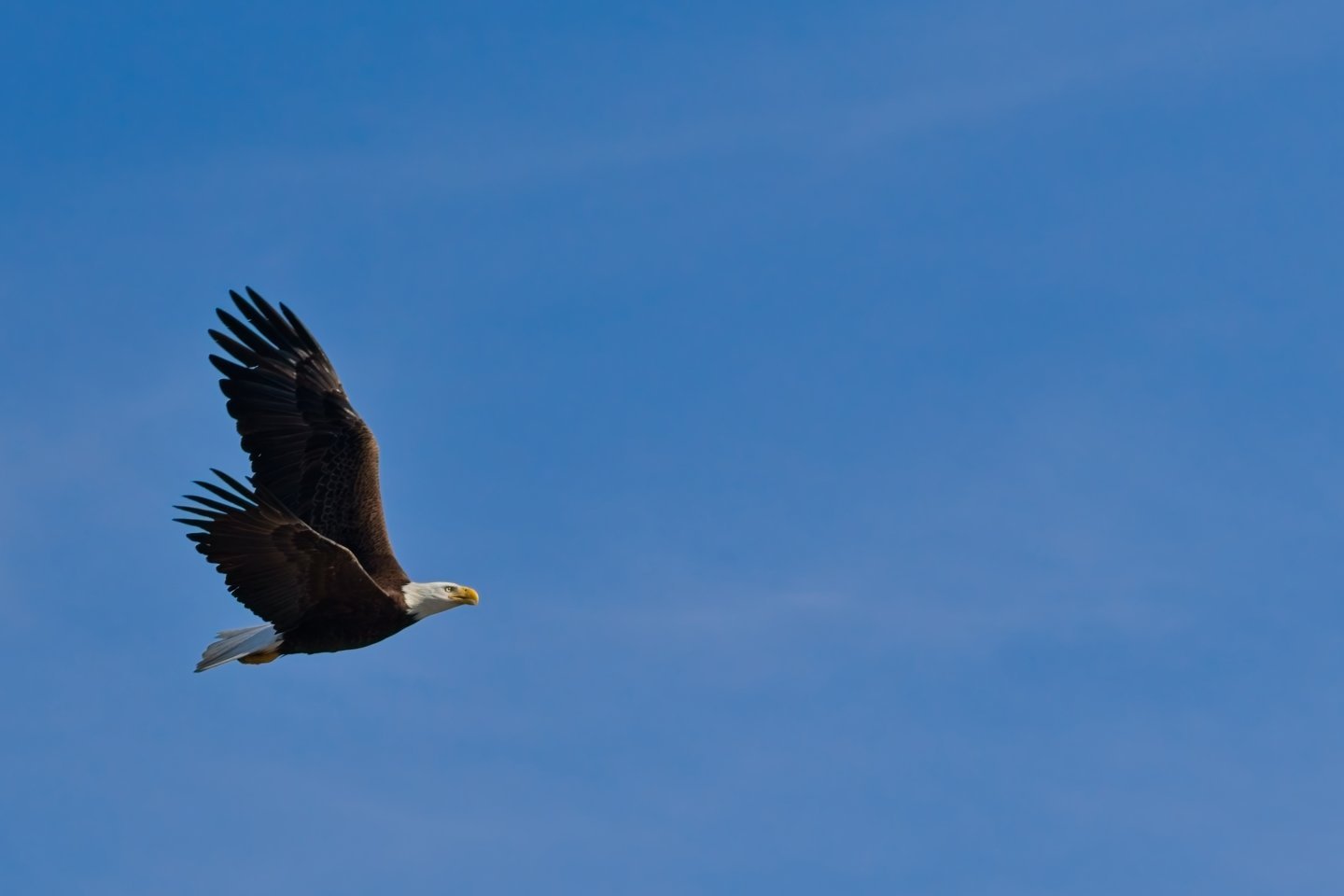
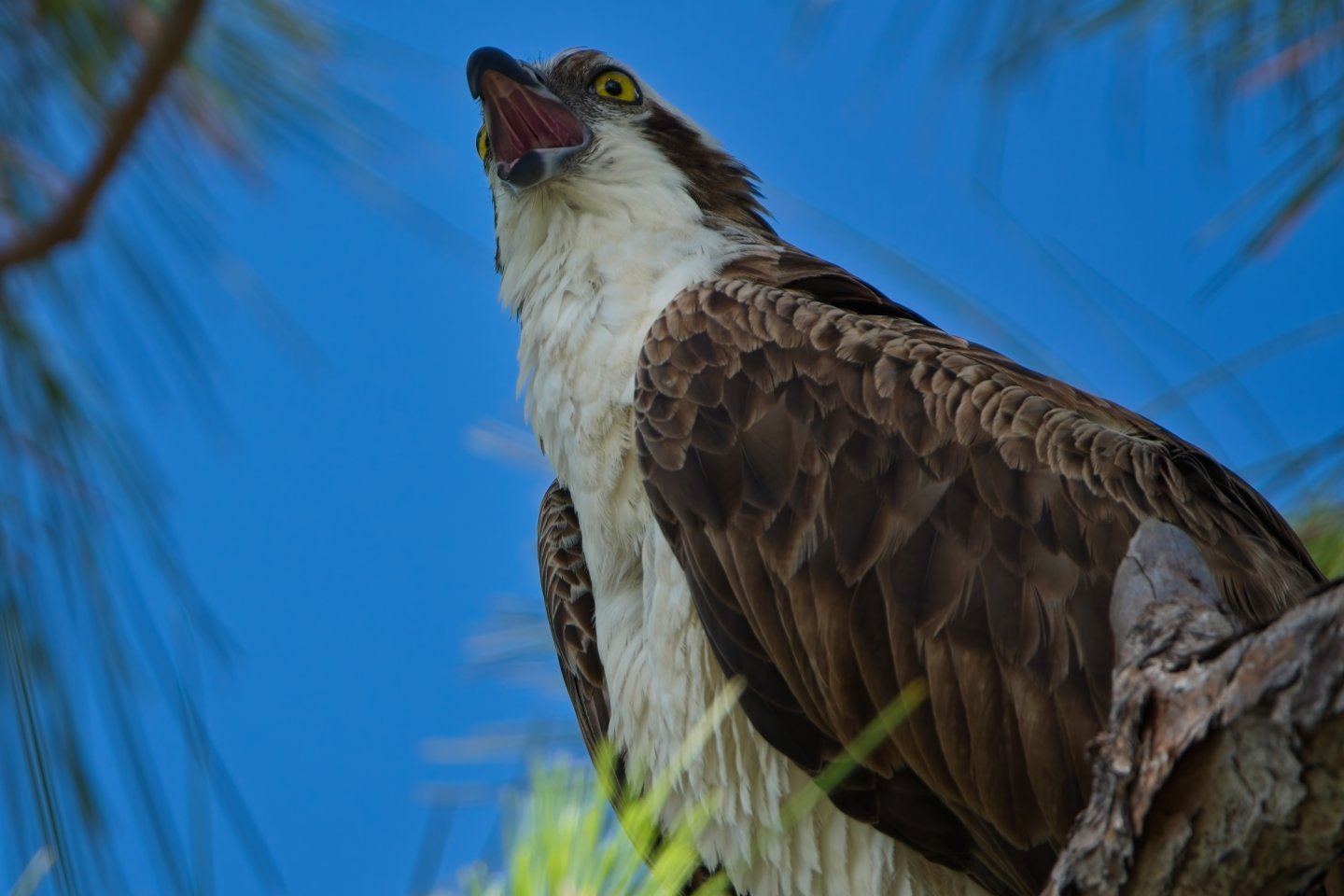
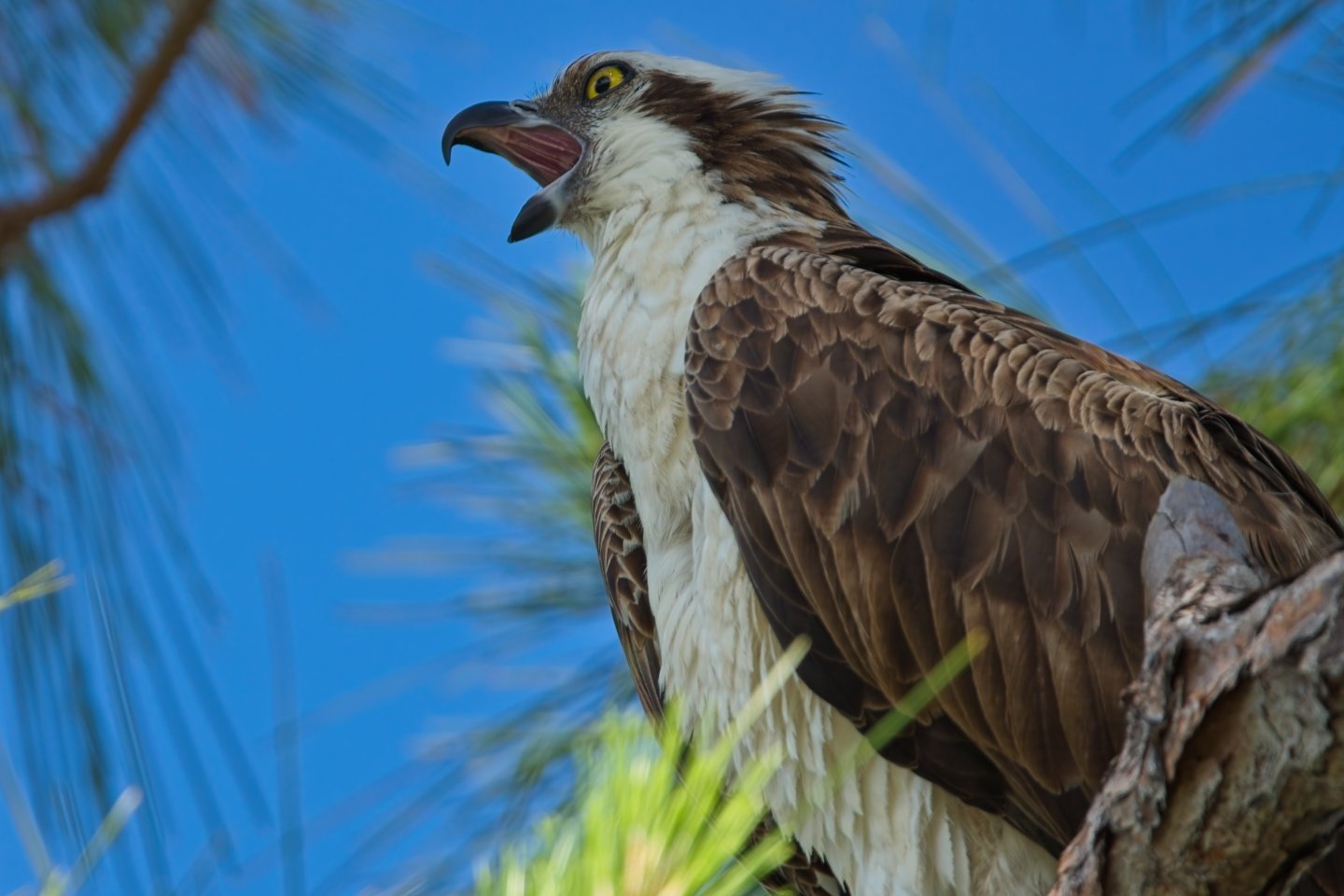
The morning light spills across Lakes Park, painting the still water with a brilliant sheen. High above this tranquil landscape, an American Bald Eagle commands the expanse of the clear blue sky. This is more than just a bird in flight; it is a living embodiment of history and untamed freedom. As the nation celebrates its 250th birthday, the majestic eagle serves as a powerful, tangible symbol of enduring American strength, soaring effortlessly above the waters that have witnessed generations of change. The scene captured here is timeless: a magnificent creature, with its distinctive white head and broad wings, stands as an iconic sentinel against the endless blue.
To witness this flight is to understand a profound connection between the wildness of nature and the spirit of the nation. The eagle does not merely fly; it moves through the air with an innate mastery, riding invisible currents with effortless grace. This movement speaks to an ancient lineage perfectly attuned to its environment, reminding us that freedom is not just an abstract concept, but a dynamic reality woven into the very fabric of the natural world. As the sun illuminates its powerful form, the eagle’s presence above Lakes Park links this peaceful park to the vast, untamed territories from which American independence was forged.
The majesty of the bald eagle is intricately linked to the geography it inhabits. Florida, in particular, serves as a vital habitat for these magnificent birds, hosting one of the densest nesting populations in the contiguous United States, with significant activity concentrated in the central and southern regions. This rich ecosystem provides the necessary environment for these powerful creatures to thrive and maintain their vital presence. The connection between the eagle and its landscape is not incidental; it is a deep, symbiotic relationship that underscores the enduring power of the natural world.
The mechanics of this flight are a masterclass in natural engineering. When the eagle rides the thermal updrafts, it conserves energy with remarkable efficiency. These birds ascend to high altitudes without needing continuous wingbeats, demonstrating an astonishing ability to harness the environment for effortless travel. This method of soaring showcases an innate understanding of physics and aerodynamics, allowing the eagle to navigate vast distances with profound ease. It is a quiet demonstration of nature’s subtle beauty and inherent power, showing us how life persists and moves forward against all odds.
As the eagle surveys the shimmering waters of Lakes Park below, its powerful eyes are sharp instruments, scanning the landscape with incredible precision. These eyes possess an acuity that allows them to spot prey with remarkable clarity, reflecting the honed survival skills necessary for life in the wild. This keen observational ability adds another layer to the narrative of the eagle as a watchful guardian—a sentinel observing the world from a vantage point of profound perspective. The gaze is not passive; it is active, filled with the instinctive awareness of a creature perfectly adapted to its domain.
The physical details of the eagle reinforce its status as an awe-inspiring figure. The striking white head and tail plumage emerge fully developed when the bird reaches maturity, a visual representation of grace and power that has been celebrated for centuries. This transformation of form highlights the natural beauty achieved through adaptation, a testament to the successful interaction between biology and environment. Every feather, every glide, speaks to an ancient, unbroken story of survival and magnificence.
The sheer physical capability of the eagle is staggering. During its steady glide over the freshwater lakes, these birds achieve speeds reaching 30 to 35 miles per hour. This measured pace, coupled with their immense size and strength, illustrates a mastery over the air that is truly extraordinary. This speed is not achieved through frantic effort but through optimized flight patterns, showcasing an aerodynamic form perfectly suited to cutting through the atmosphere. Even when preparing for action, the power held within these forms is evident; their massive talons are equipped with incredible grip, capable of exerting over 400 pounds per square inch of pressure.
Lakes Park serves as a sanctuary where this wild majesty is displayed daily. The eagle's consistent presence in this specific location, a consistent record that speaks to nature's enduring power, grounds the abstract idea of national freedom into a tangible reality. It is a reminder that amidst human history and political change, the natural world remains the constant, majestic backdrop. The eagle embodies powerful wildness, acting as a steadfast symbol for a historic milestone, reminding us that true strength lies in harmony with the environment.
Reflecting on this scene invites us to pause and consider the legacy of freedom and nature. The flight above Lakes Park is a metaphor for the spirit of the nation—effortless, powerful, and soaring high. The eagle, as our sentinel, reminds us that the spirit of wildness and independence remains deeply rooted in the landscape we share. It is a timeless symbol, captured in the light of the morning, reminding us to cherish the delicate balance between human endeavor and the enduring power of the natural world.
This image of the American Bald Eagle soaring over Lakes Park is more than just a beautiful photograph; it is a narrative woven from history, biology, and sublime beauty. It connects the memory of freedom with the living presence of nature, showing us that true strength resides in respect for the wild, untamed places that define our existence. The eagle remains a powerful reminder of the natural wonders surrounding us, offering a profound sense of peace and awe.
Follow Adventures in Southwest Florida for more hidden wonders.