The air hangs heavy and warm over the expansive mudflats of the J.N. Ding Darling National Wildlife Refuge, a place where the rhythm of the tide dictates the very pulse of life. Here, amidst the intricate tapestry of shallow waters and rich estuarine habitats, lives a bird of extraordinary beauty and remarkable adaptation: the roseate spoonbill. As the morning light breaks across the water, illuminating the landscape in soft, diffused hues, the scene is one of profound tranquility, interrupted only by the silent, purposeful movements of this wading marvel.
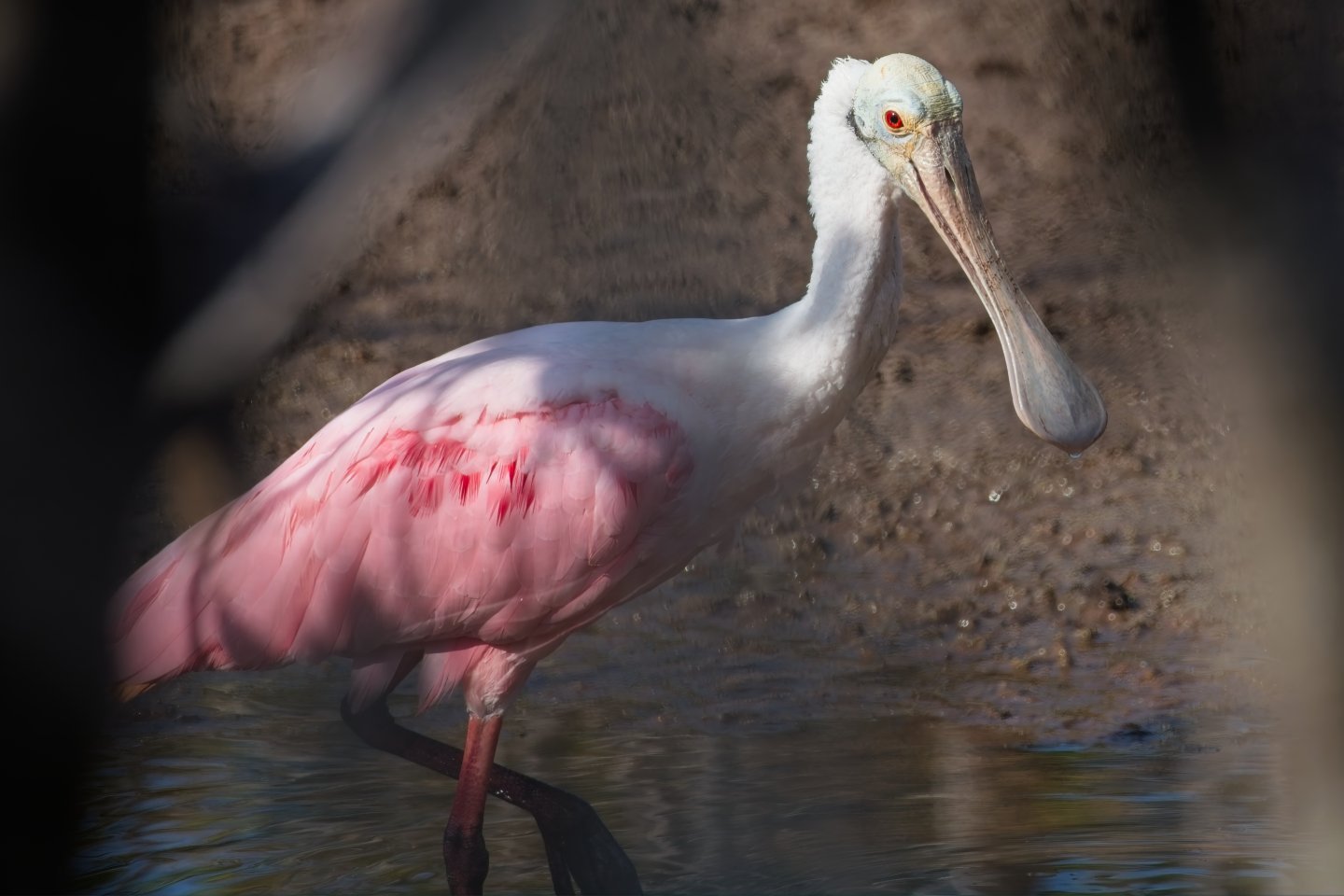
To witness a roseate spoonbill at the refuge is to observe a creature perfectly sculpted by its environment. Its plumage, a breathtaking blend of vibrant pinks, rich reds, and warm oranges, seems to glow against the muted browns and grays of the sandy substrate and the dark, blurred lines of the surrounding vegetation. This striking coloration is not merely aesthetic; it is a vivid reflection of its life within these rich waters. The deepest hues in the bird’s feathers are derived from carotenoid pigments absorbed from the crustaceans and other organisms that form the base of its diet, a living testament to the sustenance found in this unique ecosystem. As the sun climbs higher, the light catches the bird, highlighting the striking contrast between its vibrant coat and its intense red eye, which holds an unblinking gaze across the tranquil expanse.
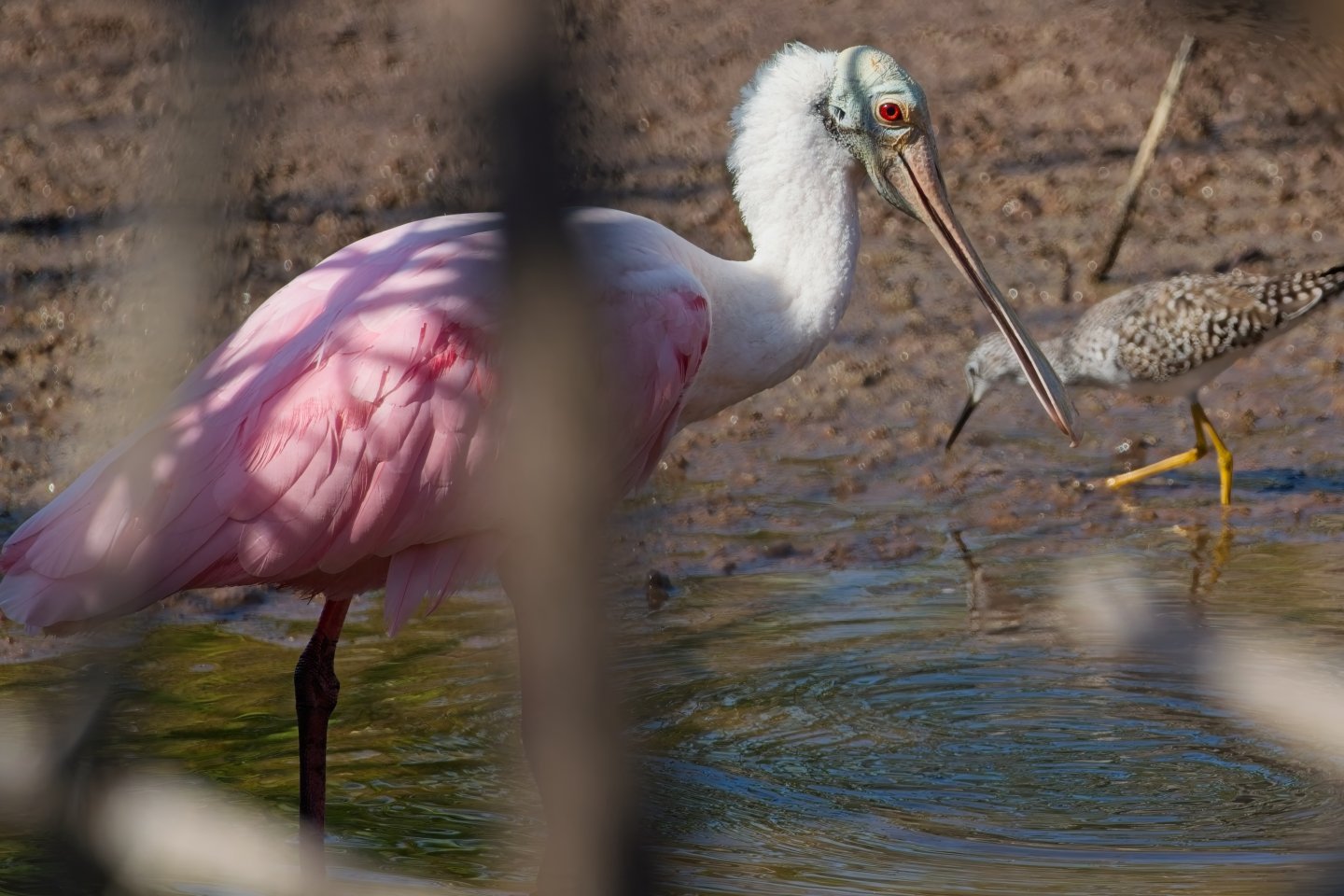
The spoonbill’s most distinctive feature is, of course, its long, spatulate bill, a marvel of avian engineering perfectly adapted for life in the shallows. It is a tool honed by time, designed not just for feeding but for interaction with the watery world around it. In this moment at J.N. Ding Darling, the bird engages in a slow, deliberate dance across the water’s surface. It sweeps its bill from side to side, partly open, moving with an innate tactile intelligence that allows it to detect small aquatic prey hidden just beneath the surface. This movement is more than mere motion; it is a silent, precise hunt unfolding beneath the sunlit facade of the refuge.
The mechanics of this hunting process reveal a sophisticated sensory system. Sensitive nerve endings line the inner edges of the spoonbill’s bill, enabling it to detect the presence of small aquatic prey by touch even when visibility is reduced by murky water. When foraging, the bird often immerses its entire bill, and sometimes even its head, into the soft substrate or turbid water, feeling for sustenance among the hidden fish and aquatic invertebrates. This behavior highlights an innate understanding of its environment, utilizing tactile senses to navigate the complex, submerged landscape.
The habitat provided by the J.N. Ding Darling National Wildlife Refuge is absolutely critical to the survival and flourishing of these magnificent birds. The refuge provides expansive mudflats and shallow estuarine habitats, creating the perfect stage for the spoonbill’s existence. These areas are essential foraging grounds, offering the rich density of food sources that sustain the bird throughout its life cycle. Furthermore, the unique geography of the refuge allows for the use of managed impoundments, where water levels are meticulously controlled. These carefully managed waters create optimal shallow feeding grounds, ensuring that the spoonbills have the necessary environment to thrive and gather their sustenance effectively.
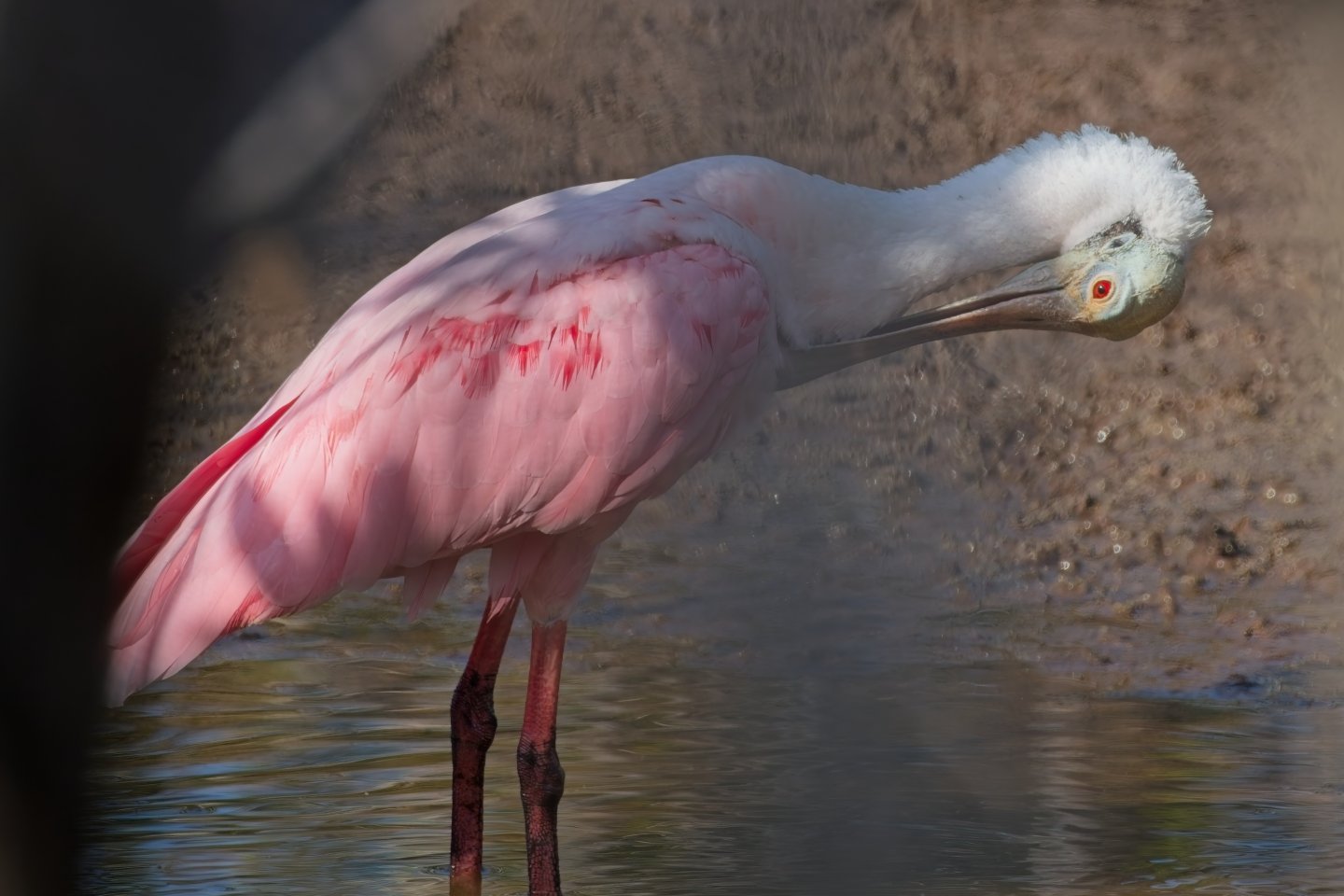
The interaction between the bird and its aquatic environment is further enriched by learned behaviors observed in these critical habitats. When standing in the shallow water, the spoonbill engages in extensive preening. This action involves carefully applying preen oil using its bill, a behavior that results in water droplets clinging to the feathers, lending an ephemeral sparkle to their vibrant plumage as they move through the light. This meticulous maintenance of itself and its environment underscores a deep connection between the bird, its food sources, and the delicate aquatic landscape it calls home.
The visual presence of the spoonbill is unforgettable. The long, elegant shape of its bill, often dotted with a single droplet of water clinging to its tip, speaks volumes about its unique niche. It is a biological instrument created for navigating the subtle textures of the water, transforming a simple act of feeding into a mesmerizing display of natural finesse. Observing this creature at the refuge is a reminder of the delicate balance inherent in these estuarine systems—a system where sophisticated adaptations coexist with breathtaking natural beauty.
As the day progresses and the light shifts, the spoonbill continues its timeless dance with the tides. Each patient sweep of the bill, each flicker of its crimson eye, speaks to a life perfectly adapted to the rich, shallow waters of the J.N. Ding Darling National Wildlife Refuge. It is a silent hunter, a vivid splash of color, a living jewel that embodies the profound interconnectedness of nature. The roseate spoonbill stands as a magnificent focal point, reminding us that in these managed landscapes, the wild artistry of life continues unabated, offering a deeply reflective experience for all who pause to observe its ethereal grace.
Follow Adventures in Southwest Florida for more hidden wonders.
No comments:
Post a Comment