The morning light spills across the landscape of Southwest Florida, illuminating the complex tapestry of pine flatwoods, cypress swamps, and marsh edges that define the CREW Marsh Trails. It is in this mosaic of lush, ancient wilderness that a subtle but profoundly vital story unfolds, centered around one of the region's most agile residents: the Great Crested Flycatcher. To stand amidst this environment is to witness an ecosystem functioning in perfect, sun-drenched harmony, where every plant, every cavity, and every movement plays a crucial role in sustaining life.
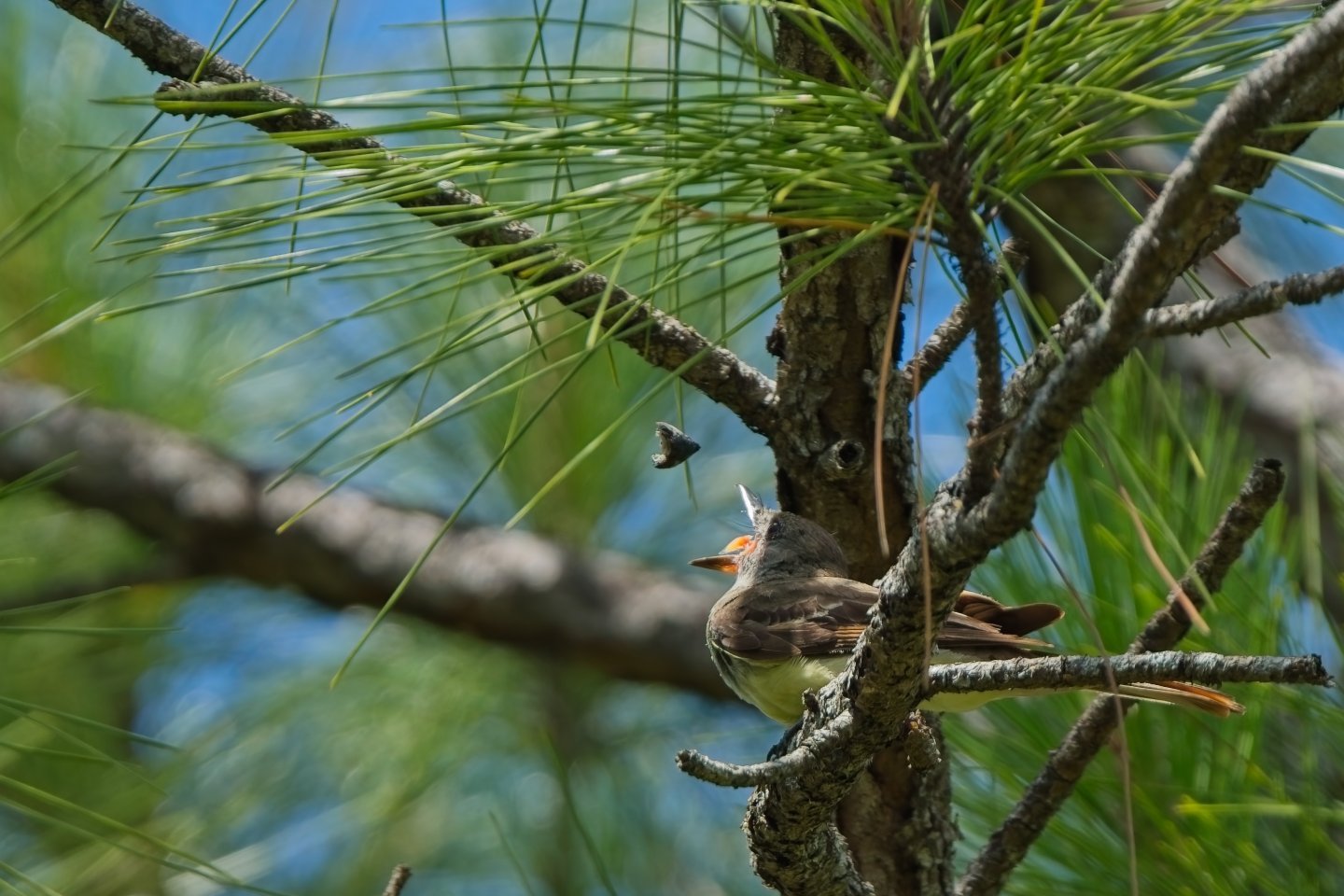
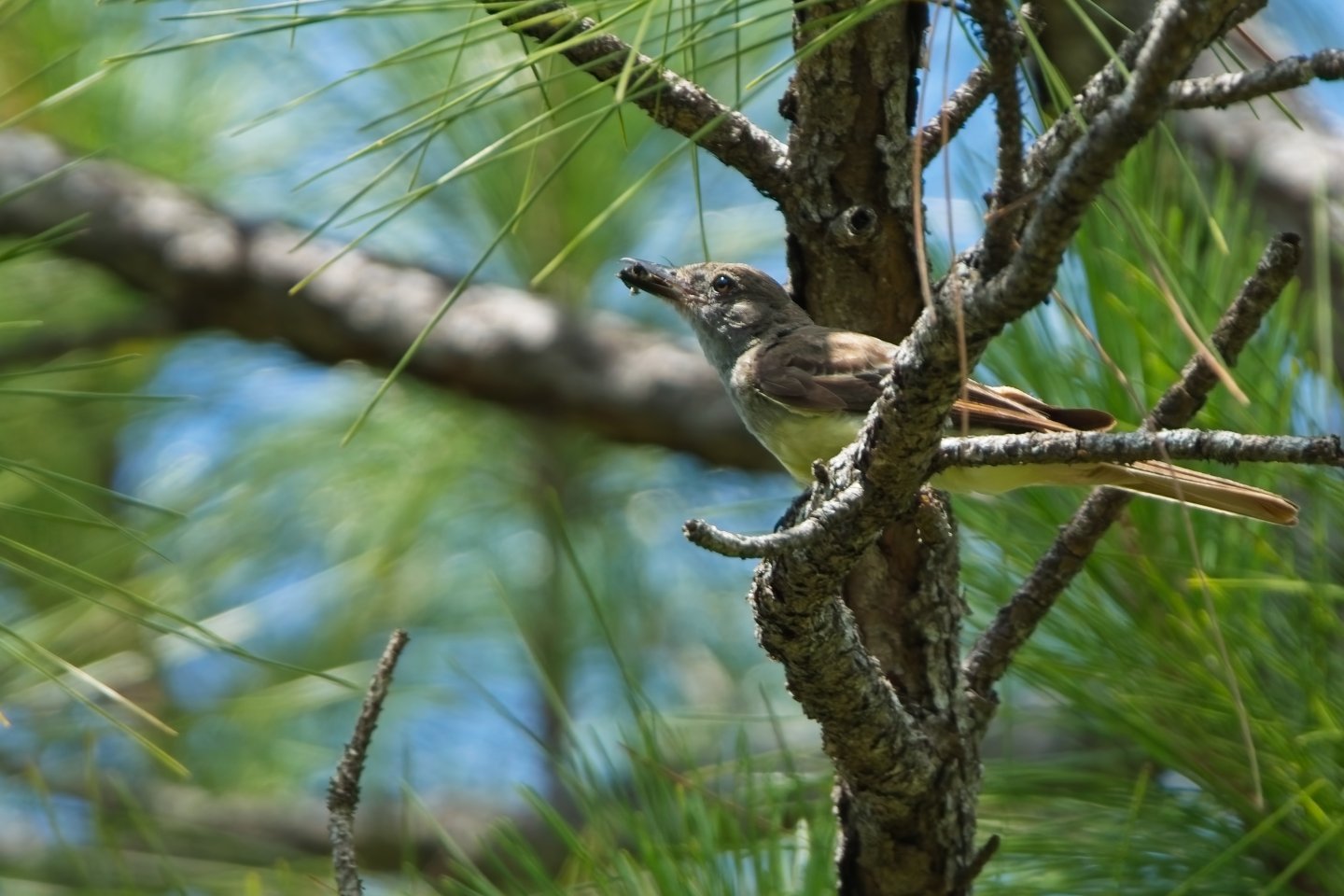
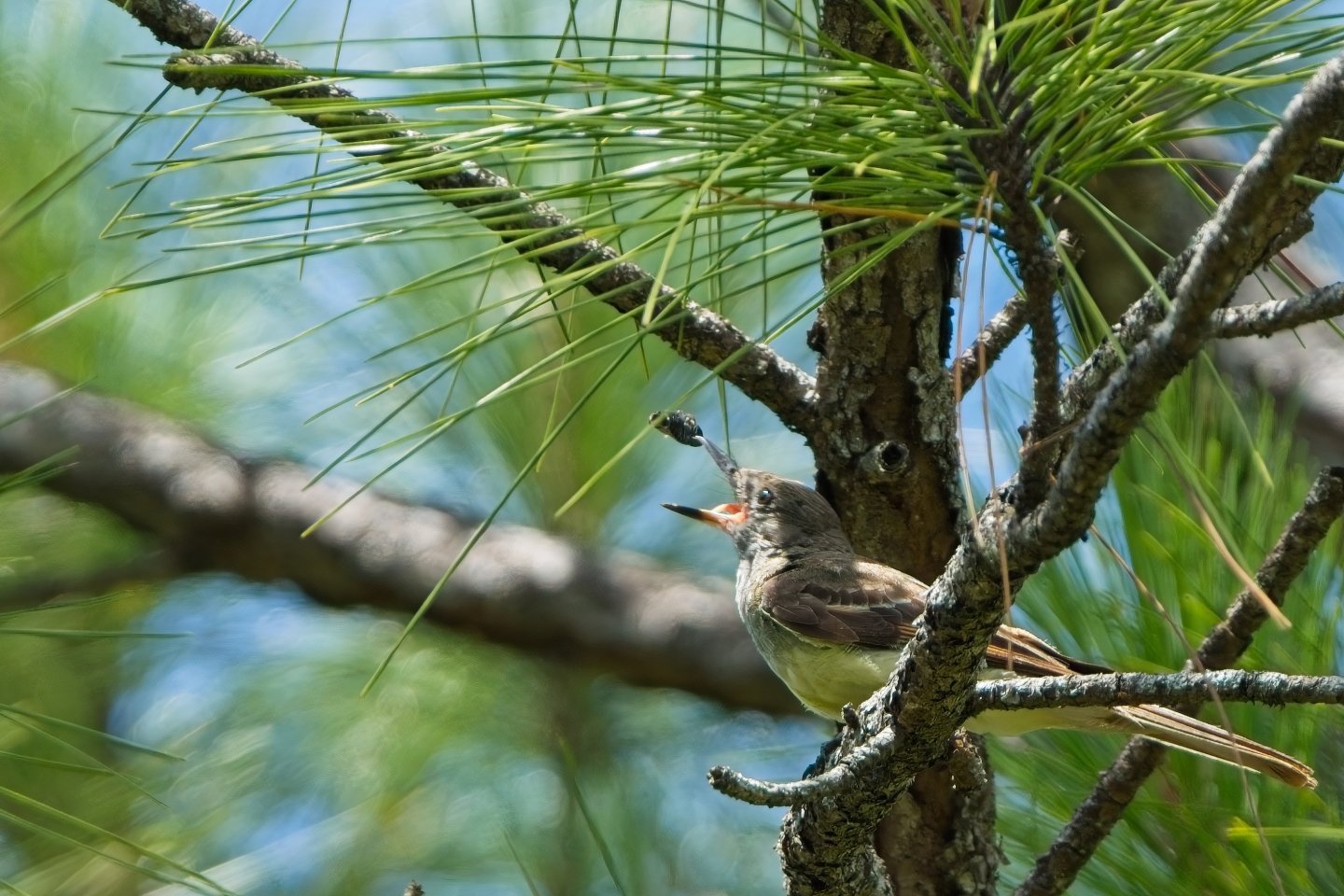
Imagine the scene: a great tree, gnarled and ancient, providing a sturdy perch amidst the sharp scent of pine needles. High above, amidst the dappled shade and brilliant natural daylight, sits the flycatcher. Its posture is one of intense focus, its beak wide open, aimed upward, intent on the world suspended just beyond its reach. This moment captures the essence of a diurnal hunter, a creature perfectly attuned to the rhythm of the sun and the subtle movements of the insect world below. It is a dance between stillness and explosive action, a perfect illustration of how life thrives within the rich biodiversity of this unique corner of the world.
The Great Crested Flycatcher is more than just a fleeting shadow in the canopy; it is an intrinsic thread woven into the fabric of the Southwest Florida landscape. This region, with its varied habitats stretching along the marsh trails, provides the essential ingredients for this bird's survival and flourishing. It is a place where the transition between dense woodland and open water creates niches that allow diverse species to thrive simultaneously. The diverse mosaic found within sites like the CREW Marsh Trails offers suitable foraging and nesting habitat, demonstrating how complexity in the environment leads to complexity in life.
These flycatchers demonstrate an incredible adaptability. While they are often associated with the dense shade of deciduous forests, their presence extends confidently into mixed woodlands and open pine woods, frequently selecting high, exposed perches that offer commanding views of their domain. This preference for varied woodland structures speaks to their ability to navigate and exploit a wide range of environments within Southwest Florida. They utilize this diverse landscape not just as a place to rest, but as an intricate network from which to hunt, illustrating the profound connection between a bird’s biology and its physical setting.
The daily life of the flycatcher is characterized by dynamic activity. As diurnal foragers, they spend their time actively hunting insects from these elevated vantage points throughout the brightly lit hours of the day. The experience captured in that moment—the intense focus on a small, dark piece of what appears to be an insect suspended in the air—is not merely feeding; it is the execution of a finely tuned biological strategy. This predatory skill relies heavily on the specialized technique known as sallying. Great Crested Flycatchers are renowned for their sallying technique, launching swiftly from an exposed perch to catch insects, including cicadas, directly from the air. This aerial maneuver transforms the bird into a master of the airspace, executing a precise aerial ballet that intercepts unsuspecting prey with remarkable accuracy.
The insects form a crucial component of the flycatcher’s diet, but their reliance is not absolute. The adaptability of the Great Crested Flycatcher extends beyond the ephemeral bounty of flying insects. As the seasons shift across Southwest Florida, these birds exhibit an impressive dietary flexibility. They supplement their insect-based diet with a significant amount of fruit, particularly during the cooler fall and winter months. This ability to switch between aerial hunting and resource gathering demonstrates a sophisticated understanding of seasonal ecological shifts, ensuring that the flycatcher population remains resilient regardless of environmental changes.
The rich biodiversity of the region also dictates where these birds establish their homes. Great Crested Flycatchers are obligate cavity nesters, meaning their survival is intrinsically linked to the availability of suitable nesting sites. They seek out and utilize abandoned woodpecker holes or natural tree hollows as the perfect sanctuary for raising their young. These cavities offer the necessary security and protection for the family unit. This need for specific architectural features highlights the essential role that mature trees and their decaying structures play in supporting avian life across the region.
The act of nesting itself reveals another fascinating aspect of the flycatcher's existence, a unique behavioral detail that connects the bird directly to its environment. In the construction of their nests, Great Crested Flycatchers incorporate shed snakeskin, often hanging from the rim of the cavity. This specific inclusion is a distinctive trait, adding a layer of unique material to the nest structure and underscoring the intricate relationship these birds form with the surrounding flora and fauna that share their habitat. It is a subtle reminder of the complex biological processes at play within the ecosystem.
The visual markers of this bird are also captivating. The Great Crested Flycatcher possesses a distinctive physical signature that makes it recognizable against the backdrop of the dense foliage. This identity is marked by subtly raised crown feathers, which give the bird its name. These features allow the flycatcher to stand out, yet blend seamlessly enough into the varied woodland settings. Furthermore, a striking coloration defines its appearance: distinct rufous, or reddish-brown coloring, is visible on its tail feathers and inner wing primaries. This subtle display of color adds warmth and definition to the bird's silhouette against the greens and browns of the forest.
The calls of these birds contribute a unique auditory texture to the forest environment. Their presence is often announced by sounds that cut through the canopy—a distinctive, loud, and emphatic wheep! call, or a series of rolling notes like whit-whee-up. These vocalizations serve as crucial communication tools, announcing their presence and interacting with other members of the avian community within the layered landscape of the cypress swamps and pine flatwoods. The sounds echo the vitality of the environment they inhabit, signaling the life pulsing through the trees and the undergrowth.
The geographical context reinforces the importance of this species. Southwest Florida acts as a vital corridor for these birds, serving not only as a breeding ground but also as an important wintering location for some Great Crested Flycatchers. This dual presence indicates their year-round ability to thrive within the region’s unique environmental conditions, successfully utilizing the varied mosaic of habitats available along the marsh trails. The continuous presence of these birds underscores the health and complexity of the regional ecosystem.
The entire scene—the high perch, the swift sally, the specialized nesting habits, the seasonal diet, and the resonant calls—paints a complete picture of an animal perfectly integrated into its world. It is a testament to the way nature orchestrates intricate behaviors, ensuring that life persists and flourishes in environments as complex and beautiful as Southwest Florida’s marshlands. Observing the Great Crested Flycatcher is not just watching a bird; it is witnessing a masterclass in adaptation, survival, and the enduring majesty of the wild.
Follow Adventures in Southwest Florida for more hidden wonders.
No comments:
Post a Comment