The air hangs thick and humid over the Six Mile Cypress Slough Preserve, a vast expanse where water meets the dense, emerald canopy of the cypress swamp. Here, within the labyrinthine shadows of the freshwater wetland, life unfolds with a slow, deliberate grace, governed by the rhythm of the season and the silent demands of survival. It is in this watery domain that the Yellow-crowned Night Heron makes its presence known, a living embodiment of patience and ancient, quiet power. The scene is one of profound stillness, captured by ambient light filtering through the bright green foliage above, illuminating a moment where the natural world holds its breath.
To stand within the Cypress Slough is to enter a realm defined by rich biodiversity and complex interdependencies. The cypress trees, their roots sprawling beneath the murky waters, anchor this environment, creating a unique ecosystem where water, wood, and life intertwine seamlessly. It is in this particular setting that we observe the Yellow-crowned Night Heron, a bird perfectly integrated into the landscape it calls home. Its presence is not an intrusion but an essential marker—a testament to the health and vitality of the entire wetland system.
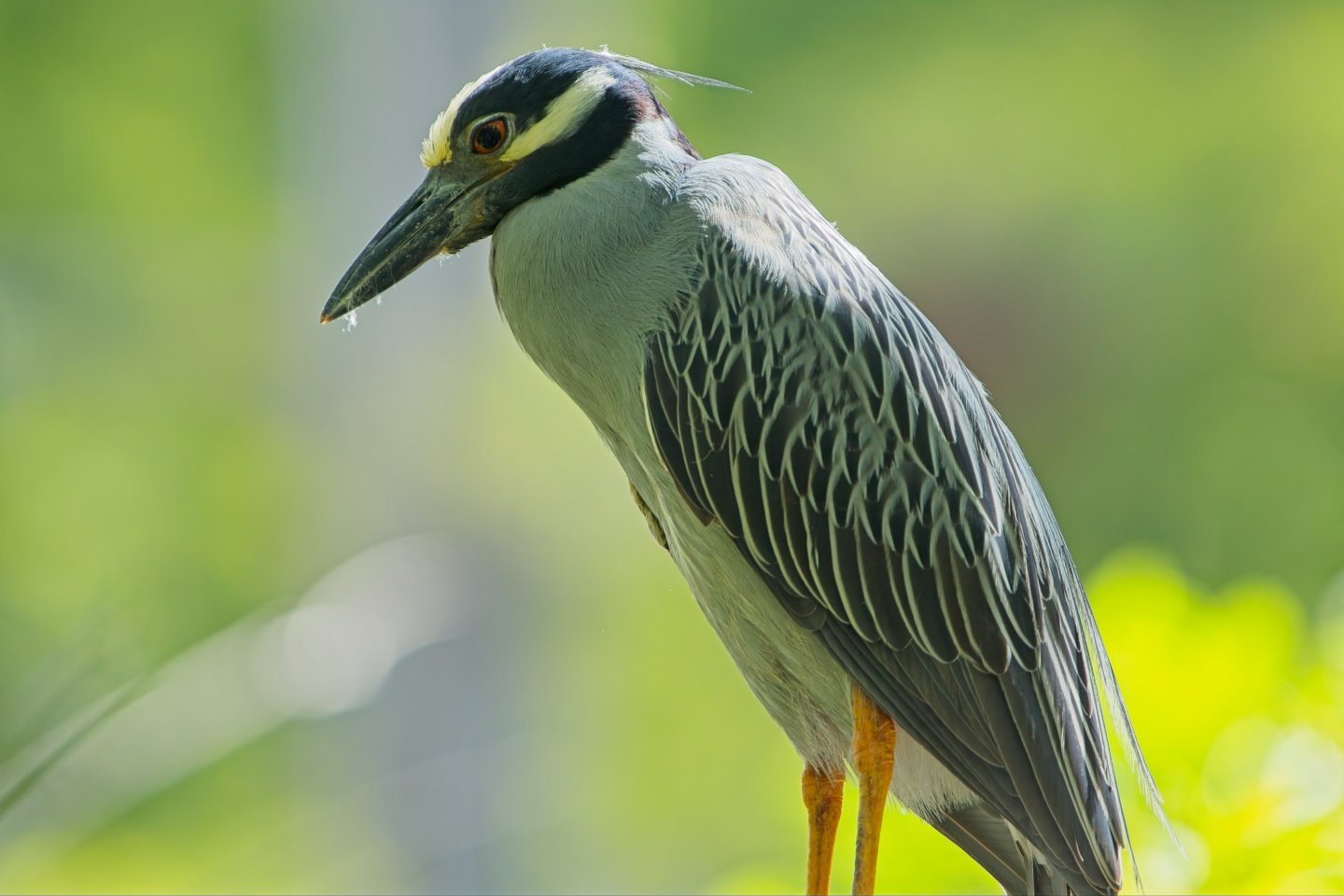
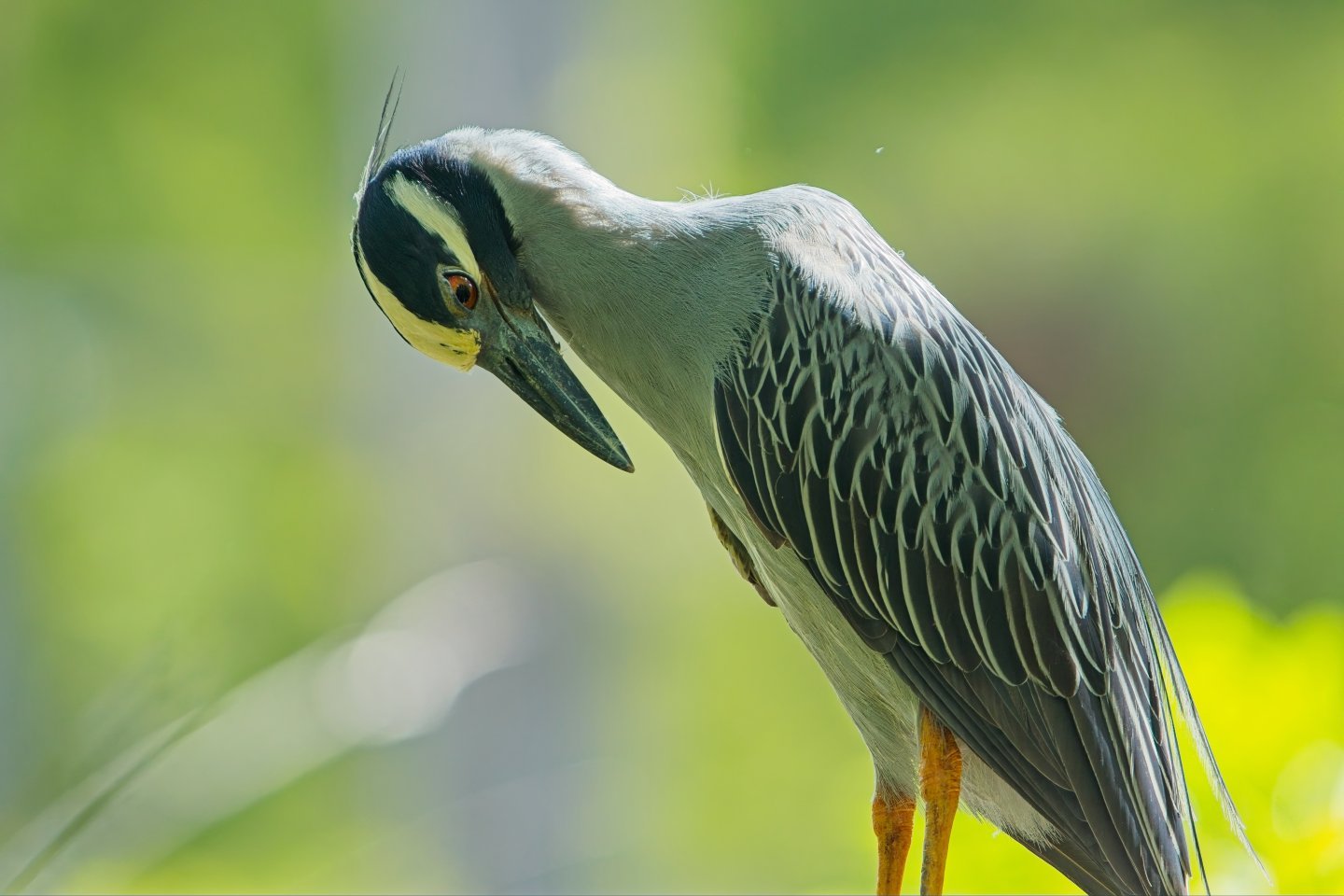
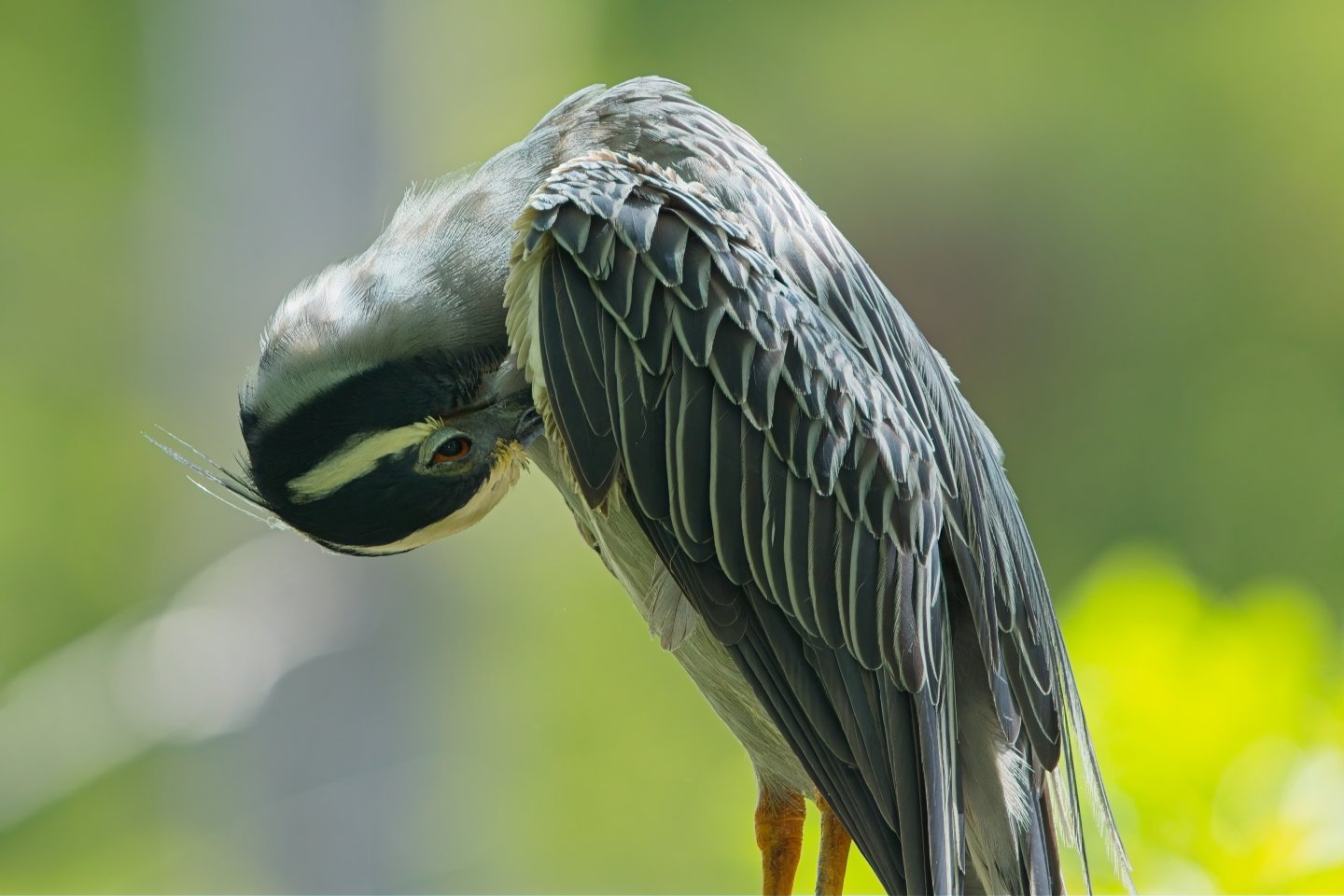
This magnificent creature, often seen as a solitary figure, embodies the very essence of the cypress swamp. It stands poised at the water’s edge, a statue amidst the verdant backdrop, its gaze directed slightly downwards, reflecting an intense focus on the world just beneath the surface. The light catches the distinctive features of the heron: a deep black head sharply contrasted by a brilliant yellow crown and crest, a striking mark of identity in the dappled shade. Below its eye traces a thick white stripe, defining a pattern that speaks to the unique beauty of this species. The body itself is covered in patterned grey feathers, intricate scales subtly layered across its wings and body, reflecting the complexity inherent in its natural design.
The hunt itself is an act of profound meditation, a perfect demonstration of patience honed by instinct. Unlike the swift, darting movements of many avian predators, the Yellow-crowned Night Heron employs a strategy of absolute stillness. It stands motionless at the water's edge or moves with slow, deliberate steps, using its quiet presence to ambush unsuspecting prey. This patient vigil is not merely waiting; it is an active engagement with the deep secrets of the marsh, tuning into the subtle shifts in the water and the movements of the aquatic life that form its sustenance. A small amount of residue might cling to its sturdy beak after a successful foraging session, a silent testament to the hard-won meal gathered from the depths.
The diet of this heron is highly specialized, perfectly adapted to the rich bounty of the subtropical wetland. Its powerful bill is not merely a tool for grasping; it is a finely tuned instrument designed for crushing the hard exoskeletons of its preferred prey, such as crabs and crayfish. These crustaceans form the core of its diet, providing the rich protein necessary for its survival in this demanding habitat. The strength and structure of its bill are perfectly adapted for this specialized task, granting it access to the vital sustenance that sustains a large bird in an aquatic environment. This specialization underscores the intricate balance within the slough: the presence of these herons signals a robust supply of crabs and other essential invertebrates, which in turn indicates a healthy food web teeming beneath the water’s surface.
The Yellow-crowned Night Heron is a creature deeply intertwined with the seasonal rhythms of Florida, particularly in regions like the Six Mile Cypress Slough. Many populations of this species are year-round residents, integrating completely into the ongoing cycle of life and decay that defines the cypress swamp environment. They navigate the delicate balance between the nocturnal world they often inhabit and the diurnal needs of their young, demonstrating an adaptability that is remarkable for a bird focused on such intense aquatic hunting strategies. While known for their nighttime tendencies, these herons will actively forage during the day, a necessity driven by the demanding requirements of feeding their growing brood. This dual nature—a creature with nocturnal leanings yet active in the daylight—speaks to the complex interplay between light, shadow, and survival within this specific environment.
The environment itself dictates the terms of this existence. The cypress swamps are not static landscapes; they are dynamic ecosystems constantly adapting to water levels, temperature fluctuations, and the ebb and flow of nutrient cycles. For the Yellow-crowned Night Heron, the slough is more than just a place to rest or feed; it is a complex tapestry woven from living roots, flowing water, and a dense biological community. The blurred greens of the slough canopy that frame the heron’s solitary vigil are not merely a backdrop; they are the living context, emphasizing how this bird embodies the very essence of its freshwater wetland home. It exists as a focal point within this lush environment, a living indicator of ecological health.
The patient hunting method observed in the Cypress Slough is a masterclass in minimizing energy expenditure while maximizing opportunity. The heron’s ability to remain perfectly still, allowing the world around it to fade into a soft blur of green and shadow, speaks to an incredible level of focused awareness. This stillness is not inactivity; it is intense sensory engagement, where every flicker of movement on the water or within the undergrowth is processed with acute attention. This quiet observation transforms the simple act of feeding into a profound performance of natural mastery over its environment. It highlights how survival in such complex settings requires more than just physical strength; it demands an intuitive understanding of the subtle, shifting dynamics of the wetland.
The relationship between the heron and its prey is one of perfect adaptation. The bird's powerful bill, designed to crush hard exoskeletons, allows it to access a rich source of protein within the ecosystem. This specialization ensures that the Heron thrives precisely because the wetland supports such a robust population of crabs and other vital invertebrates. When we observe this heron in its natural context, we are witnessing a self-sustaining cycle: a healthy wetland provides abundant food, which supports thriving wildlife, including this magnificent predator, further enriching the overall health of the ecosystem. The presence of these birds serves as an undeniable indicator that the food web remains intact and flourishing within the Six Mile Cypress Slough Preserve.
In reflecting on this scene, one sees not just a beautiful bird, but a living symbol of ecological balance. The Yellow-crowned Night Heron is a singular hunter, perfectly attuned to its watery world, demonstrating a quiet power that transcends mere physical attributes. Its patient watch, a blend of instinct and deep awareness, reveals the intricate, often unseen, balance of this unique freshwater wetland. Each moment spent in silent observation is a thread woven into the living tapestry of the Cypress Slough, reminding us of the enduring, profound relationship between wildlife and the delicate, complex beauty of nature. The heron’s presence ensures that the story of the swamp—the slow, deliberate work of life unfolding under the canopy—continues to be told, one patient moment at a time.
Follow Adventures in Southwest Florida for more hidden wonders.
No comments:
Post a Comment