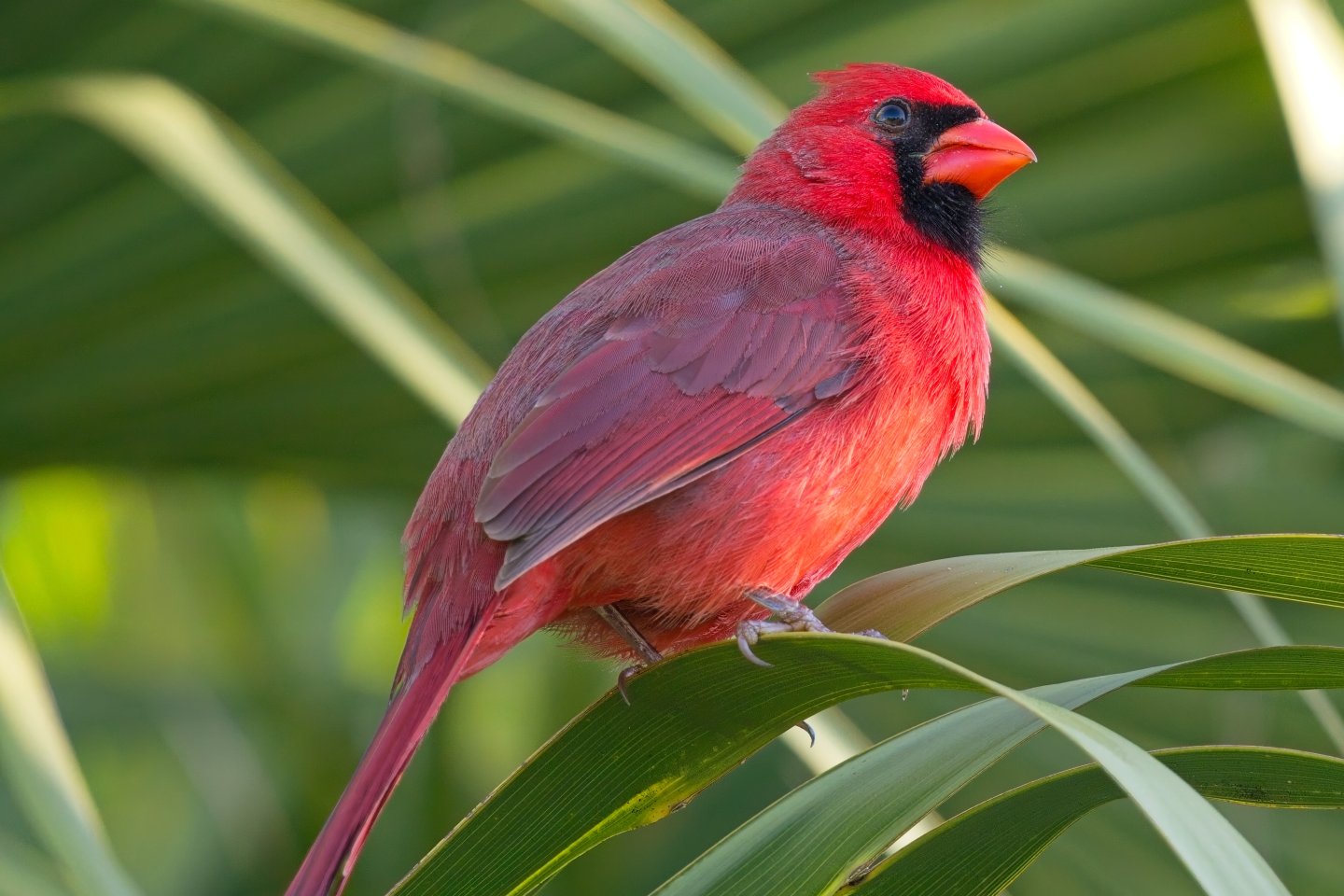
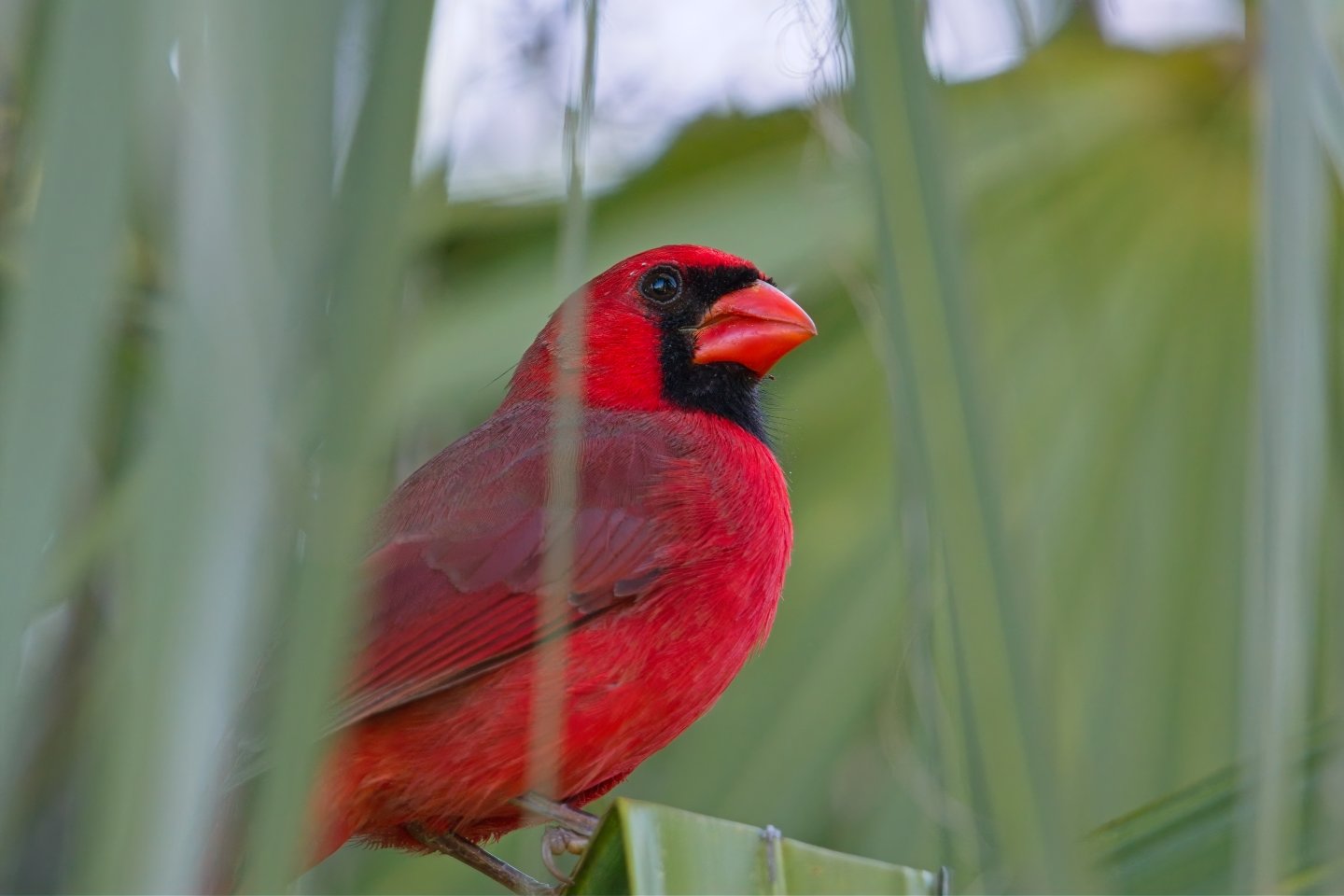
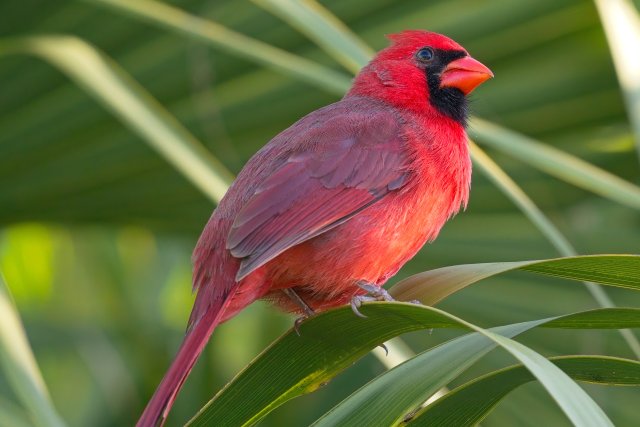
Crimson threads illuminate the deep green of the Florida landscape. A flash of vibrant red anchors itself to a broad, sun-dappled leaf, standing out vividly against a softly blurred background of deeper green foliage. This striking male Northern Cardinal is not merely a bird resting in Rotary Park; it is a living focal point, a vivid exclamation point painted across the emerald canvas of the local environment. Soft, natural light filters through the canopy, tracing the intricate patterns of its plumage and highlighting the rich textures of the leaf it stands upon, inviting a quiet moment of profound observation.
To pause and simply witness this scene is to engage with a timeless display of natural artistry. The visual impact of the cardinal’s presence—the intense scarlet of its body set against the cool, enveloping greens of the surrounding vegetation—is immediately arresting. It draws the eye, demanding contemplation of the delicate balance that sustains such brilliant life within a structured park setting. This bird embodies a resilience that seems intrinsic to the very soil and air of this region, a constant reminder of life persisting through every season.
The source of this fiery hue is more than just pigment; it is a story written in the environment. The striking red plumage of the male Northern Cardinal is derived from carotenoid pigments absorbed directly from its diet, primarily through the consumption of various fruits and seeds found abundantly in the Florida ecosystem. This connection between sustenance and appearance underscores the cardinal's deep, symbiotic relationship with its habitat. As we watch it perch, we recognize that this brilliant color is a visible testament to the nourishing bounty of the surrounding woods and undergrowth. The intricate feather structure itself enhances this effect, reflecting red light intensely, making the bird’s presence dazzling even under varied natural lighting conditions.
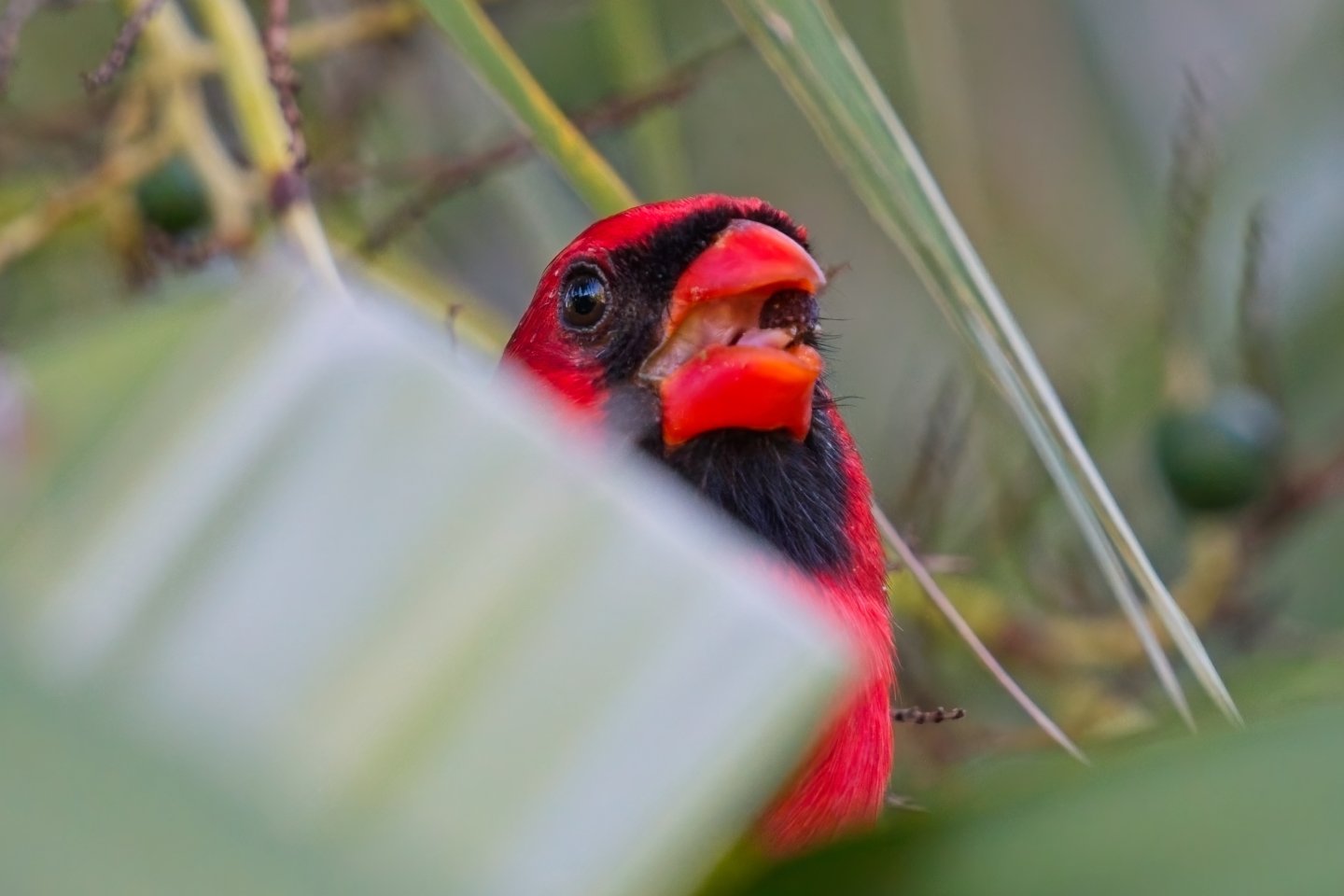
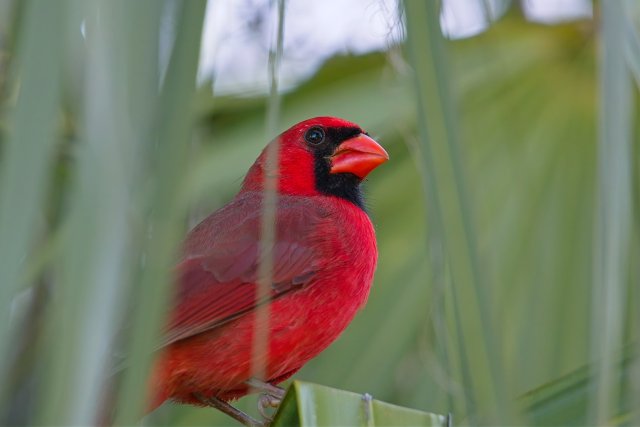
The male cardinal carries further visual signals within his presentation. The prominent black facial mask, a striking contrast against the fiery red, serves as a subtle but important indicator of social dynamics within the flock. This distinct marking may function as a visual signal of dominance or age to other cardinals, weaving an unspoken narrative about position and experience within their community. It is a quiet piece of communication embedded in the very structure of its feathers, speaking volumes without uttering a single note.
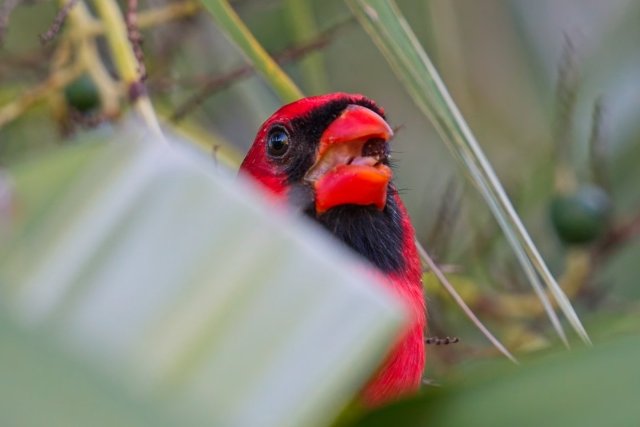
Beyond mere aesthetics, the cardinal’s physical adaptations speak to an incredible mastery over its environment. Its beak is stout, conical, and brilliantly red, perfectly sculpted for its primary role in gathering sustenance. This tool is not just an instrument; it is a finely tuned extension of instinct, perfectly adapted for efficiently cracking open various seeds, which form a significant part of its necessary diet. This efficiency speaks to an innate understanding of the resources available within the dense foliage of Rotary Park and the surrounding natural areas.
The permanence of this bird in Florida is a remarkable feature of its existence. Northern Cardinals are non-migratory; they remain year-round residents throughout Florida, including the southwestern region, persisting in the same area through all four seasons. This steadfast presence grounds the beauty of the scene, emphasizing that this vibrant spectacle is not a fleeting arrival but an enduring fixture of the local landscape. They do not depart; they simply exist, woven into the fabric of the park and its surrounding natural spaces.
The context of Rotary Park plays a critical role in understanding the cardinal’s daily life. In developed areas such as this public green space, Northern Cardinals demonstrate remarkable adaptability regarding their nesting and roosting strategies. They frequently utilize the dense shrubs and small trees that populate the area, choosing these structures for safe nesting sites and vital roosting cover from the elements. Observing a cardinal utilizing these local features reveals an intricate, practiced understanding of how to secure shelter while remaining exposed to the dynamic world around them. These natural structures provide the perfect confluence of safety and concealment necessary for family life.
The interactions within this habitat are rich with subtle behavioral details. Unusually for many North American songbirds, both the male and female Northern Cardinal possess the remarkable ability to sing. Their vocalizations weave through the ambient sounds of the park, contributing a melodic layer to the natural symphony. These songs are not just calls; they are expressions of territory, courtship, and the establishment of family bonds, adding an auditory dimension to the visual splendor we observe.
As the seasons shift, the cardinal’s dietary needs change, mirroring the vitality of the environment. During the breeding season, when life is at its most dynamic, the cardinal's diet expands to include a richer variety of food sources. They supplement the seeds and fruits they gather with a variety of insects, including grasshoppers, cicadas, and beetles, which are readily available within the dense vegetation. This dietary flexibility highlights an incredible capacity for adaptation in utilizing the resources provided by their Florida home.
The rituals of courtship are equally compelling. Males engage in a specific courtship behavior known as nuptial feeding, a fascinating display where they actively offer seeds directly to the female. This act is more than simple provisioning; it is a demonstration of fitness and commitment, an essential part of the social choreography that dictates the continuation of life in their habitat.
The construction of a nest represents another layer of this enduring natural drama. A cardinal's nest, often constructed with great care, is typically built within dense thickets, positioned roughly three to ten feet off the ground. These nests are constructed with astonishing speed and efficiency; they can be assembled remarkably quickly, sometimes in as few as three to nine days. This rapid construction ability underscores the inherent drive for survival and the deep, instinctive knowledge held by these birds about their immediate surroundings. The intricate structures they create are temporary shelters that house new life, a testament to the fierce determination of nature.
The enduring presence of the Northern Cardinal in Rotary Park is a powerful reminder of the constant, vibrant life thriving in shared, natural spaces. Its vivid hue, its persistent song, and its year-round dedication embody an incredible resilience. To observe this bird is to witness a living tapestry where instinct, adaptation, and breathtaking beauty converge. It reminds us that even within structured environments, the wild spirit remains powerfully alive, offering moments of pure, warm wonder for all who take the time to look closely.
Follow Adventures in Southwest Florida for more hidden wonders.
See more photos on Instagram