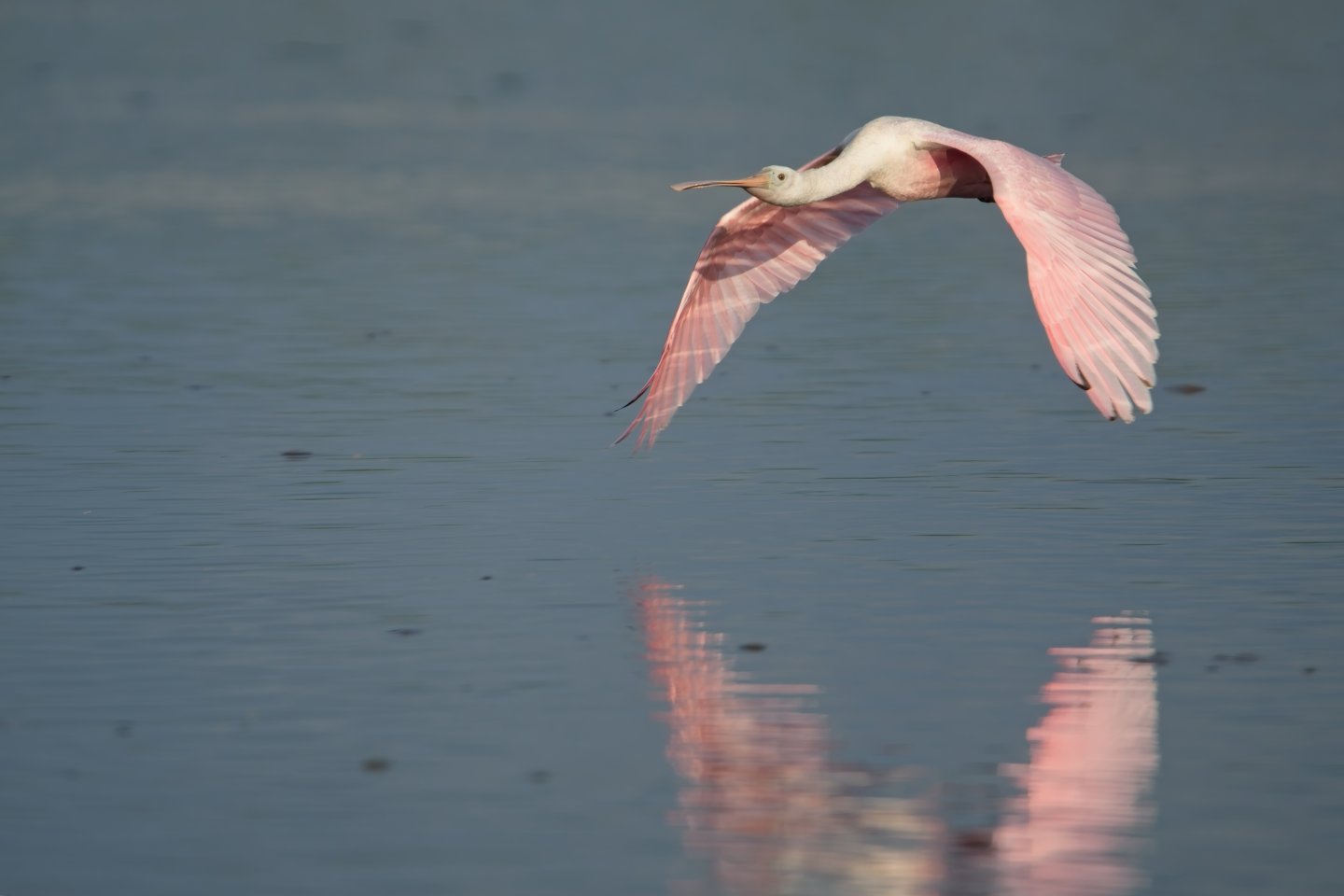
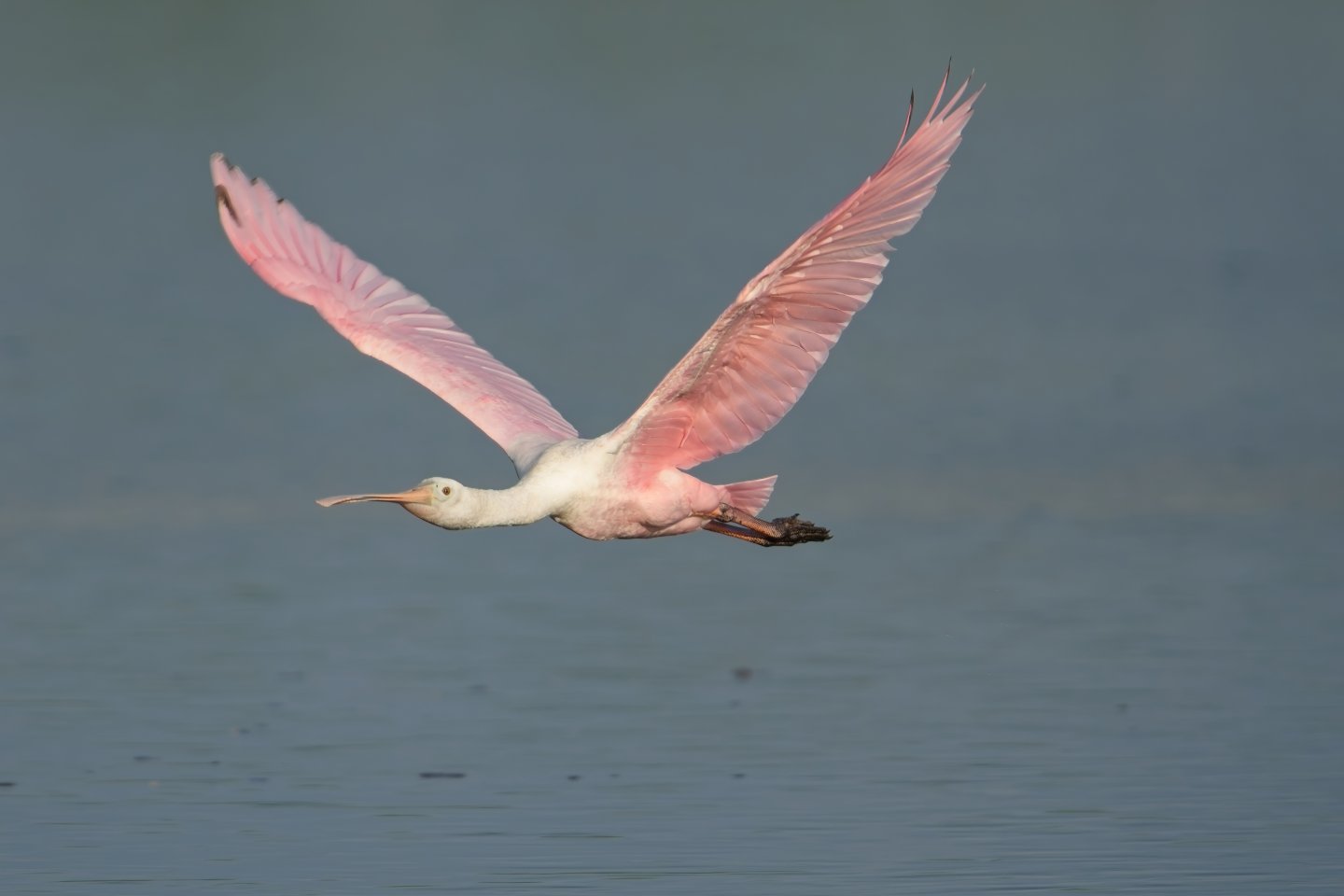
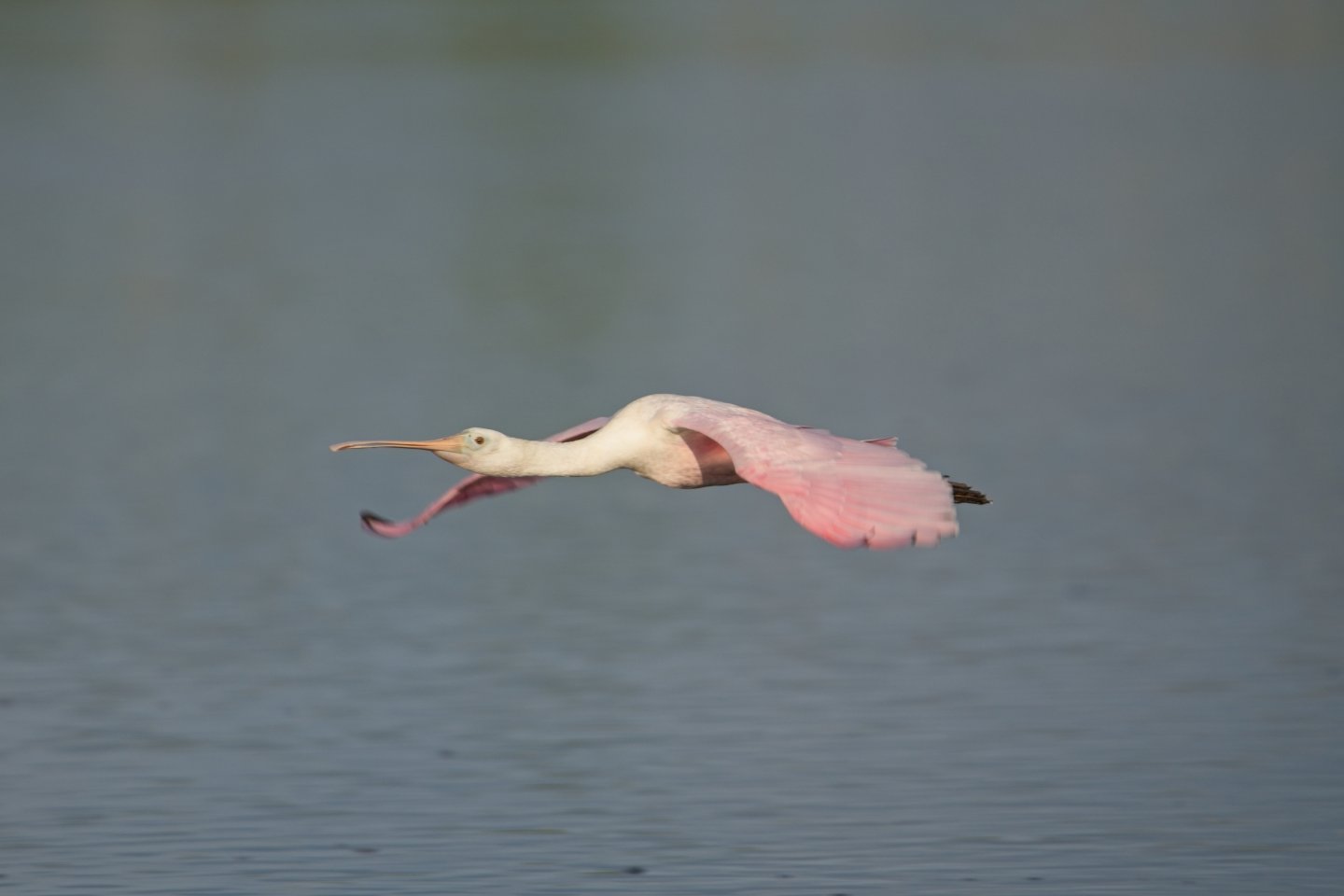
A whisper of pink touches the calm, blue-grey surface as a Roseate Spoonbill moves through the air above J.N. Ding Darling National Wildlife Refuge. The reflection dances beneath its broad, extended wings, highlighting a scene of profound natural tranquility. This magnificent bird glides effortlessly, demonstrating the graceful power that defines life in these vital wetland ecosystems.
The soft, natural light illuminates the delicate colors of its plumage as it soars across the tranquil water. These birds possess broad wings perfectly suited for soaring and gliding, allowing them to travel between their feeding and roosting sites with ease. This movement reflects a daily rhythm played out across the shallow impoundments of the refuge.
The vibrant pink hue of the Roseate Spoonbill is not merely beautiful; it tells a story about its environment. This striking color is acquired from carotenoid pigments found in the crustaceans they consume, linking the bird’s stunning appearance directly to the health of the waters below.
As these spoonbills utilize the mangrove islands within the refuge for communal roosting and nesting, their presence serves as a powerful indicator species for wetland health. Seeing them at J.N. Ding Darling is a visual testament to a thriving, vital ecosystem.