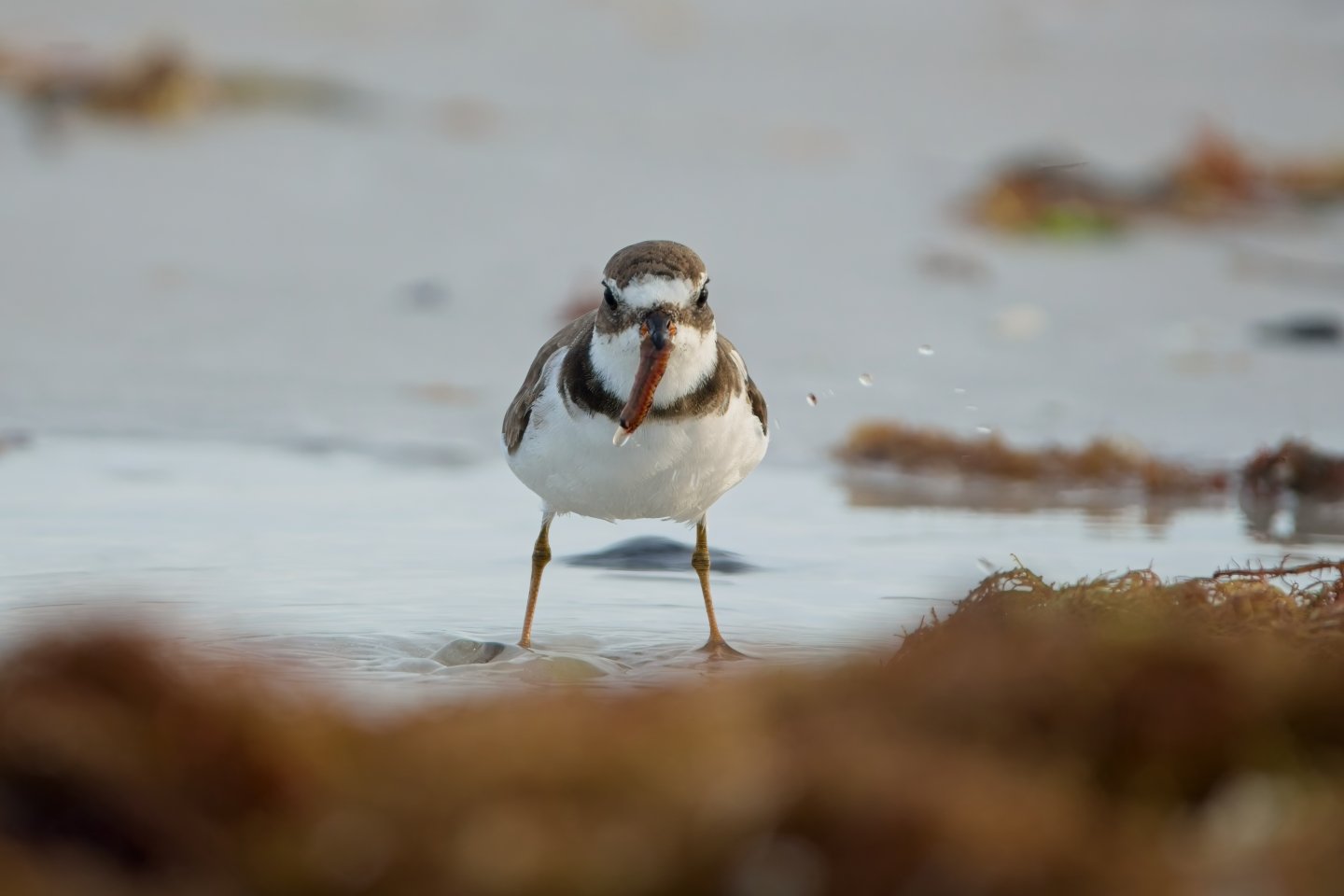
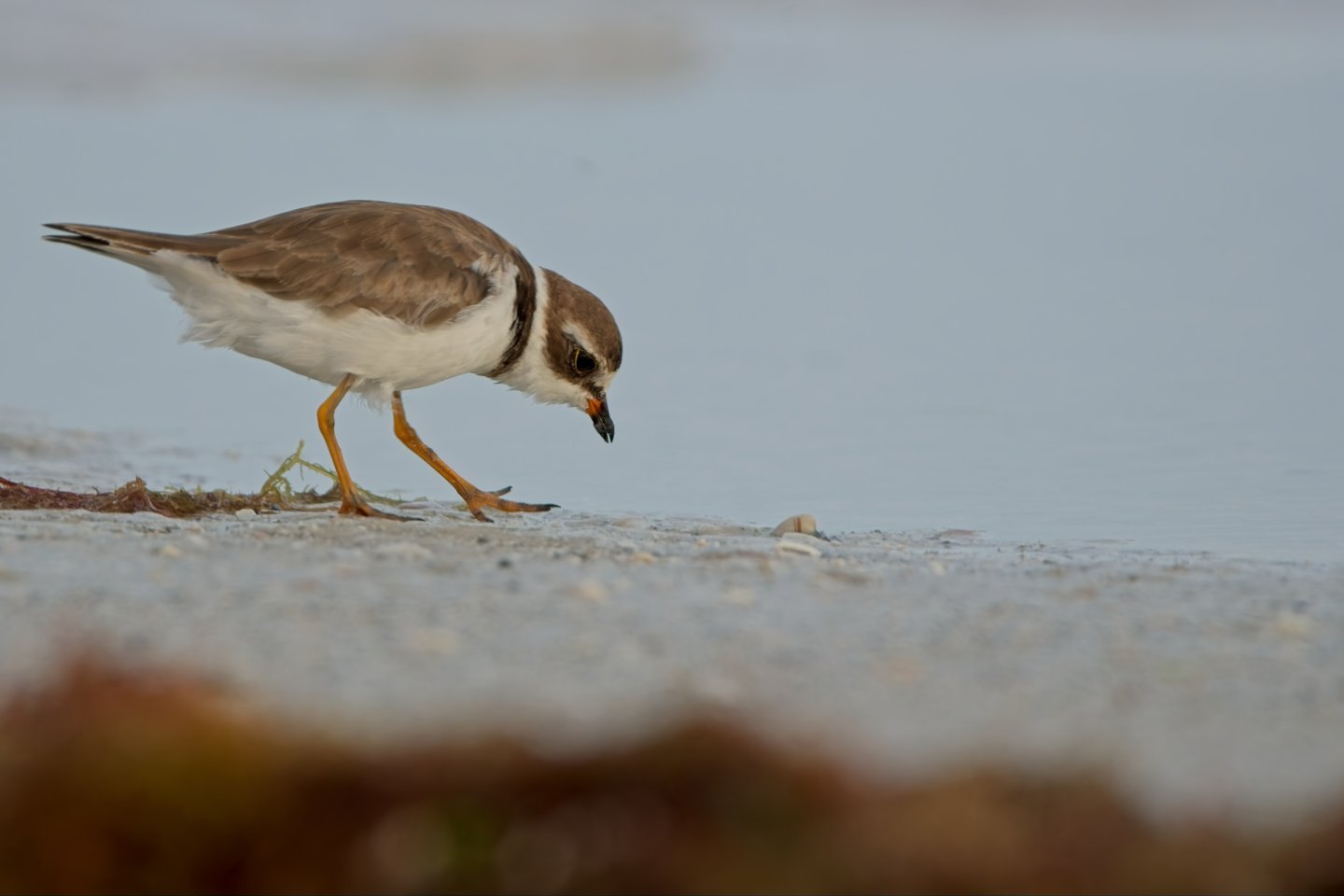
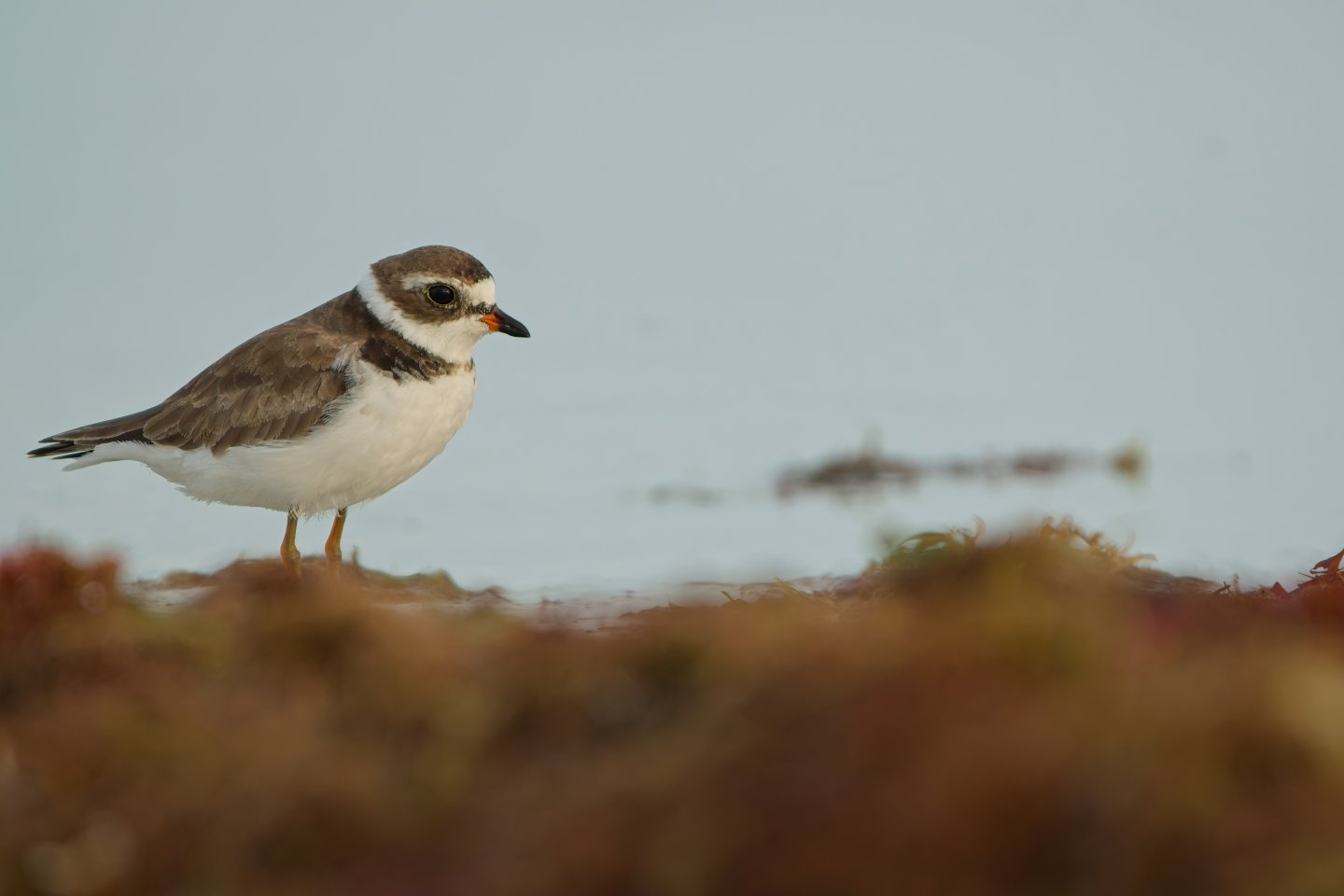
Semipalmated Plovers are experts at navigating soft mudflats, utilizing partially webbed feet to move efficiently in shallow water across the intertidal zones found at Bowditch Point Park. This migratory stopover point in Southwest Florida is essential for these shorebirds as they replenish energy during their long journeys. The plovers spend considerable time wading through the dark, organic debris of the mudflats, actively foraging for sustenance.
When searching for food, a Semipalmated Plover employs a distinctive stop-run-peck behavior. They pause momentarily to scan their surroundings before rapidly probing the soft substrate with their short, stout bills. Their feeding strategy relies on both keen eyesight to spot prey resting on the surface and tactile probing to locate hidden invertebrates beneath the mud.
The plover's diet is specialized, consisting primarily of marine worms, small crustaceans like amphipods, and various larval insects. These tiny meals are extracted from the soft sediments that accumulate in these coastal habitats. The short bill is perfectly suited for both picking up surface prey and making shallow probes into the rich mud.
The abundance of life here speaks to the importance of undisturbed conditions. Coastal mudflats like those at Bowditch Point Park serve as vital feeding areas, providing necessary sustenance during their non-breeding season when they arrive in late summer. Protecting these natural environments ensures that this crucial refueling station remains intact for future generations of shorebirds.
#SemipalmatedPlover #BowditchPointPark #ShorebirdLife