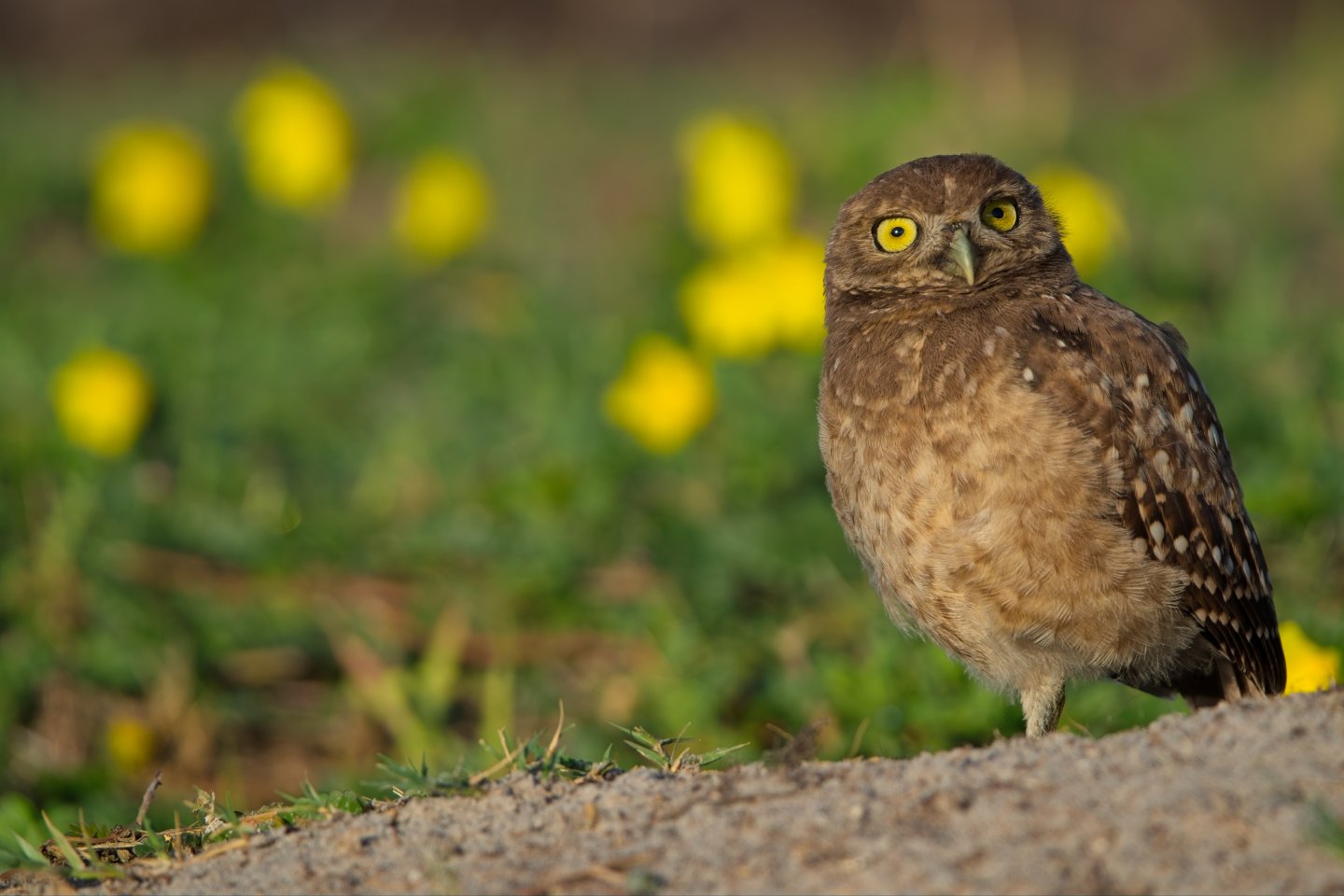
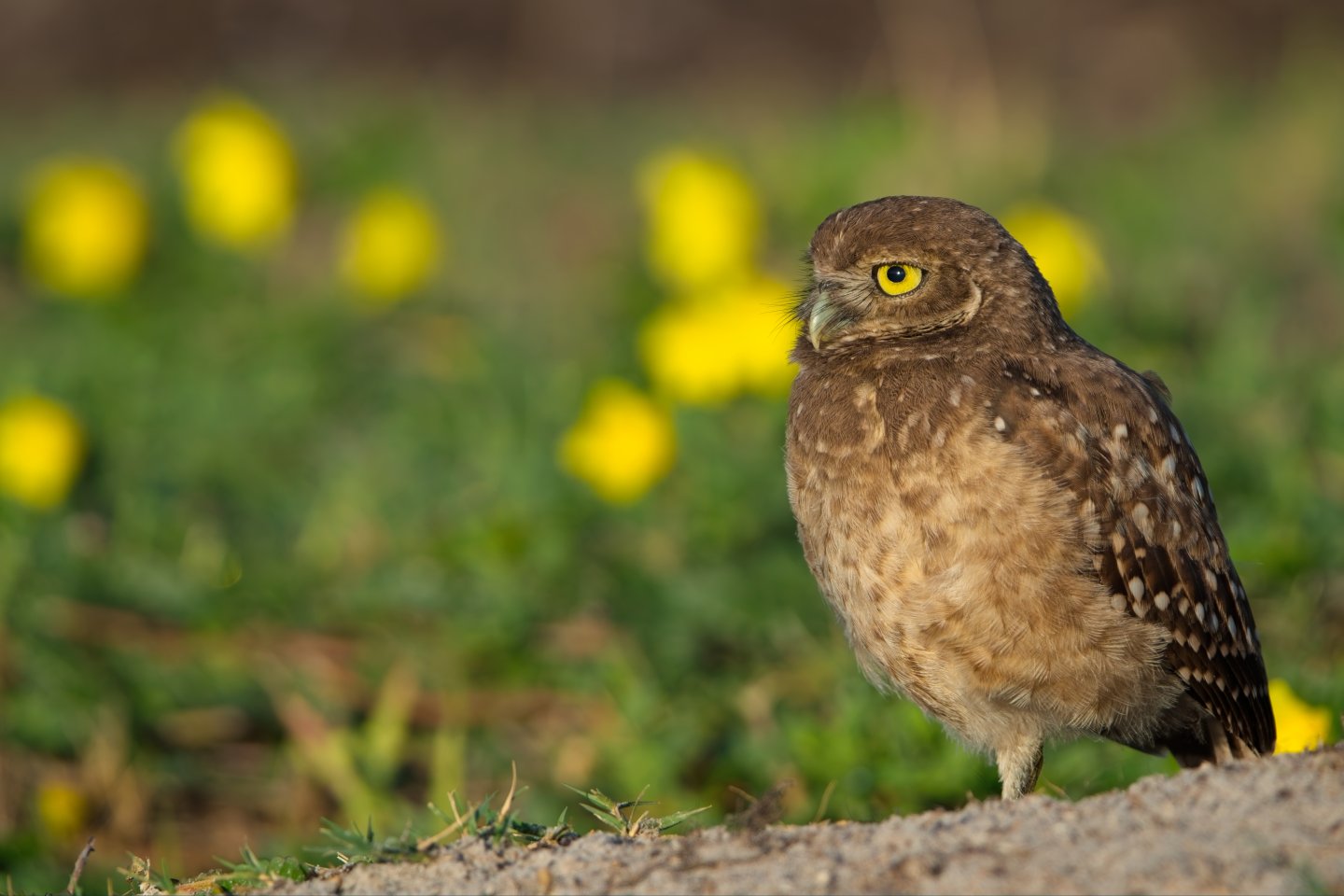
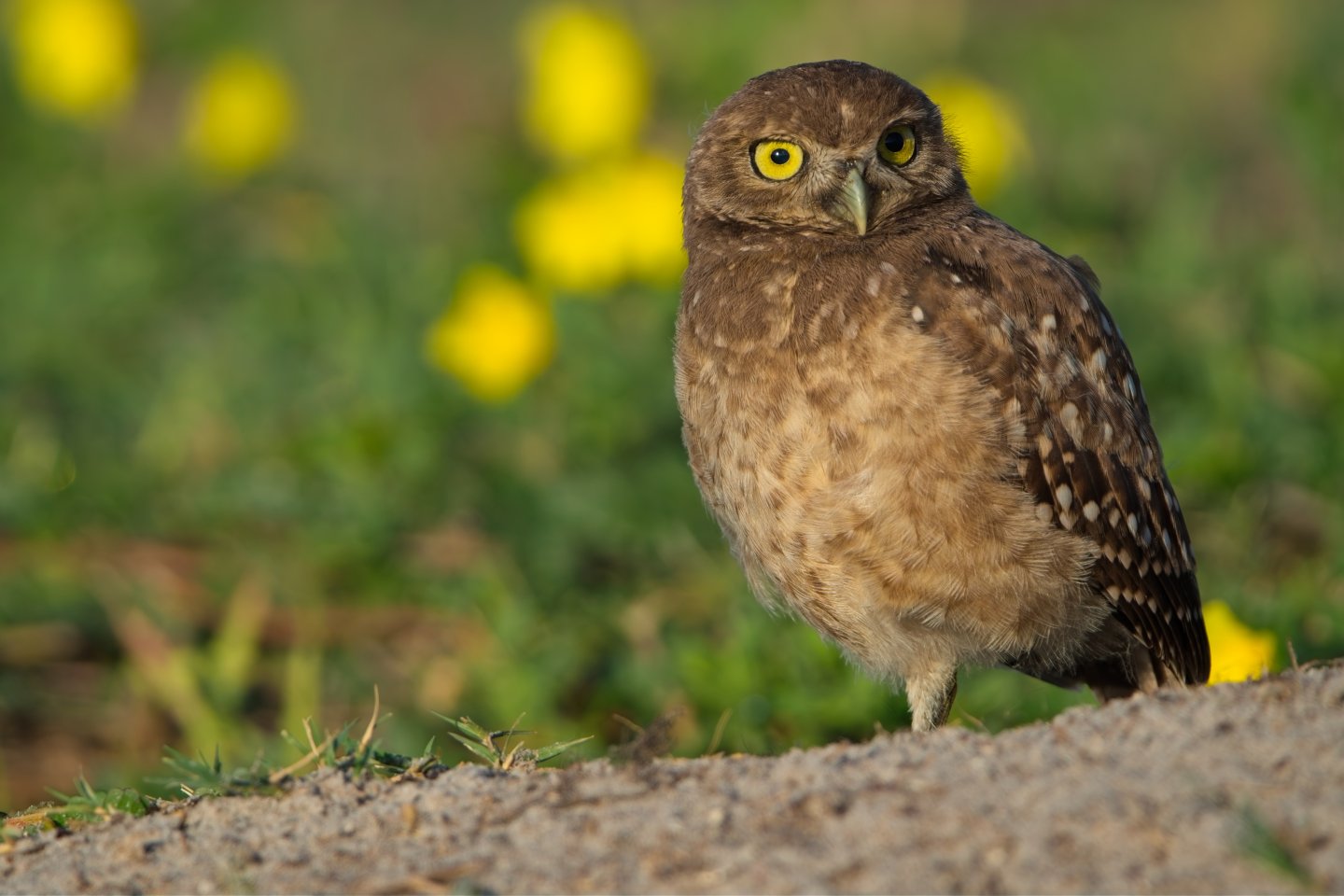
A Burrowing Owl stands alertly on a low dirt mound at the Pelican Baseball Complex, its bright yellow eyes fixed directly forward. The setting sun bathes the scene in warm, golden light, illuminating its brown and tan plumage against the backdrop of vibrant green grass and scattered yellow flowers. This moment captures a quiet interaction between the wild and the human-modified landscape.
This remarkable bird thrives in places that seem unexpected, utilizing low dirt mounds or sparse shrubs as elevated perches to scan for potential threats in their surroundings. The earthy tones of its plumage provide effective camouflage, allowing it to blend seamlessly with the dry grasses and soil typical of this open habitat.
The Florida Burrowing Owl is a non-migratory subspecies that inhabits these sun-drenched areas year-round. While they are active during the day, their foraging and social activities significantly increase around dawn and dusk. In these times, the owl relies on abundant insect prey, such as crickets and beetles, which are plentiful in the grassy, open areas they frequent.
Within their subterranean homes, these owls possess remarkable adaptations for survival. If a threat approaches the burrow entrance, an owl can mimic the hiss of a rattlesnake to deter predators seeking refuge. Furthermore, some owls line their burrows with materials like mammal dung, which may help regulate temperature or attract food for the inhabitants.
This resilient bird finds its place in unexpected corners, reminding us of the wild heart beating within our constructed environments. It navigates a world shaped by human activity while maintaining its ancient ways.
No comments:
Post a Comment