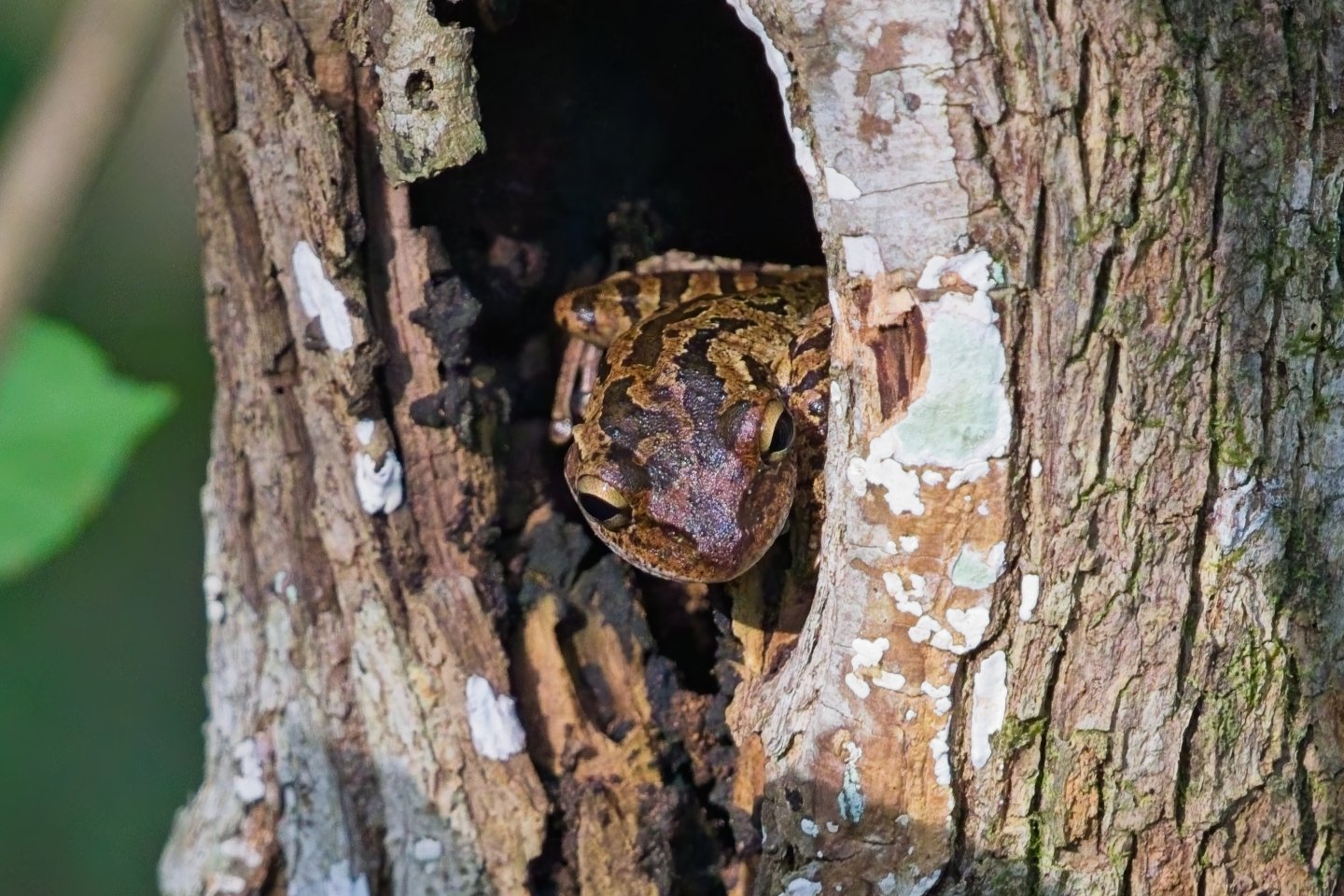
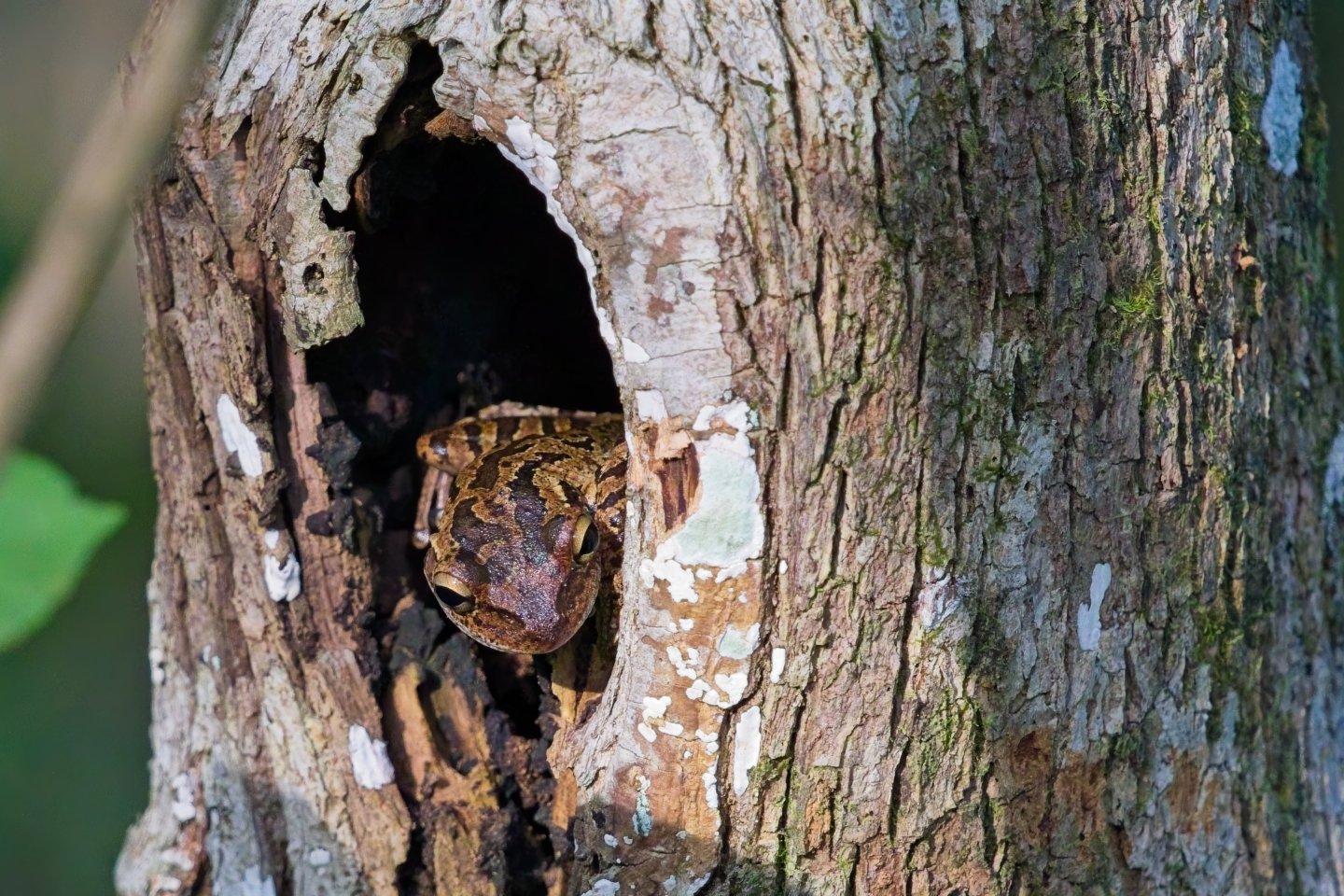
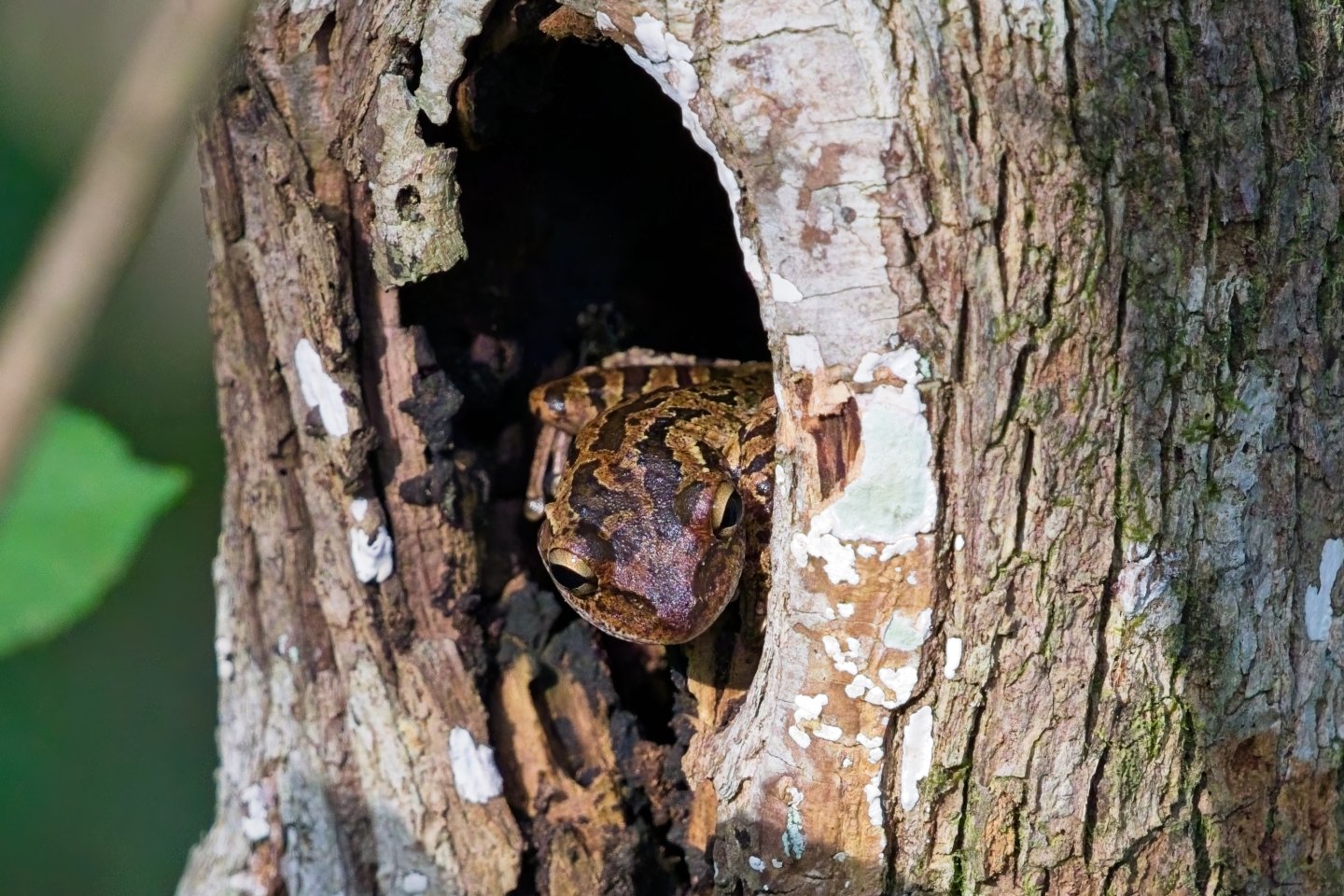
A single, unblinking eye emerges from the bark's dark cavity at Six Mile Cypress Slough Preserve. It is a portrait of profound stillness, a moment captured in the filtered, dappled light that struggles to penetrate the dense canopy overhead. The mottled brown and black patterns covering its head and upper back blend seamlessly with the rough texture of the cypress trunk, making the creature almost invisible in the shifting shadows of the wood. This scene is more than just a fleeting observation; it is an invitation into the quiet, hidden world that thrives within the heart of this Florida preserve, revealing the delicate balance between predator and refuge in a subtropical landscape.
The intense daylight of the Cypress Slough demands a strategy of deep concealment for the Cuban Tree Frog. Most of the day, this remarkable amphibian remains deep within its chosen refuge, avoiding the harsh sunlight and the threat of desiccation that define the Florida environment. It conserves energy, settling into the cool, damp confines of the tree cavity, becoming a hidden presence against the textured wood. This diurnal retreat is a masterclass in survival, demonstrating how life adapts its existence to the demanding rhythms of the sun and shade. The light plays across the scene, highlighting the contrast between the shadowed interior where the frog rests and the bright exterior, emphasizing the need for this nocturnal lifestyle to persist.
Such perfect concealment is not accidental; it is the result of intricate, finely tuned biological adaptations developed over time within this specific ecosystem. The physical reality of the Cuban Tree Frog is a testament to nature’s ability to create complex solutions for existence in a challenging habitat. Imagine the surface of that rough bark, crisscrossed with ridges and grooves, offering little purchase for most creatures. Yet, the frog navigates this terrain effortlessly. This ability stems from its remarkable anatomy: very large toe pads that secrete a powerful, sticky mucus. This adhesive strength allows the frog to cling tightly to even the roughest, most vertical bark surfaces, enabling it to secure itself against gravity and potential disturbances. This sticky substance is not merely for grip; it is a vital tool for navigating and resting within its preferred architectural shelters.
When the dry seasons lengthen, as the humid air begins to thin and water sources recede, the frog demonstrates another incredible physiological response. It can enter a state of estivation, sealing itself within the humid, protected spaces of the tree holes. This action serves as a deep survival mechanism, allowing the frog to escape the intense heat and avoid dangerous desiccation by entering a dormant state, awaiting the return of vital moisture. The shift from active presence to deep dormancy is a profound demonstration of biological resilience, an innate understanding of when and how to retreat from the external world to await favorable conditions. This ability to enter estivation highlights the frog's sophisticated capacity to manage its life cycle in response to environmental shifts within the Cypress Slough Preserve.
As the sun begins its slow descent, signaling the transition to night, a profound transformation begins within the hidden sanctuary. The stillness is replaced by latent energy, and the nocturnal hunter prepares to emerge. Its relatively large eyes, equipped with horizontal pupils, are exquisitely adapted for the low-light world of the night. These visual organs allow the frog to perceive the subtle shifts in darkness, pinpointing the locations of its targets with uncanny accuracy. It is in this low-light realm that the Cuban Tree Frog reveals its true role as an active hunter, preparing to emerge from the shadows and explore the nocturnal landscape of the slough.
The emergence into the night signals a shift in the ecological dynamic of the preserve. The darkness brings forth a different set of interactions within the Cypress Slough ecosystem. While many creatures become active, the frog is poised to engage in its specialized predatory behaviors. It will emerge to hunt insects, spiders, and even other smaller frogs that are also active in the low-light environment. This behavior underscores the complex web of life woven throughout the preserve, where every creature plays a specific, vital role in maintaining the overall health of the habitat. The very act of hunting contributes to the intricate food web that sustains the diverse community of plants and smaller animals within the slough environment.
The presence of this species introduces fascinating dynamics into the established tapestry of the preserve. As an invasive species, the Cuban Tree Frog’s interaction with the local environment is significant. It competes directly with native frog species for crucial diurnal refugia, such as the tree holes and other sheltered spots that provide essential daytime safety for other amphibians. This competition subtly alters the distribution and behavior of the native inhabitants, forcing shifts in how resources are utilized across the preserve. Furthermore, its presence influences local food webs by preying on native insects and smaller vertebrates. This influence highlights the delicate, interconnected nature of the biological communities existing within the Six Mile Cypress Slough Preserve.
The skin itself is another feature that speaks to this adaptation and interaction. The frog's skin contains glands capable of secreting a sticky, irritating mucus. This substance serves a dual purpose: it acts as an effective defensive mechanism against potential predators, making the frog unpleasant or difficult to handle should one be disturbed unexpectedly. This chemical defense adds another layer to its strategy for survival in a world where vigilance is paramount.
The entire existence of the Cuban Tree Frog within the Six Mile Cypress Slough Preserve is a layered narrative of adaptation, instinct, and ecological influence. It is a creature defined by its mastery of concealment during the day and its active engagement with the world at night. It embodies the deep, quiet processes that govern life in these subtropical wetlands—a reminder that even in seemingly still environments, profound biological dramas are constantly unfolding beneath the surface. The frog remains an unseen, enduring part of the vibrant, wild tapestry of this landscape, a living example of nature’s capacity for ingenious adaptation and persistent survival amidst changing conditions. Follow Adventures in Southwest Florida for more hidden wonders.
No comments:
Post a Comment