The air hangs heavy and humid over the Six Mile Cypress Slough Preserve, a vast expanse of slow-moving water shaded by an endless canopy of cypress. Here, within the deep embrace of this permanent freshwater wetland, life moves with a deliberate, ancient rhythm, orchestrated by the subtle interactions between water, shadow, and the dense vegetation above. It is in this environment that the Florida Cottonmouth makes its home, a creature perfectly sculpted by its surroundings, an embodiment of quiet mastery over the aquatic-terrestrial boundary.
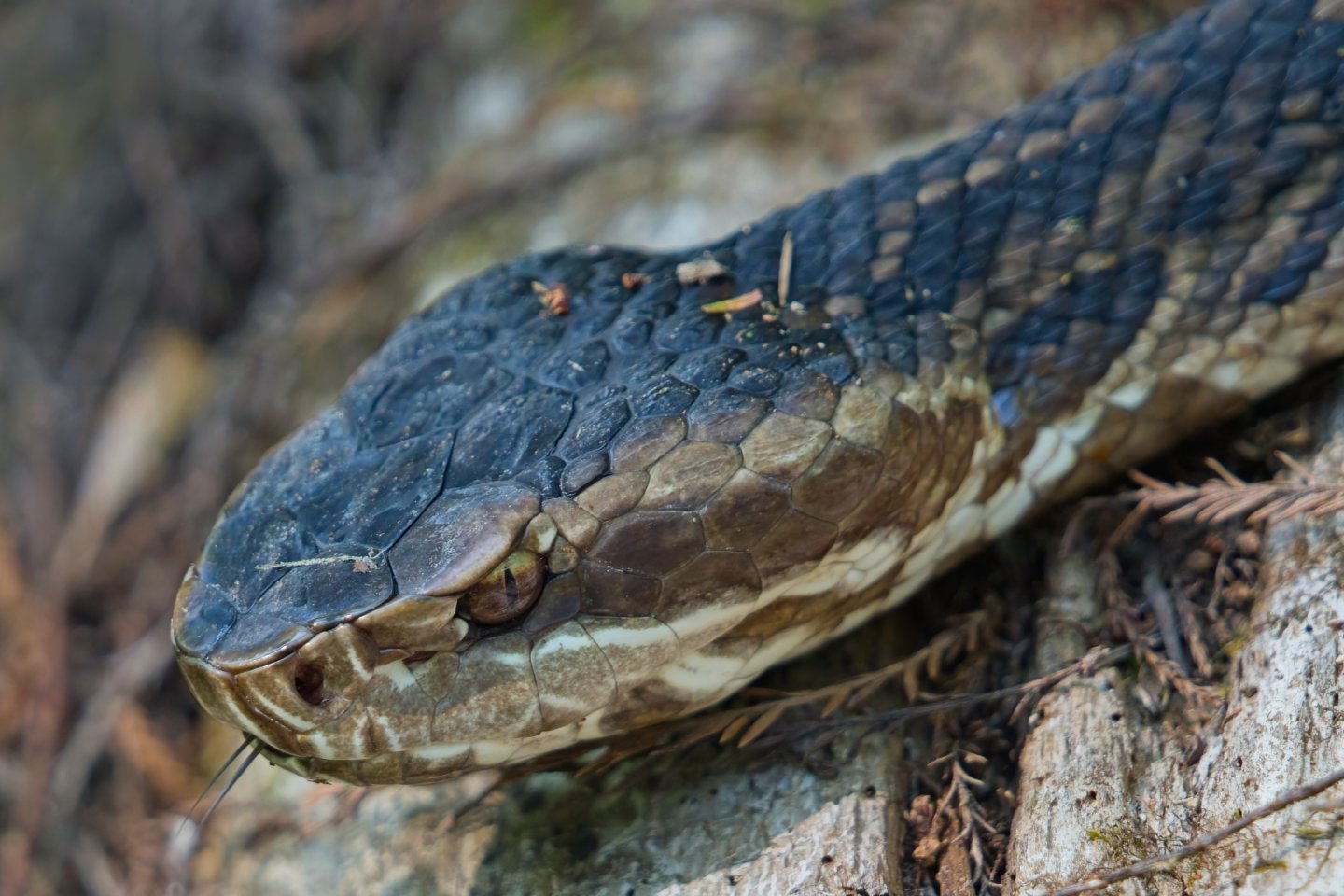
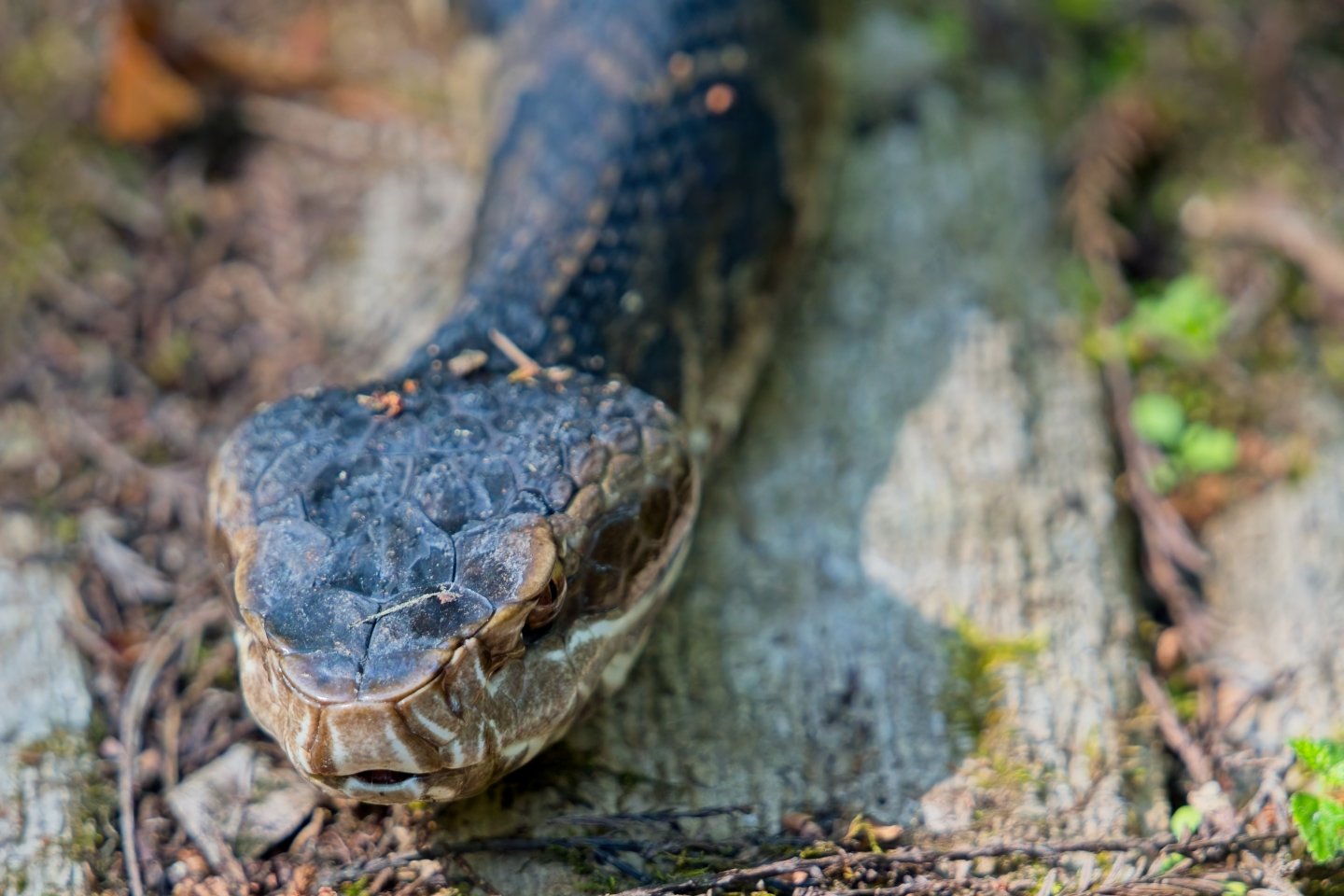
Imagine a moment of profound stillness, where the only sounds are the gentle lapping of water against unseen banks and the soft rustle of cypress needles. This is the realm of the Cottonmouth, where light and shadow dance upon dark, patterned scales, creating a living tapestry woven from the deep greens, browns, and rich, mottled reds of the fallen debris. A close-up portrait captures this essence perfectly: the snake rests deliberately upon a light-colored log or branch, surrounded by scattered, textured cypress needles that offer perfect camouflage against the dappled light filtering through the dense overhead foliage. The natural light catches the intricate patterns on its dark scales, highlighting the texture and depth of its existence within the slough.
This creature thrives in the specific conditions of Southwest Florida’s permanent freshwater wetlands, finding sanctuary amidst the submerged roots and fallen vegetation that characterize these cypress sloughs. The environment itself is a masterpiece of concealment; scattered cypress needles and other organic debris littering the forest floor provide essential cover, transforming the wetland into an intricate hunting ground where stillness is the most potent defense. These elements are not mere background; they are integral components of the Cottonmouth’s survival strategy, offering the perfect ambush points from which it can remain concealed from potential threats.
The way the Cottonmouth interacts with its world is a study in physiological adaptation and sensory acuity. As an ectotherm, this magnificent reptile relies entirely on external sources of warmth to fuel its internal processes. To thrive, it must strategically navigate the microclimate of the slough, engaging in calculated movements between sun-exposed logs and deep, shaded recesses. This behavior is not random; it is a precise regulation of body temperature, a critical process that dictates the efficiency of its metabolism, the speed of its digestion, and the vigor of its physical activity throughout the day. By shifting position, seeking out patches of solar warmth or retreating into cool shadow, the Cottonmouth fine-tunes its internal engine, ensuring optimal performance in this dynamic, humid landscape.
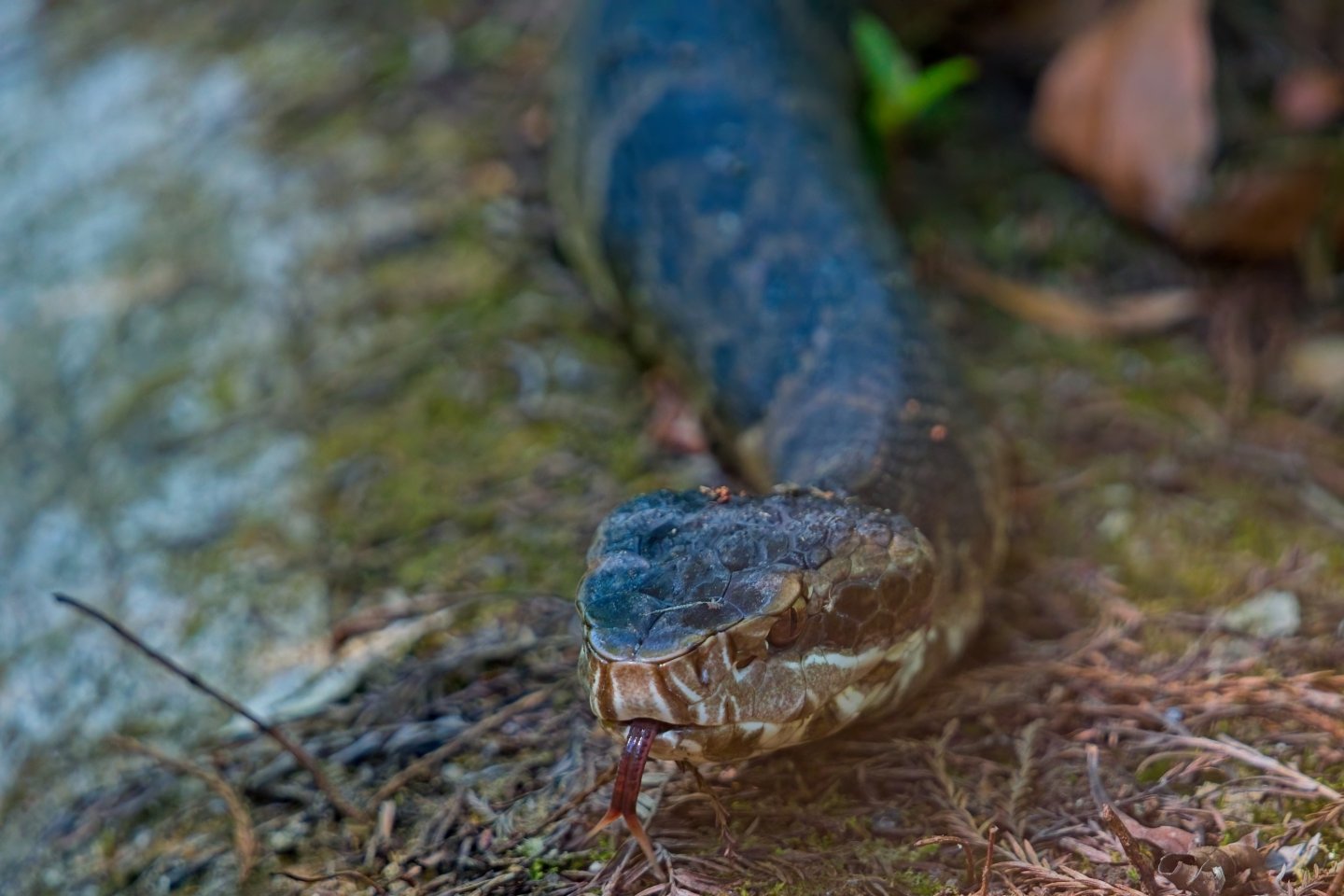
The sensory world of the Cottonmouth is exceptionally nuanced, allowing it to perceive details invisible to the unaided eye. The forked tongue, extended subtly into the air, becomes an instrument of sophisticated environmental analysis. It actively collects microscopic chemical particles suspended in the air, engaging a specialized vomeronasal organ located within its mouth. This process allows the snake to sample the very atmosphere of the slough—to taste the subtle chemical signatures of water quality, potential prey movements, and the presence of other organisms that inhabit this delicate wetland ecosystem. It is through this acute sense that it navigates the submerged world, identifying the subtle shifts in the environment that signal opportunities or threats.
Beneath the surface of this seemingly placid wetland lies a rich diet that sustains the Cottonmouth community. The food sources available within the slough are plentiful and diverse, providing the necessary sustenance for these semi-aquatic predators. Their meals consist primarily of fish, frogs, and other small aquatic or semi-aquatic vertebrates. The strategy employed by the snake is one of calculated concealment; it waits patiently in its chosen spots, relying on its masterful camouflage to remain unseen until the moment is right. This ambush hunting technique underscores the Cottonmouth’s status as a silent hunter, a predator perfectly attuned to the shadows and submerged spaces of its home.
The visual signature of this reptile is equally compelling. The intricate patterns woven into its dark scales are not merely decorative; they function as an advanced system of camouflage. These varied dark colorations allow the Cottonmouth to merge seamlessly with the complex backdrop of mud, leaf litter, and deep shadows that define the slough habitat. When viewed in close-up, this patterning reveals the complexity of its dermal structure, showcasing how light interacts with its skin to create a visual effect that is nearly indistinguishable from the surrounding organic debris.
A defining feature for identification, visible especially in these detailed portraits, is the characteristic dark facial stripe. This striking line extends from behind the eye all the way to the corner of the jaw, often delineated by lighter lines that add further complexity to the pattern. This marking serves as a key identifier for this species, allowing observers to recognize this unique reptile within its wetland domain. It is a subtle masterpiece of natural design, perfectly adapted to the life found in the waterlogged shadows of the cypress sloughs.
The Cottonmouth’s existence is one of profound immersion in its place. Despite frequently being observed on land—resting on logs or basking in sun-dappled areas—the snake is profoundly semi-aquatic. Its relationship with the water is intimate and essential; it readily swims and dives, spending considerable time both beneath the surface and at the water's edge of the slough. This dual existence, balancing terrestrial rest with aquatic activity, defines its mastery over this specific wetland environment. This ability to transition effortlessly between the open water and the shaded banks highlights the versatility required for survival in a dynamic freshwater ecosystem.
The stillness observed in the photograph is not an absence of energy; rather, it is the manifestation of profound awareness. The snake embodies a quiet, ancient precision, navigating its vibrant ecosystem with instinct honed over time. It moves through the realm of shadows and light, utilizing every crevice and surface to maximize its concealment while constantly engaging its highly developed senses to process the subtle symphony of the slough environment. This Florida Cottonmouth is more than just a reptile; it is a living testament to the exquisite balance found within the heart of the cypress sloughs, a silent hunter whose presence deepens the wonder of this wild place.
Follow Adventures in Southwest Florida for more hidden wonders.
No comments:
Post a Comment