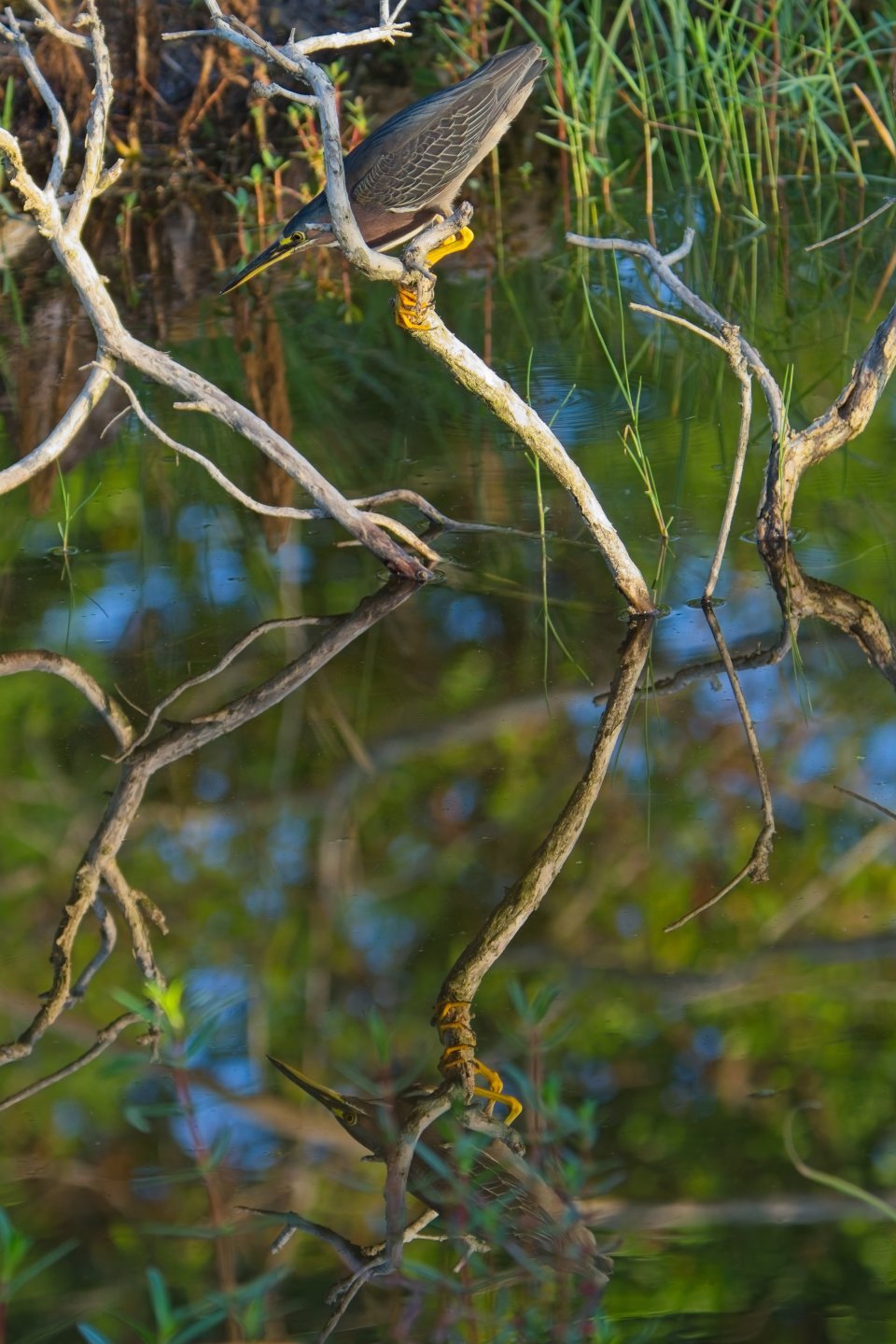
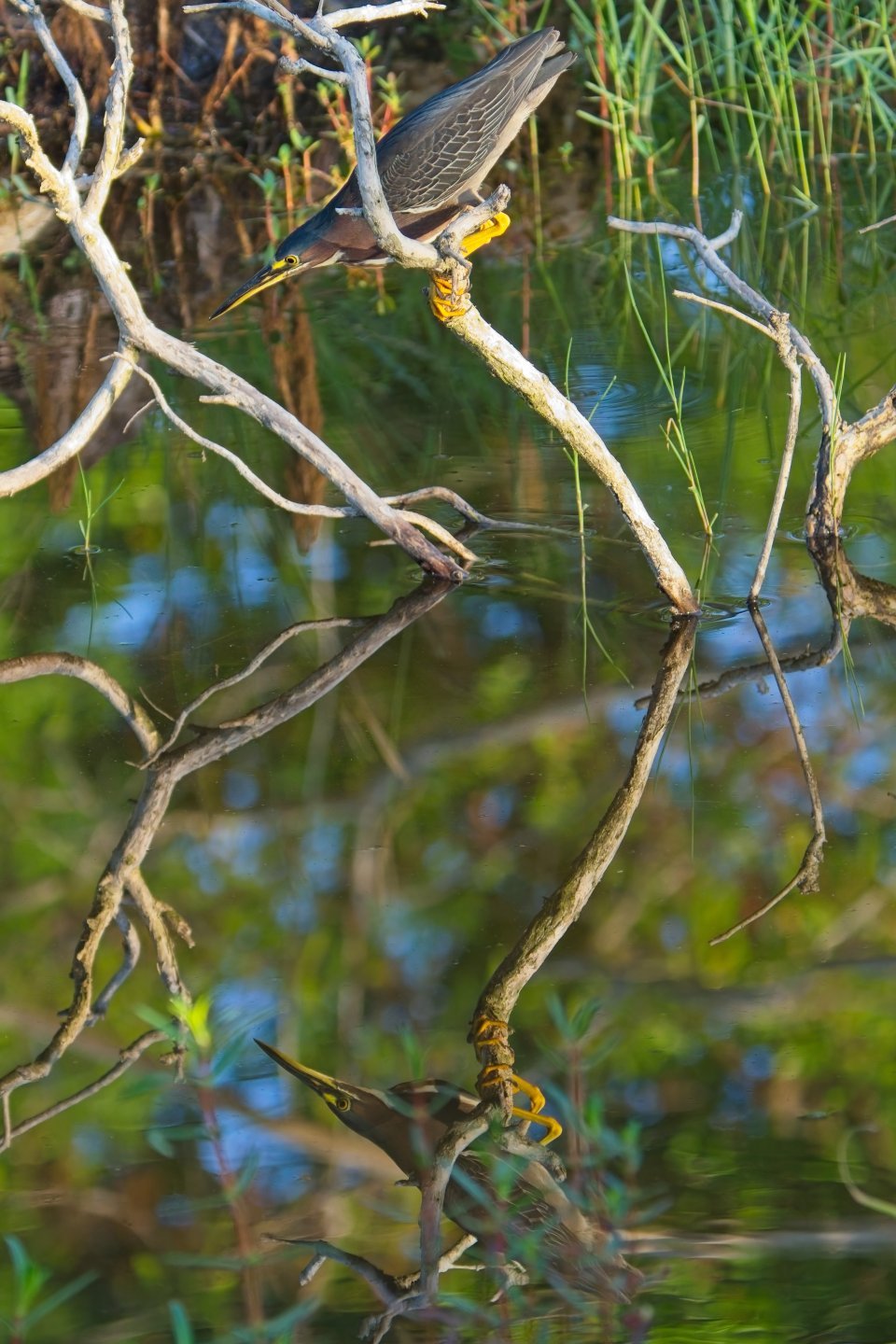
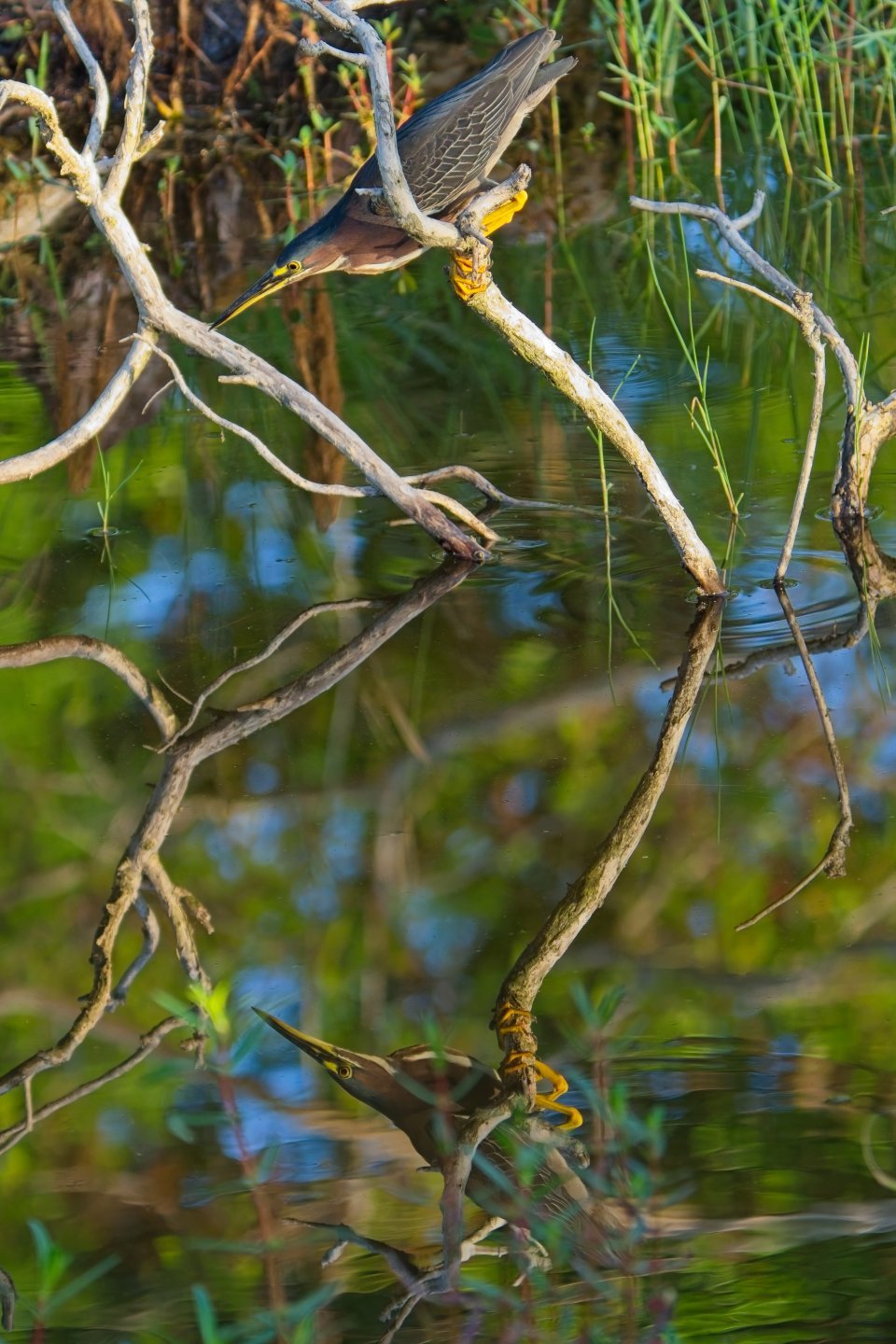
The light over Lakes Park often holds secrets, and among the tranquil waters, a profound stillness is disturbed only by the presence of the Green Heron. This scene is not merely a snapshot; it is a perfect reflection of patience, mastery, and the quiet complexity of life thriving in freshwater wetlands. Perched upon a gnarled bare branch that extends over the calm surface of the water, the heron embodies an ancient equilibrium between stillness and explosive potential. It is oriented toward the left, leaning forward with its long, elegant beak pointed downwards, caught in a moment of intense observation, seemingly studying its own reflection or perhaps contemplating the unseen life beneath the liquid glass. The entire composition is mirrored with striking clarity in the still water below, creating a powerful symmetry that invites the viewer into the heron’s focused world. The setting itself reflects the lush green vegetation and patches of blue sky, bathed in natural, bright light that accentuates every subtle detail of the environment.
To witness this bird in its element is to understand the delicate balance required for survival in a dynamic ecosystem. The Green Heron is not merely a creature of the water; it is an embodiment of the freshwater wetlands, a year-round resident that finds sanctuary throughout Southwest Florida, including the rich freshwater habitats found in places like Lakes Park. Its presence here speaks to the resilience of nature and the profound connection between a bird and its specific environment. The calm, still water surfaces preferred by these hunters are not just aesthetic; they serve as vital instruments for their survival. These smooth reflections act as a second set of eyes, allowing the heron to aid its visual hunting by revealing subtle movements below or at the water’s surface, transforming an otherwise static wait into an active engagement with the aquatic world.
The life of the Green Heron revolves around an extraordinary capacity for patience and stealth. It is a master of stillness, often found poised on low perches directly over calm water, patiently waiting for its sustenance. This patient waiting period is crucial, allowing the bird to maximize the subtle information gleaned from its surroundings. This characteristic hunting style extends beyond simple waiting; Green Herons are known to employ sophisticated tactics, including bait-fishing. They have been observed dropping small objects onto the water’s surface, using these subtle lures to attract unsuspecting prey fish into the immediate vicinity. This behavior showcases a level of cunning and calculated strategy that is essential for navigating the complexities of their freshwater habitat.
The sensory experience of watching this bird unfold is deeply layered. From a distance, its plumage may appear muted in the ambient light. Yet, as the sunlight strikes the bird just right, a stunning transformation occurs. The duller external appearance gives way to shimmering emerald-green and bronze-purple hues across its back and crown, a hidden vibrancy revealed only by the bright light. This interplay of color and light highlights the subtle beauty and adaptation inherent in this species. Furthermore, the details of its posture also convey information about its internal state. While often exhibiting a hunched posture during quiet hunting periods, the heron possesses an astonishing physical capability that belies this calm exterior: a remarkably flexible neck that can rapidly extend to twice its apparent length for a swift, precise strike at prey. This incredible flexibility is the engine behind its deadly accuracy, allowing for instantaneous transition from stillness to motion in a fraction of a second.
The anatomy of the Green Heron is finely tuned for its specialized role as an aquatic hunter. Beyond the powerful extension of its neck, the bird utilizes its physical structure with expert precision. Its strong, long toes are expertly adapted to grip even irregular perches with security. This secure footing is essential, enabling the heron to lean forward deeply and maintain perfect balance while intently observing potential prey below the surface. This mastery over its physical mechanics allows it to leverage the stillness of the water into a deadly advantage.
The diet that sustains this remarkable hunter is intrinsically linked to the richness of the freshwater habitat where it resides. In environments like Lakes Park, the heron’s primary food sources are abundant and diverse. Their diet primarily consists of small fish, frogs, tadpoles, and a variety of aquatic insects, all thriving within the wetland ecosystem. This broad dietary range demonstrates the heron’s adaptability and its role as a critical regulator within the freshwater environment. The presence of these various smaller organisms is directly supported by the clarity and abundance of the water sources that attract them.
The intricate relationship between the predator and its environment is further revealed through subtle behavioral cues. Green Herons are generally solitary creatures when they are away from their breeding colonies. This solitary nature necessitates a strong sense of territoriality, meaning these birds actively defend their favored hunting perches or fishing territories from other herons. This protective instinct underscores the importance of securing prime locations for feeding and resting within the wetland landscape.
The bird’s plumage also offers another fascinating display of adaptation. When the heron is not in a state of intense focus or agitation, its shaggy crest feathers often remain flattened, contributing to its overall streamlined appearance during passive hunting. However, when the bird is highly focused on spotting movement or becomes agitated, these shaggy crest feathers can be visibly raised, adding another layer to the subtle communication of its mood and attention. This dynamic display reveals the constant internal processing that occurs as the heron monitors its environment.
The clear reflections in the calm waters are more than just an aesthetic feature; they are a crucial component of the heron’s sensory toolkit. These still surfaces provide not only visual confirmation of the surroundings but also a means to aid their hunting strategy by revealing movement beneath the surface, making the invisible visible. This use of the environment is a testament to the highly developed observational skills possessed by this magnificent avian species.
The Green Heron's existence in Lakes Park is a living lesson in adaptation and harmony with nature. It demonstrates how stillness can be the most potent form of action, how flexibility can translate into unparalleled power, and how keen observation can unlock hidden resources in the natural world. Observing the heron in this bright light, suspended over the reflective water, is witnessing an ancient, perfected method of life—a quiet, powerful demonstration of nature’s enduring artistry. It remains a profound reminder that the most powerful forces in nature are often found not in rapid movement, but in deep, unwavering patience and perfect synchronization with the natural rhythm.
Follow Adventures in Southwest Florida for more hidden wonders.
No comments:
Post a Comment