The dappled sunlight filters through the canopy of Lakes Park, painting shifting patterns on the rich, damp earth. It is in these verdant, humid pockets that a hidden world thrives, a realm populated by creatures perfectly adapted to the lush environment of Southwest Florida. Amidst the rustling leaves and the scent of decaying wood, a quiet drama unfolds daily, centered around the life of the Five-lined skink. This small reptile embodies the subtle, intricate balance of nature, moving through the familiar landscape with an ancient, instinctive grace.
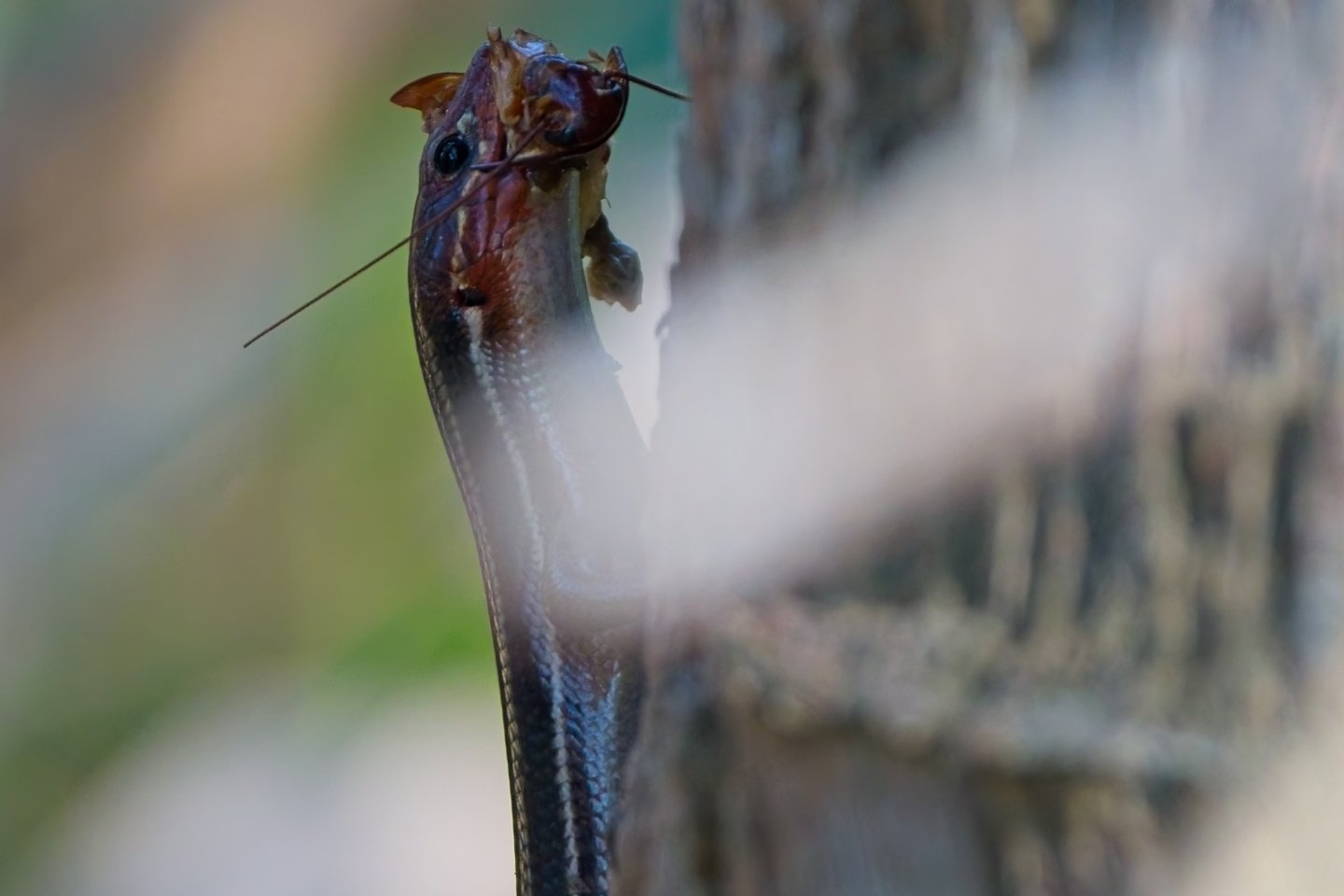
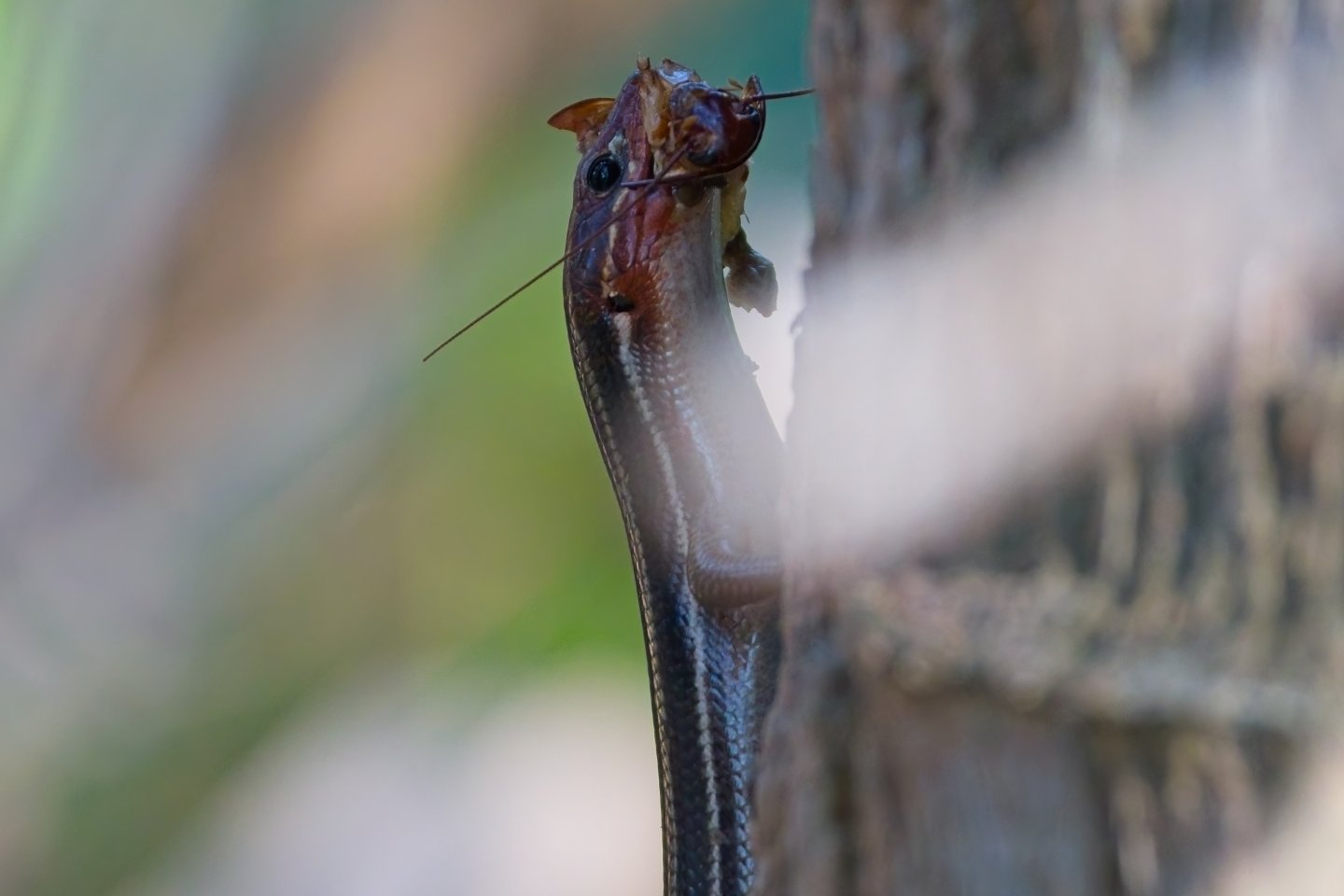
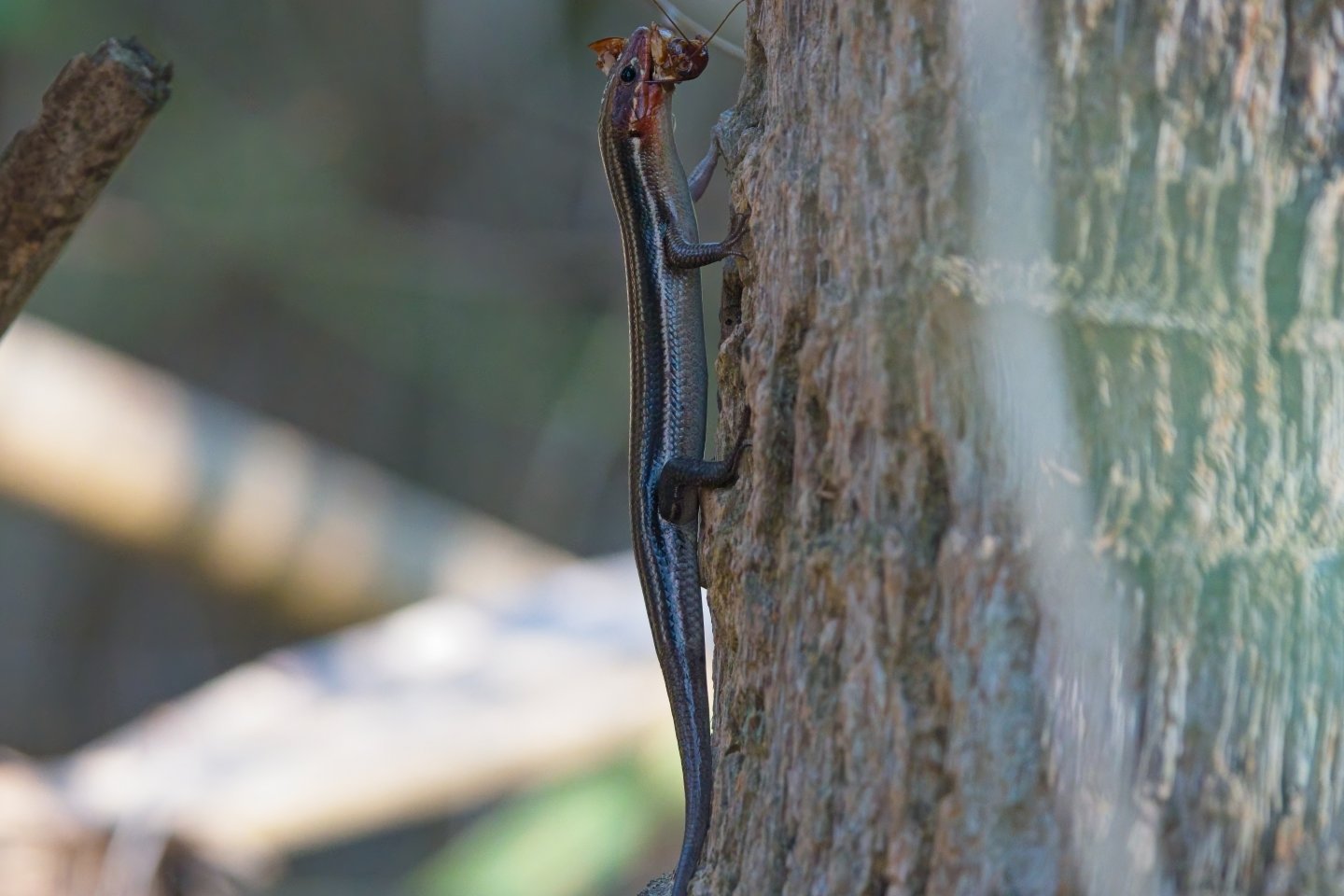
Imagine the scene: high up on the rough bark of an old tree trunk, where shadows dance and moisture clings to the wood, a five-lined skink is engaged in its essential task. Its presence is one of perfect integration with the vertical world. This creature is not merely resting; it is actively utilizing the structures of its habitat, demonstrating a remarkable semi-arboreal nature that allows it to navigate the vertical expanse of the park. The way it clings to the trunk, utilizing excellent grip from its clawed feet, speaks volumes about its physical adaptation to life among trees and fences. This ability to ascend and traverse these surfaces is crucial for both foraging for food and basking in the warmth, linking the creature intrinsically to the complex ecosystem of Lakes Park.
The appearance of the five-lined skink itself is a study in subtle beauty. Its skin is covered in smooth, glossy scales that catch the light, giving it a sleek, almost polished quality. These features are not just aesthetic; they serve an important functional purpose, reducing friction as the creature moves through tight spaces and providing a streamlined appearance suited for its agile lifestyle. As the skink meticulously explores the textures of the bark, it is demonstrating a form of physical efficiency that has adapted over time to suit its niche in the Florida environment.
This hunter’s focus is absolute, honed by an exceptional sensory system. The five-lined skink possesses a keen sense of sight, allowing it to perceive the subtle shifts in light and shadow that betray the location of unsuspecting prey hidden among the leaves and bark. But vision alone is not enough for such precise hunting; this creature relies heavily on its sense of olfaction and the subtle signals it receives from the world around it. It uses specialized sensory tools, including flicking its tongue to sample the air and locate the specific chemical cues that indicate the presence of an insect in the vicinity. This intricate interplay between sight, smell, and touch allows it to successfully pinpoint targets often hidden just beyond the immediate view.
When the opportunity arises, the skink transforms into a swift and silent predator. It is an active forager, darting out from the cover of the shadows to snatch unsuspecting prey. The hunt is a sequence of calculated movements, where keen awareness guides every step. When it finally locates its meal—a large arthropod such as a cricket, grasshopper, or beetle—it possesses specialized tools to secure its catch. Its sharp, conical teeth are perfectly adapted for this task, allowing it to firmly grasp and hold the prey with precision. The act of consuming is methodical; the skink often processes these larger insects with repeated chewing motions before swallowing them whole, a demonstration of efficient energy utilization.
The skink’s physical structure also reveals unique characteristics common among many lizard species. A distinct gular fold, a flap of skin located on the throat, is present in Five-lined skinks, a feature that adds to their distinctive appearance and biological uniqueness. This anatomical detail is part of the broader tapestry of adaptations that allow them to thrive in the warm, humid environment of Southwest Florida. It is a natural feature that contributes to the overall design of this remarkable creature.
The habitat where these lizards flourish—the humid, wooded areas with ample ground cover and vertical structures—provides the perfect stage for this kind of specialized life. When we consider places like Lakes Park, we are looking at an environment where the conditions necessary for a five-lined skink’s survival are abundantly met. The presence of dense foliage, old trees providing vertical pathways, and rich ground cover creates a habitat that is not just suitable, but ideal for these insectivorous reptiles. These environments offer the complexity required for active foraging and secure resting spots, turning a simple park setting into a vibrant corridor of life.
The adaptability of the Five-lined skink is further reflected in its ability to thrive within diverse settings. Whether it is navigating the dense pine flatwoods or the more manicured spaces found within a suburban yard, these lizards demonstrate an incredible capacity to adapt their behavior and physiology to their immediate surroundings. This resilience underscores the inherent connection between the animal and its environment; the skink is a testament to the successful strategies that allow life to flourish in complex natural settings. It navigates this world with quiet confidence, playing its essential role as a vital component of the local biodiversity.
The visual experience of watching a five-lined skink move through the light-dappled woods is a reminder of the intricate details often overlooked in our daily lives. It highlights how small creatures are masters of their domain, constantly engaged in survival, feeding, and exploration within the complex geometry of the natural world. They serve as living examples of fine-tuning, demonstrating how specialized traits—from keen vision to specific methods of consumption—enable successful existence in a demanding environment. Observing these subtle interactions reminds us that even in seemingly tranquil public spaces like Lakes Park, a continuous, dynamic drama of life is unfolding beneath the surface, sustained by the resilience and ingenuity of creatures like the five-lined skink.
No comments:
Post a Comment