The morning light on Lakes Park is a study in subtle transitions—a soft diffusion across the water that catches the movement of light and shadow, transforming the freshwater expanse into a living canvas. Here, amidst the quiet rhythm of the water, dwells a creature of profound aquatic mastery: the Pied-billed Grebe. This bird is not merely a visitor to these tranquil waters; it is a permanent resident, a silent anchor in the ecosystem of Southwest Florida, perfectly integrated into the complex tapestry of Lakes Park.
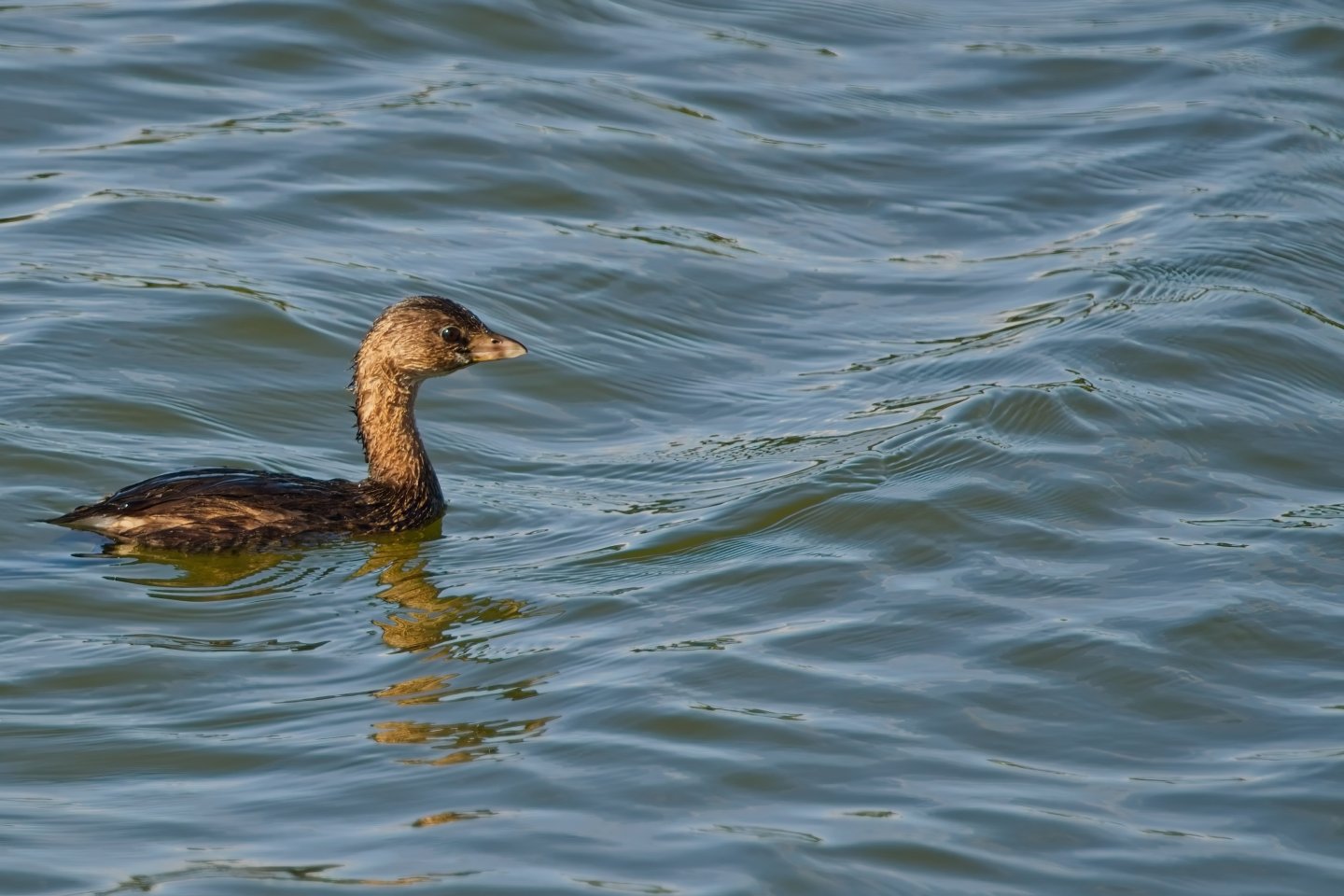
As the scene unfolds, the focus is drawn to the interplay between the water and the plumage of the grebe. A Pied-billed Grebe swims across the subtly rippled surface, its wet, brown feathers reflecting the muted light. The image captures a moment of effortless grace, highlighting an innate ability to navigate the liquid world with supreme efficiency. Positioned in the lower-left quadrant of the frame, the bird’s presence is anchored by the textured water that spreads across the rest of the image, emphasizing the depth and texture of its environment. Its head is turned slightly to the right, a posture of keen alertness, peering into the distance, suggesting a constant vigilance for both the bounty beneath the surface and the unseen shifts in the surrounding landscape.
The life of the Pied-billed Grebe is defined by its extraordinary adaptations to a submerged existence. The way it interacts with the water is a masterful demonstration of biological engineering designed solely for aquatic life. One of the most remarkable secrets held by this species is their capacity to control their buoyancy. They possess a unique ability that allows them to manipulate how they float, precisely controlling their position within the water column by compressing their feathers and expelling trapped air. This subtle manipulation enables them to slowly sink out of sight with complete silence, avoiding any disruptive splash as they move into the deeper shadows below the surface.
This mastery of buoyancy is further supported by their physical structure. Their dense plumage is not merely for insulation; it functions actively in maintaining a neutral buoyancy that is crucial for extended periods of submergence. The water readily absorbs into these feathers, creating an effective seal that aids the bird in remaining submerged for lengthy durations without expending unnecessary energy fighting the current. This specialized relationship between feather and water allows them to remain hidden, patiently observing their world from the depths.
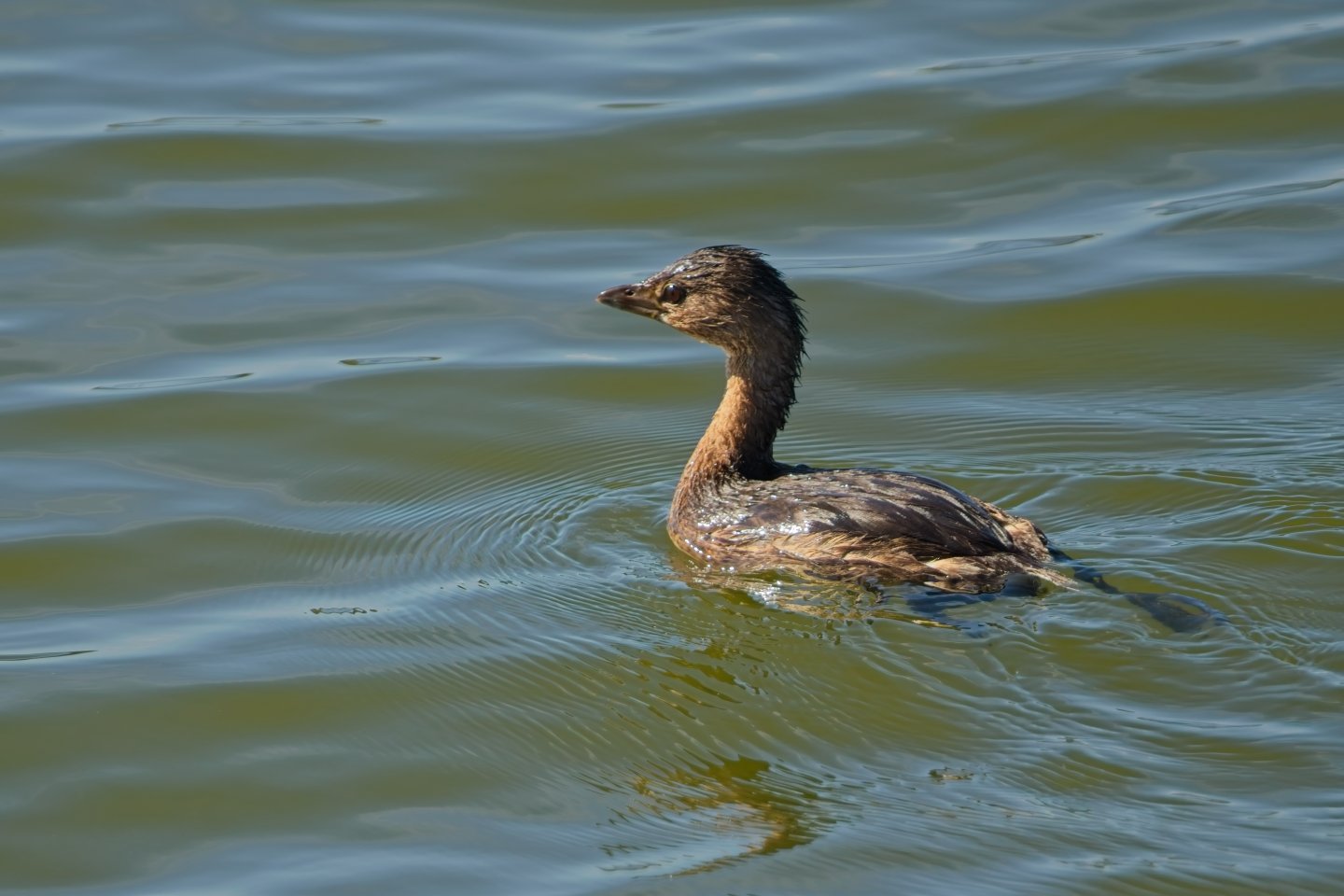
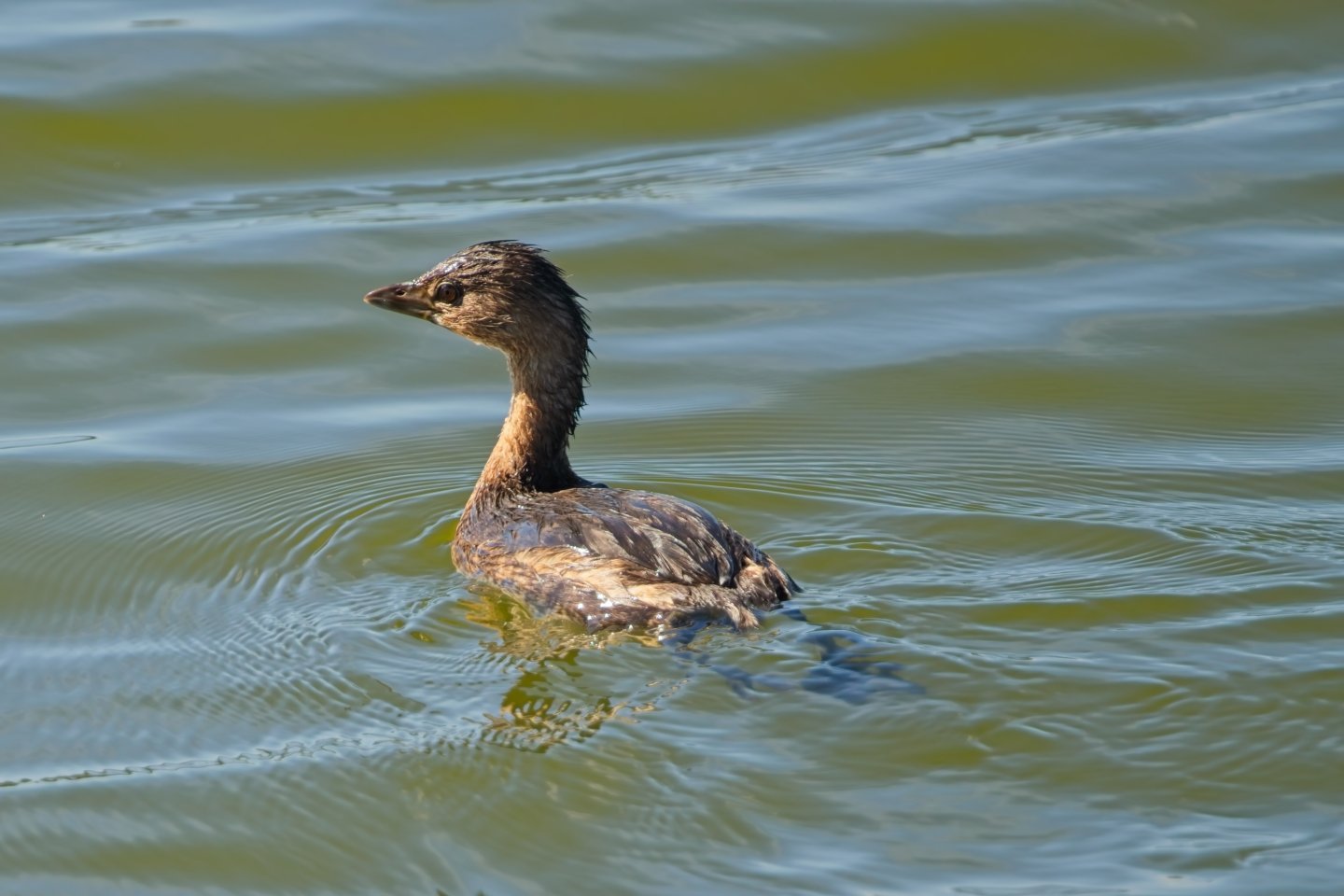
When a Pied-billed Grebe is engaged in hunting or heightened vigilance, its physical posture shifts to an almost ethereal state. It frequently swims with only its head and neck visible above the surface—a behavior that can be described as periscoping. This method of viewing allows the bird to effectively scan its surroundings for both potential threats lurking in the shadows and the movement of prey hidden below the water line. The act of turning the head at various angles, utilizing precise monocular vision, transforms the simple act of swimming into a sophisticated system of sensory input, allowing them to navigate complex aquatic environments with acute awareness.
The mechanics of underwater propulsion are equally specialized. Unlike many other water birds, the powerful legs of the Pied-billed Grebe are set far back on their bodies. This anatomical arrangement is optimized entirely for generating strong propulsion beneath the surface, granting them incredible power when diving and hunting. While this setup provides phenomenal underwater thrust, it contributes to a certain awkwardness and lack of agility when they are on land, underscoring their specialized existence as obligate aquatic hunters.
The true agility of this bird is revealed in its feet. Where other waterfowl rely on fully webbed feet, the grebe possesses uniquely lobed toes. These specialized appendages offer highly efficient propulsion, allowing for agile and precise maneuverability during intense underwater pursuits. This configuration allows them to execute complex dives and quick adjustments necessary to capture fleeting opportunities in their environment.
The diet of the Pied-billed Grebe is intrinsically linked to its lifestyle within freshwater habitats like Lakes Park. Their sustenance comes from the rich aquatic life that thrives in these lakes. They primarily focus their efforts on small fish, crayfish, and large aquatic insects, which they meticulously catch during their underwater dives. This dependence on precise hunting techniques means that every dive is a calculated endeavor, a silent hunt orchestrated by instinct honed over generations.
There is an even more fascinating aspect of the grebe's existence, an unusual biological behavior that speaks to a unique interaction with its own body. It is known that the Pied-billed Grebe consumes its own feathers. This action is not a mere habit but a survival mechanism; it is believed to serve the purpose of protecting their digestive tract from the sharp bones of the fish and crustaceans that form their diet. This behavior highlights an intricate level of self-management, demonstrating how the bird continuously adapts its physiology to ensure survival in its aquatic niche.
The ability to remain submerged for extended periods further emphasizes their deep connection to the water. While a typical dive might last between ten and thirty seconds, these birds are capable of staying underwater for over a minute when the conditions demand it. This endurance, coupled with their remarkable physical adaptations, paints a vivid picture of a creature perfectly attuned to the aquatic environment of Lakes Park. They are living embodiments of adaptation, demonstrating how subtle physical structures can translate into extraordinary skills for survival and thriving in a freshwater habitat.
To observe a Pied-billed Grebe in its natural setting is to witness a profound display of natural engineering. The interaction between light, water, and these unique biological mechanisms reveals a world operating on principles of silent efficiency and deep, innate knowledge of the aquatic realm. They glide through the rippling surface, embodying a quiet power that resonates with the stillness of Lakes Park, reminding us that the most spectacular wonders of nature often reside in the subtle details of adaptation and existence.
Follow Adventures in Southwest Florida for more hidden wonders.
No comments:
Post a Comment