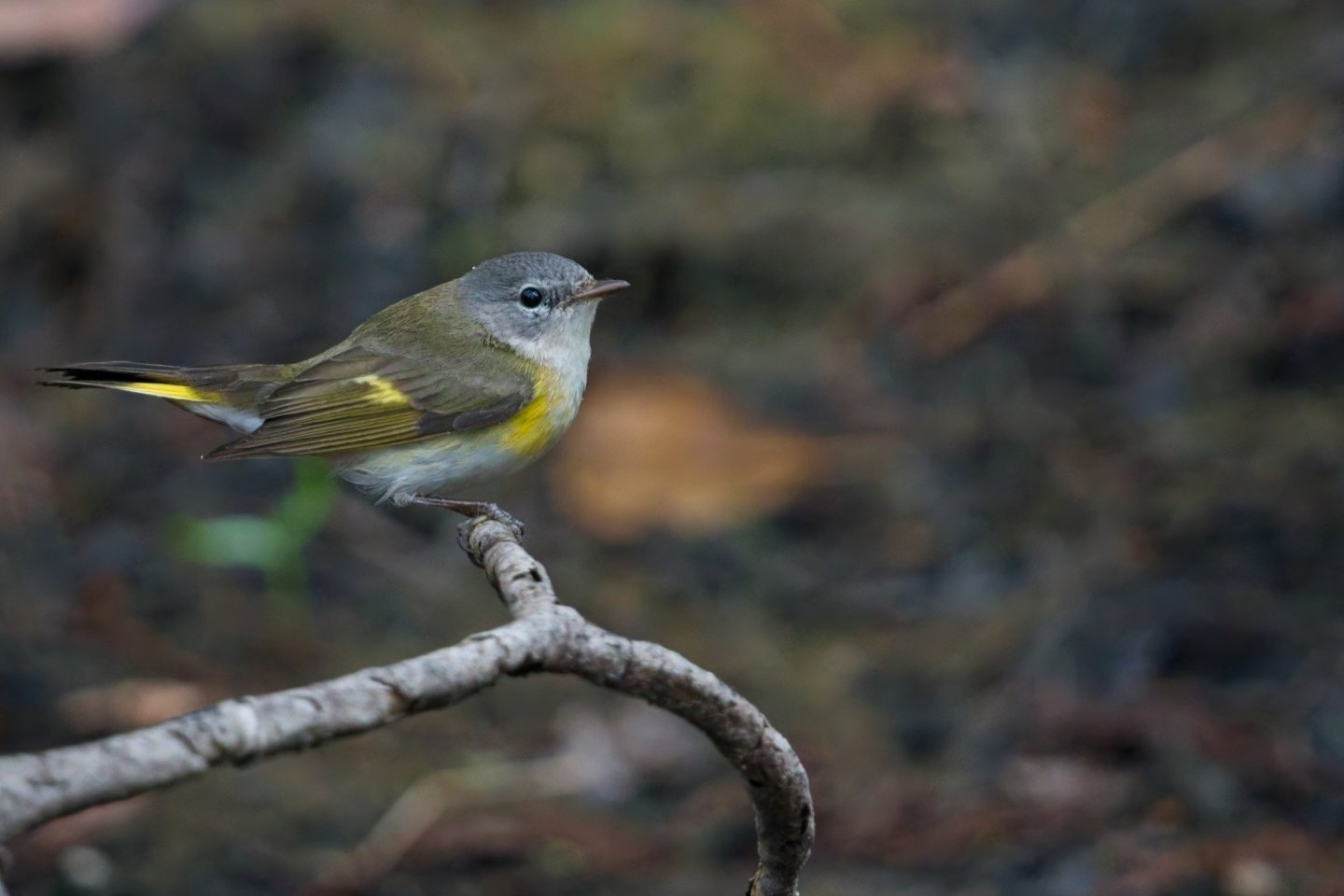
The air hangs heavy and humid over the Six Mile Cypress Slough Preserve, a sanctuary where the rich tapestry of wetland and canopy blends into a soft, muted palette of greens and deep browns. Sunlight filters down in gentle, even rays, illuminating the dense foliage and the slow, rhythmic breathing of the environment. High above, perched on a gracefully curved, bare branch, an American Redstart pauses in a moment of perfect stillness, gazing softly toward the right. This is a portrait of life unfolding in the heart of Southwest Florida, a delicate encounter between avian presence and the lush complexity of the subtropical habitat.
This scene captures more than just a bird; it reveals a critical facet of the regional ecosystem. The setting itself—the Six Mile Cypress Slough Preserve—is more than just land; it functions as an essential corridor and a vital stopping point for countless journeys traversing the humid corridors of the neotropical realm. It is here that the American Redstart finds refuge, utilizing the wetland environment not merely for water but for sustenance and safe passage during migratory cycles. The light catches the bird's plumage, highlighting the subtle yet striking patterns that define this species, embodying a quiet, watchful presence within the dense backdrop of Florida’s natural landscape.
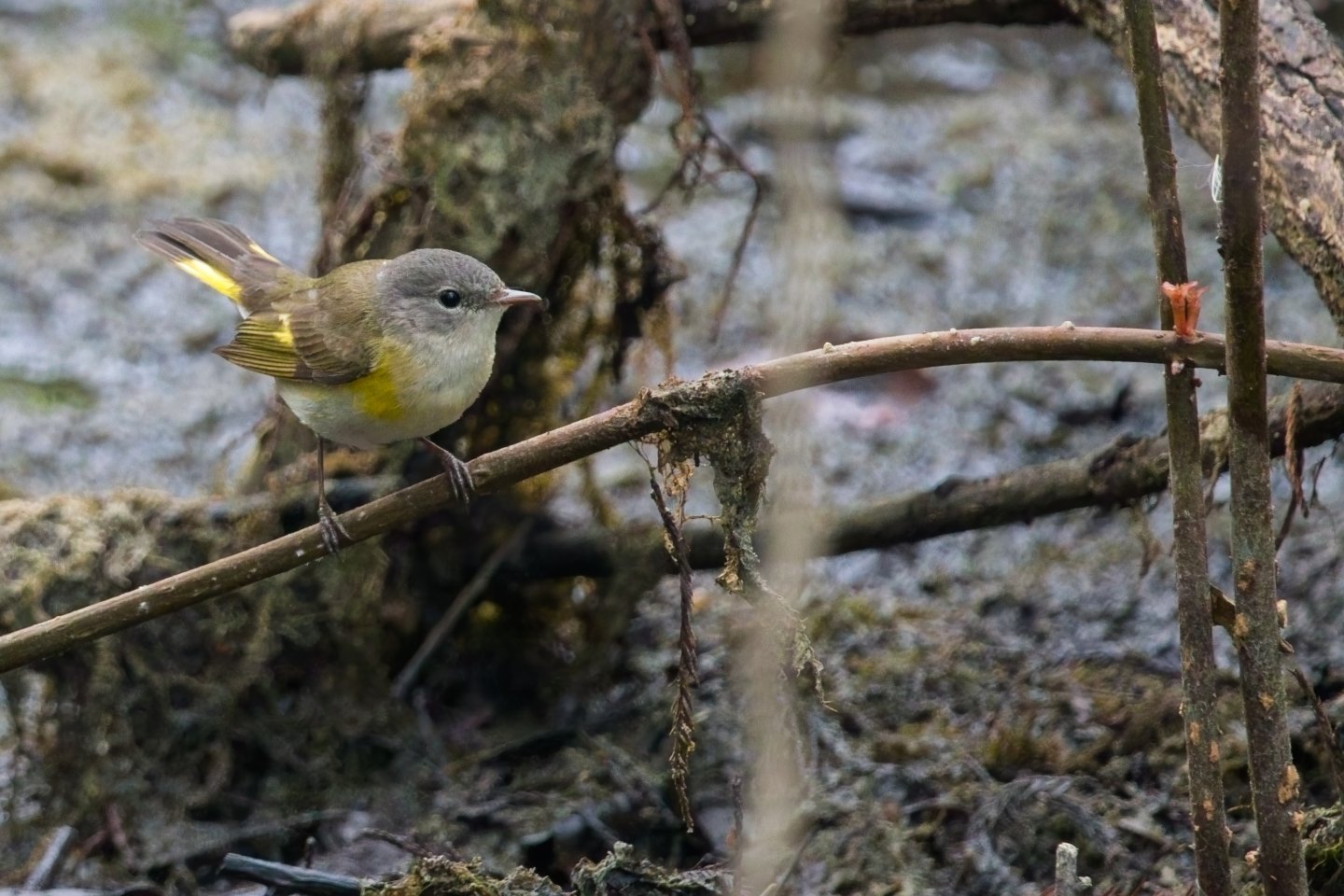
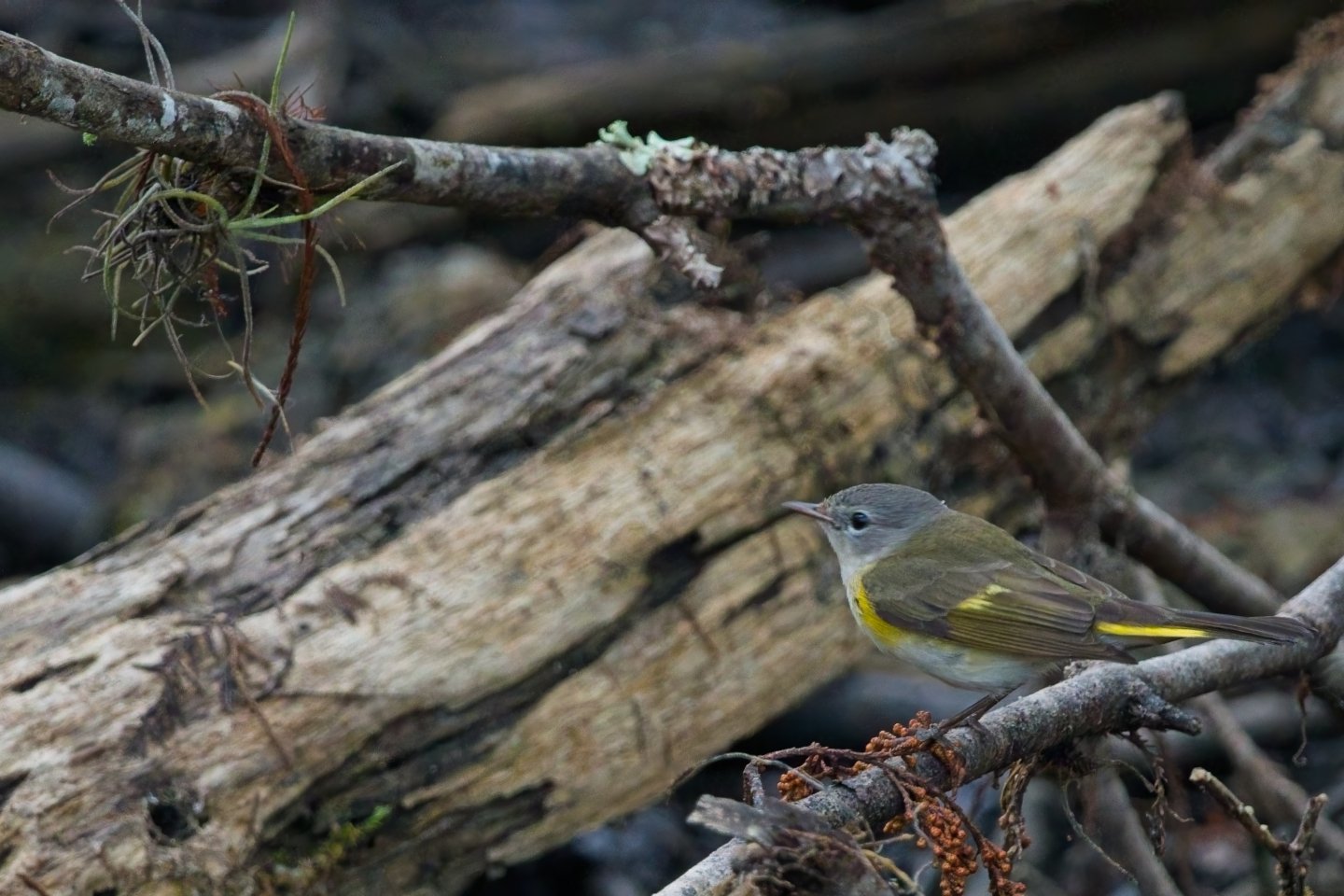
The visual details of the bird are captivating: its head is a calm, muted grey, contrasting gently with an olive-yellow expanse across its back. This coloration is further punctuated by brilliant, unmistakable patches of bright yellow marking its wings and flanks. This distinct patterning signals something specific about the bird’s identity—it indicates that the individual is either a female or an immature male American Redstart. These vibrant marks are not merely decorative; they serve a profound biological purpose within this environment. They act as potent flash signals, momentarily startling insects into movement, making them easier targets for the foraging bird. This interaction between light, pattern, and insect life highlights the intricate, finely tuned relationship these birds maintain with their immediate surroundings.
These migratory birds are masterful navigators of their realm, undertaking long nocturnal migrations that link northern breeding grounds to southern wintering areas. Florida serves as a significant corridor along this extraordinary route, facilitating the movement of these neotropical migrants between the dense forests and the expansive wetlands they rely upon for survival. The timing of their presence in this region is intrinsically linked to the seasonal shifts; American Redstarts typically arrive in late summer and depart by late spring, finding this non-breeding season within the sheltered environment of Southwest Florida. This seasonal rhythm underscores how intimately tied the health of these birds is to the cyclical changes of the regional climate and habitat availability throughout the year.
The daily activities of the Redstart are characterized by active foraging, a constant engagement with the abundant resources available in the wetland ecosystem. Unlike many other bird species that remain confined to the dense foliage of the canopy, American Redstarts exhibit a remarkable ability to forage across all canopy levels. They move confidently from the understory and dense shrubbery right up to the tree crowns, expanding their access to the varied array of prey sources hidden within the complex structure of the wetland trees and surrounding vegetation. This flexibility in hunting strategy allows them to exploit the rich diversity of insects that thrive in this specific wetland environment.
When a Redstart settles on an exposed perch, such as the bare branch seen in this image, it utilizes these vantage points strategically. These exposed perches are not merely resting spots; they serve as essential lookout positions, allowing the bird to sally out and survey the surrounding environment for hidden insects. It is from these elevated positions that the foraging behavior becomes most evident. The Redstart employs a characteristic method of hunting, utilizing swift movements—fanning its tail and flicking its wings with practiced ease—to flush hidden insects out from the foliage and stems. This dynamic action is a testament to their efficient predatory style, ensuring they capture the plentiful food sources that are abundant in these moist, insect-rich wetland habitats.
As primary insectivores, the dietary needs of the American Redstart dictate much of its interaction with the environment. They thrive by preying on a wide variety of insects, including the numerous caterpillars, various flies, and beetles that proliferate in the rich biodiversity of the wetland ecosystem. The abundance of these invertebrate populations directly supports the health and survival of the Redstarts within this crucial stopover habitat. The sheer density of these insect lifeforms provides the foundation for the remarkable foraging success of these migrants during their critical passage through Southwest Florida.
The ecological role of the American Redstart is profound, reflecting the delicate balance of the wetland environment. By actively consuming large numbers of insects, they play a key role in regulating the populations within this ecosystem. Their presence and activity in places like the Six Mile Cypress Slough Preserve emphasize how crucial these areas are for maintaining biodiversity and supporting migratory life. The regular eBird observations for this area, particularly between October and April, further underscore the consistent presence of these migrants, confirming Florida’s status as a necessary passage point for their extraordinary journey.
Observing this bird in its natural setting offers a deep appreciation for the subtle mechanisms that govern life in nature. The quiet interaction of light, pattern, behavior, and habitat transforms a simple observation into a profound understanding of ecological dynamics. The Redstart, perched calmly above the shimmering water of the slough, embodies resilience and adaptation, navigating the complex world of migration with instinct and grace. It serves as a living reminder of the delicate interconnectedness that exists within the natural world, where every species plays a vital part in the continuity of the landscape.
The experience of witnessing this scene is one of tranquil awe. The soft light illuminates the subtle textures of the branch and the brilliant colors of the bird, inviting the observer to slow down and consider the immense journeys and daily efforts undertaken by these remarkable creatures. The Six Mile Cypress Slough Preserve becomes a focal point, not just for its physical beauty, but for its deep significance as an anchor in the migratory paths of countless species, including the American Redstart. It is a place where the rhythms of nature are played out in slow motion, offering a window into the essential, living complexity of the natural world. The bird remains, in this moment, a perfect emblem of life thriving within the humid, vibrant heart of Florida.
No comments:
Post a Comment