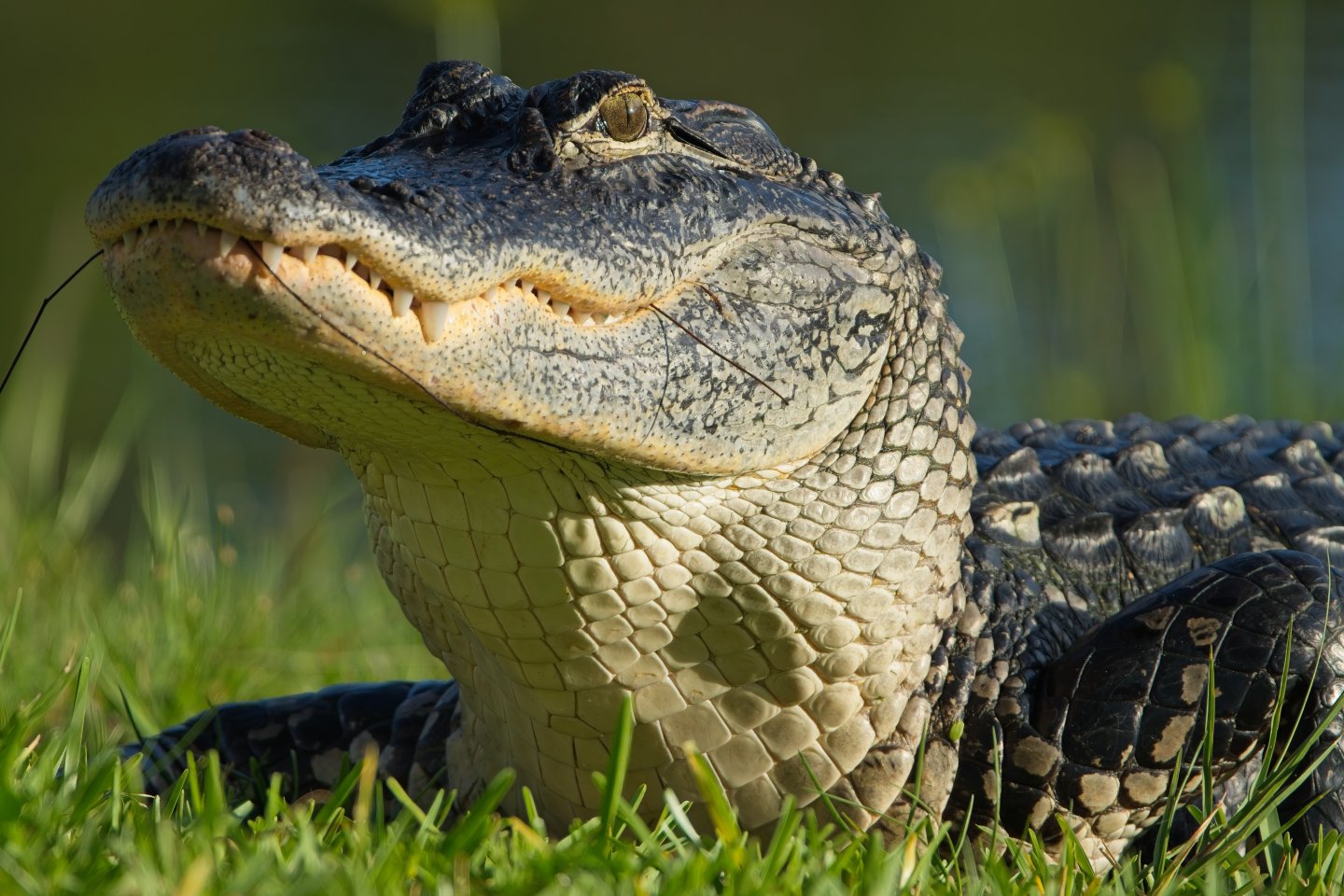
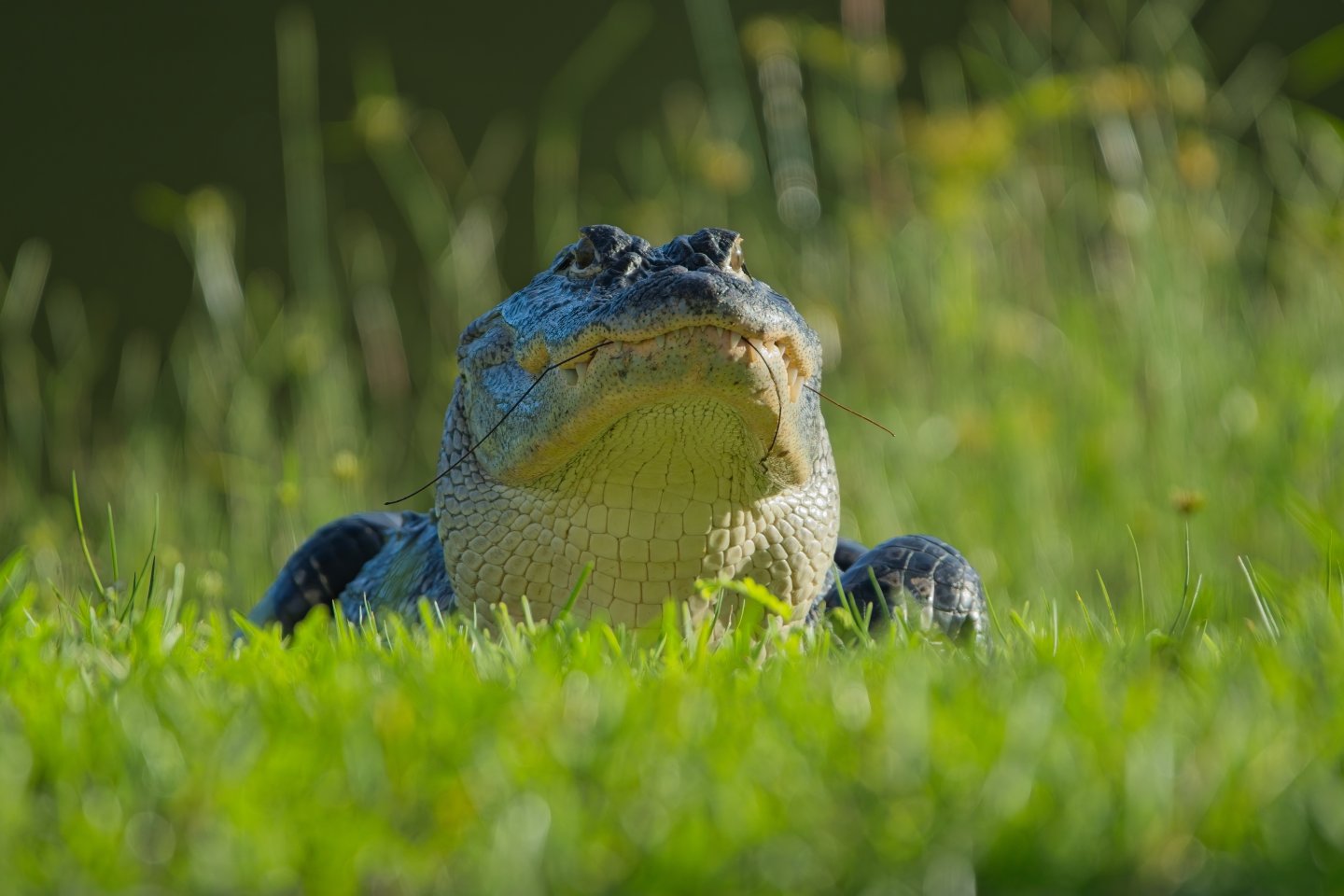
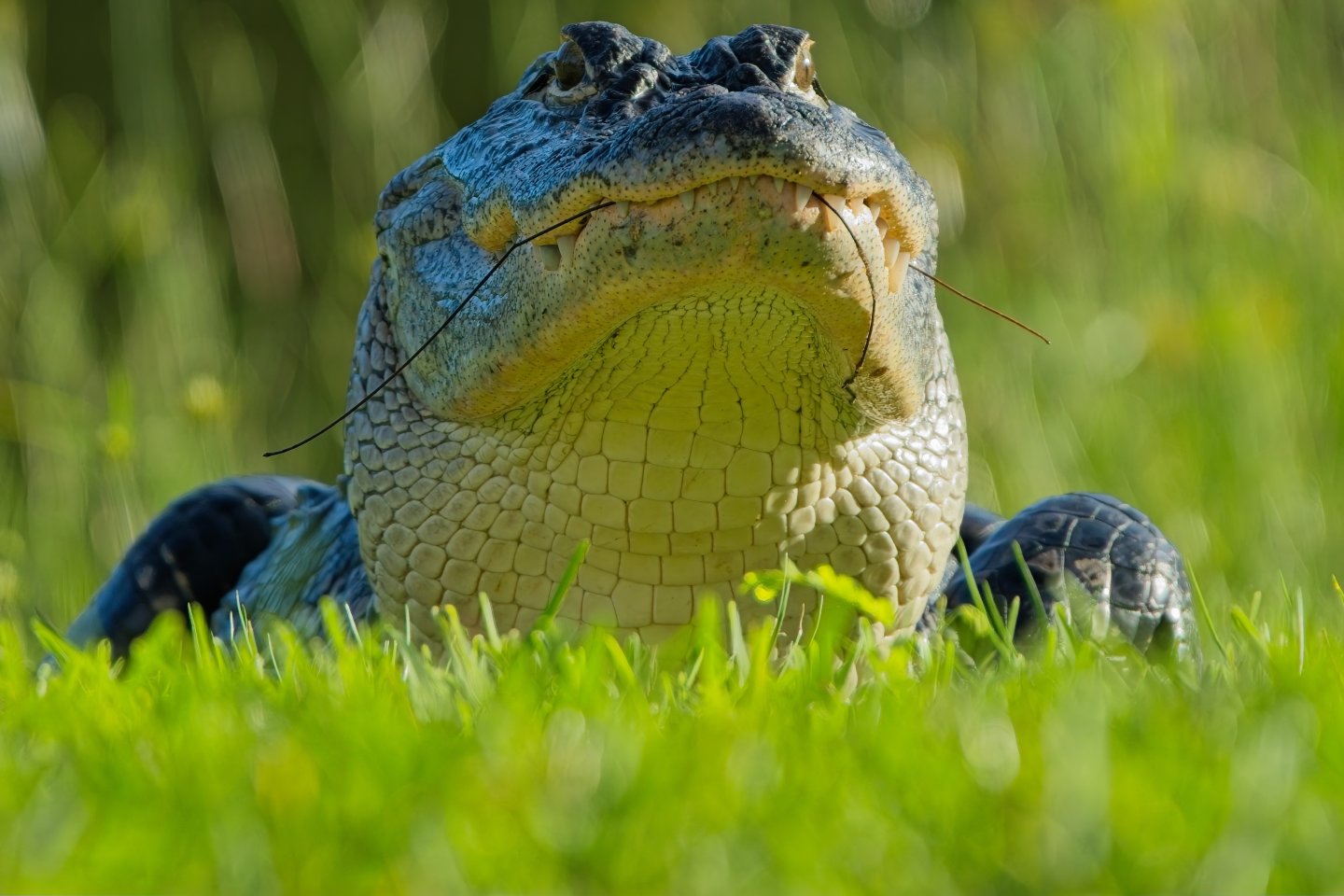
The morning light at Lakes Park casts a warm, golden sheen across the bright green expanse of the grass, creating an atmosphere of profound stillness. Resting amidst this vibrant foliage is an American alligator, its presence both ancient and perfectly integrated into the landscape. The photograph captures a moment of quiet contemplation; the reptile looks slightly upwards and to the left, its mouth gently agape, revealing the moist oral membranes—a physical expression of a timeless biological necessity. This powerful creature is not merely resting on the bank; it is actively engaged in the fundamental process of regulating its internal state by interacting with the environment. The interplay between the sun, the water, and the grassy earth defines this scene, painting a portrait of an apex presence within a thriving freshwater ecosystem.
The act of basking is more than simple warmth absorption; it is a critical biological maneuver for the alligator. As the sun warms the surrounding air, the reptile uses its body to manage the heat accumulated from prolonged periods spent in the cool waters. To achieve this thermal balance, the alligator regulates its internal temperature by gaping its mouth, exposing those moist oral membranes to the warming Florida sun. This process of evaporative cooling is essential for maintaining optimal body temperature when basking on the grassy banks. It highlights how deeply connected these magnificent reptiles are to the thermal dynamics of their environment, demonstrating an innate understanding of how to harness external energy for survival and comfort. As the golden light illuminates its textured scales, it reveals a complex surface designed for both camouflage and protection, emphasizing the alligator’s role as a living embodiment of patience and enduring strength within this lush setting.
Beneath the surface of the visible form lies a structure of remarkable biological engineering. The skin of the American alligator is covered in textured scales that serve multiple purposes, contributing to its formidable appearance while facilitating essential physiological functions. Embedded deeply within these scales are bony plates known as osteoderms, intricate structures that provide robust protection for the animal. These embedded plates do more than just offer physical defense; they play a vital role in calcium regulation and help the alligator efficiently absorb solar warmth, allowing it to optimize its internal temperature throughout the day. This remarkable system underscores the reptilian design’s ability to thrive in diverse and demanding environments, seamlessly integrating protection and thermoregulation into a single, powerful form.
The relationship between these giants and their habitat at Lakes Park is symbiotic. As primarily aquatic creatures, American alligators regularly emerge onto the comfortable grassy banks to elevate their body temperature, particularly following extended periods spent submerged in cooler water. This emergence is not just a casual occurrence but a necessary behavior for thermoregulation, allowing them to harness the generous, direct sun to fuel their metabolism. Furthermore, basking in this warm light allows the alligator to synthesize Vitamin D3, a substance crucial for their calcium metabolism and overall bone health. This integration of environmental warmth into metabolic processes illustrates how perfectly adapted these animals are to their specific Florida wetlands, utilizing the natural resources of Lakes Park to maintain peak physical condition.
The environment of Lakes Park provides an ideal freshwater sanctuary where these alligators are a common and integral sight, serving as an anchor for the local wildlife community. The health of this ecosystem is intrinsically tied to the presence of these large predators, which play a crucial role in maintaining the overall balance of the wetland. During the dry seasons, when water levels fluctuate, the alligators exhibit instinctive behaviors that further shape the landscape. They dig "gator holes" within the soft sediments of the wetlands, creating vital depressions that serve as essential water sources and indispensable refugia for other aquatic wildlife struggling to survive in fluctuating conditions. These actions illustrate a deep, instinctual connection between the apex predators and the physical structure of the habitat, demonstrating how they actively sustain the life around them.
Beyond their role as ecosystem regulators, the American alligator possesses specialized sensory abilities that further underscore its existence in this complex world. Specialized integumentary sensory organs on its powerful jaws are uniquely equipped to detect minute pressure changes in the surrounding water. These subtle detections aid the alligators in pinpointing the location of prey, granting them an acute awareness of their watery domain. Furthermore, when submerged or when resting near the surface, they possess a transparent nictitating membrane, or "third eyelid," which sweeps across the eye to protect it and maintain clear vision. These sophisticated sensory adaptations allow the alligator to navigate and interact with its environment with remarkable precision, enhancing its capacity to survive as an apex predator within this unique Florida ecosystem.
In this setting at Lakes Park, the American alligator stands as the undisputed force of nature—a silent guardian whose presence dictates the intricate balance of the wetland. As a polyphyodont species, these magnificent reptiles are continuously replacing lost teeth throughout their lives, a remarkable biological feature that underscores their enduring presence and resilience across decades. Their existence is a profound testament to the power of natural adaptation and the deep interconnectedness between living things and the landscapes they inhabit. Observing them in the golden light of the morning at Lakes Park offers a humbling perspective on the enduring rhythms of nature, revealing a world where immense power coexists with serene balance.
No comments:
Post a Comment