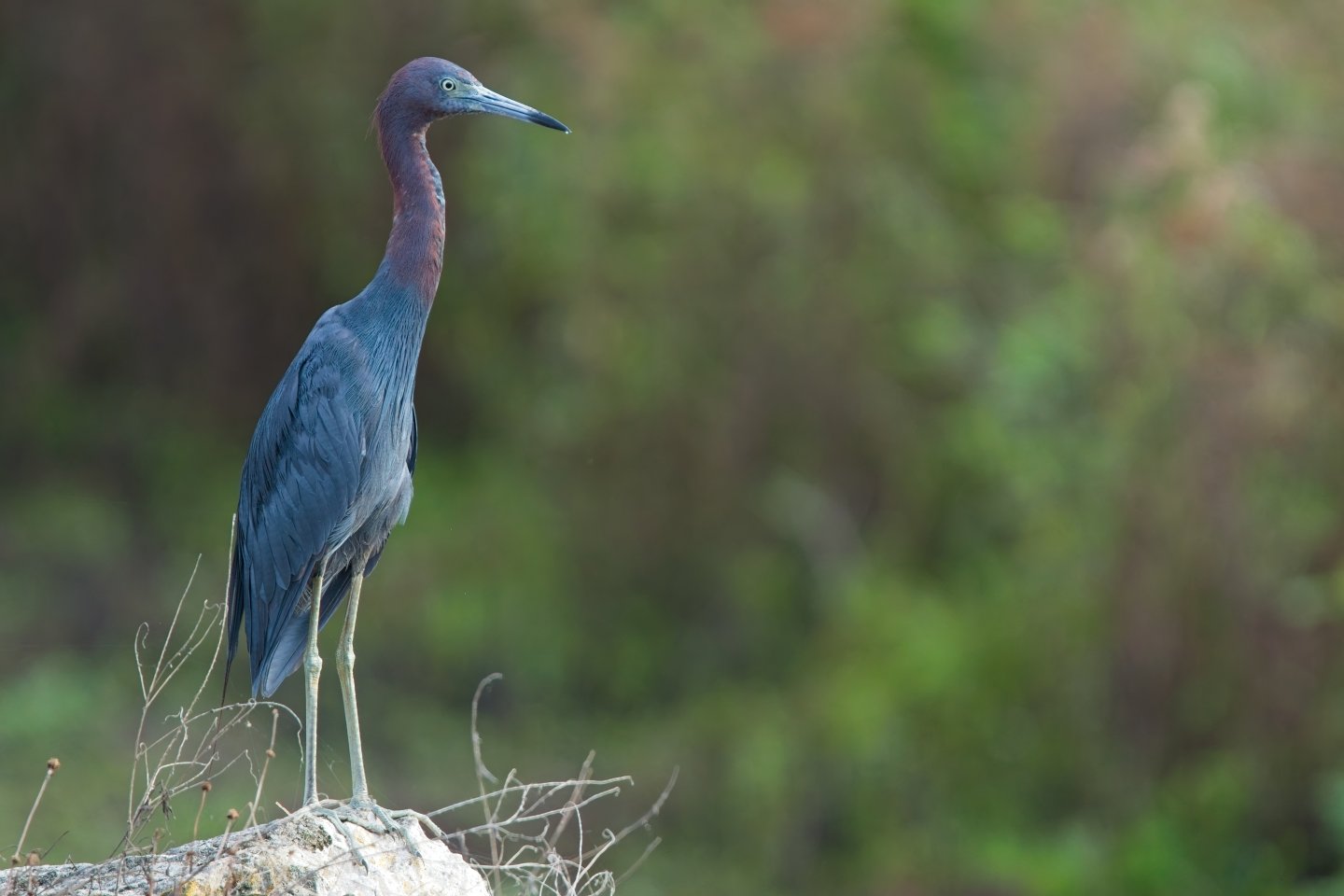
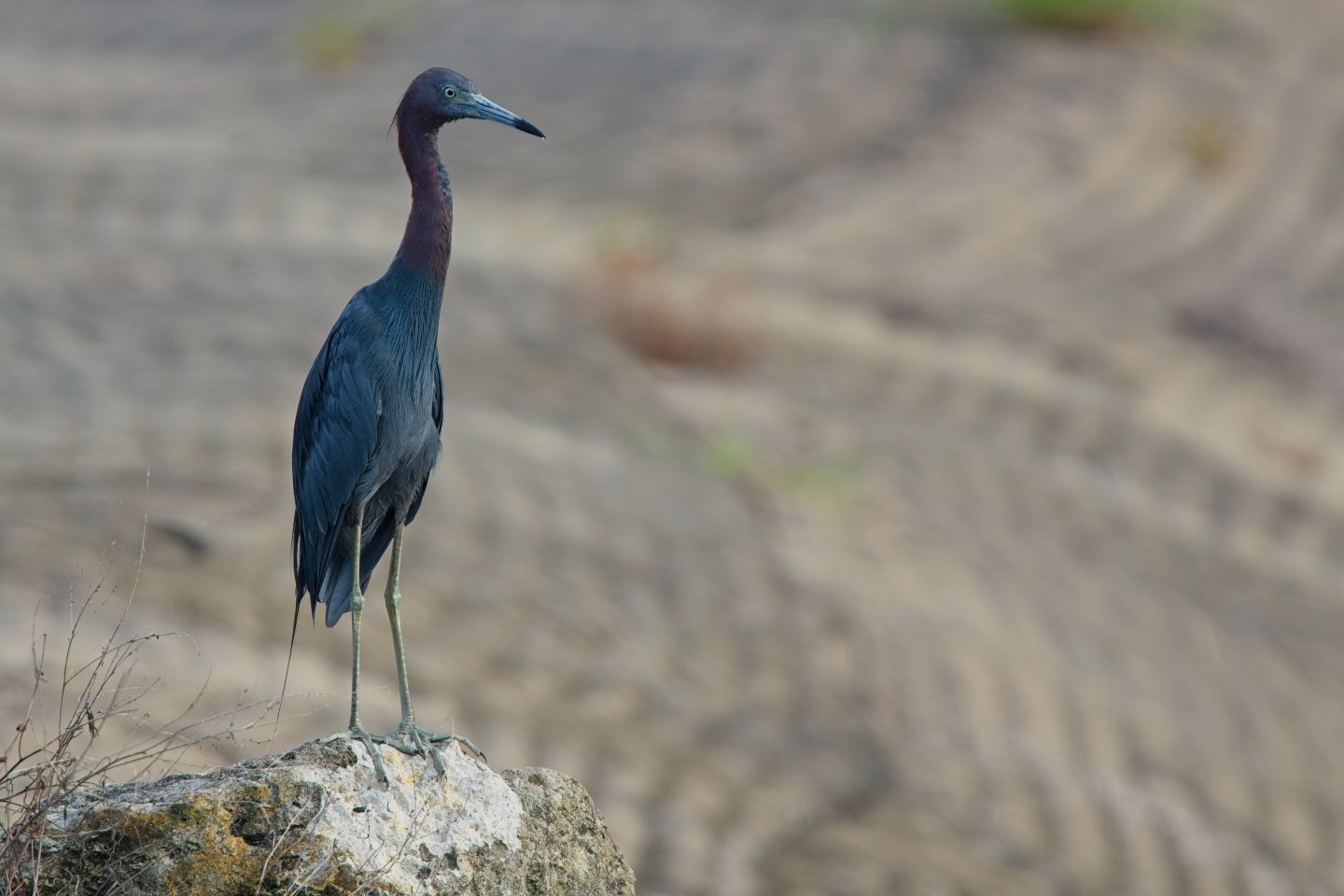
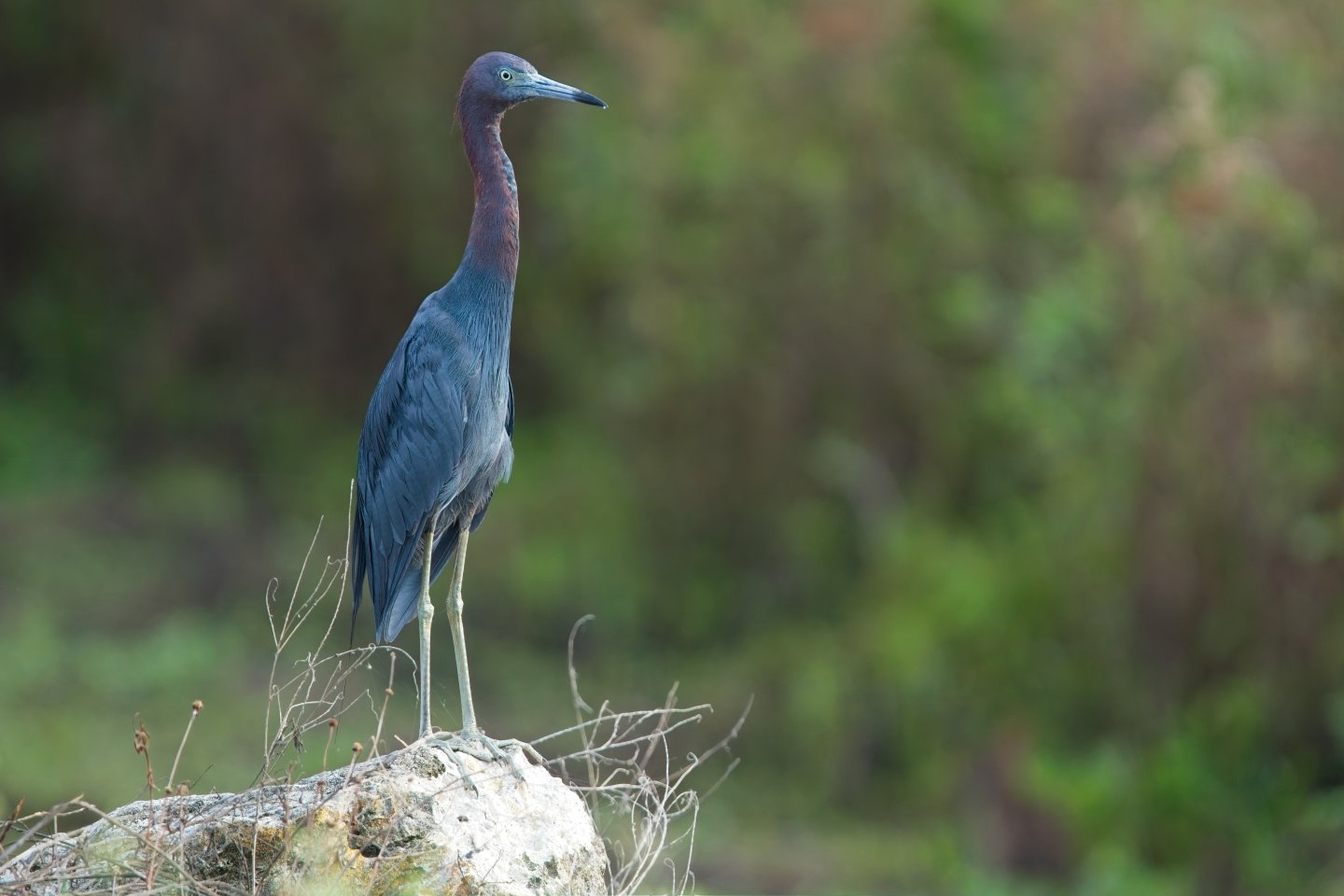
A vibrant, deep slate-blue feather catches the morning sun as a Little Blue Heron stands poised on a rocky ledge at Harns Marsh Preserve. Its head, marked with purplish-maroon hues, holds an intense, focused gaze toward the water, a striking vision against the softly blurred green of the marsh background. This elegant sentinel is an emblem of focused intent, surveying the hidden depths with unwavering resolve.
Such profound stillness defines the heron’s primary hunting art. Unlike many other species that forage in groups, this bird prefers solitude, remaining completely motionless to wait for prey. In these restored wetlands, which offer ideal rocky structures and shallow marsh environments, the Heron targets small fish, tadpoles, frogs, and aquatic insects dwelling beneath the surface.
The environment of Harns Marsh Preserve is perfectly suited to this species, as the area was once a rock mine but has since been restored to support vital wildlife habitat. These natural features provide the perfect hunting grounds for the heron, allowing it to practice its unique foraging techniques. Sometimes, the Heron subtly stirs the water with one foot to flush out hidden creatures, or spreads its wings to create a shaded surface, which dramatically improves its visibility of prey below.
As the season shifts, the beauty of these birds is heightened. During the breeding season in Florida, from March through August, the purplish-maroon coloration on their head and neck plumage appears most vibrant. These sightings confirm that Little Blue Herons are regularly found here, establishing Harns Marsh Preserve as a critical part of their established range.
This patient hunter remains a guardian of this dynamic wetland. Despite being classified as Least Concern globally, the populations face local challenges from habitat loss, making protected areas like this preserve an essential sanctuary for these beautiful and graceful birds.
No comments:
Post a Comment