Roseate spoonbill at J.N. Ding Darling National Wildlife Refuge
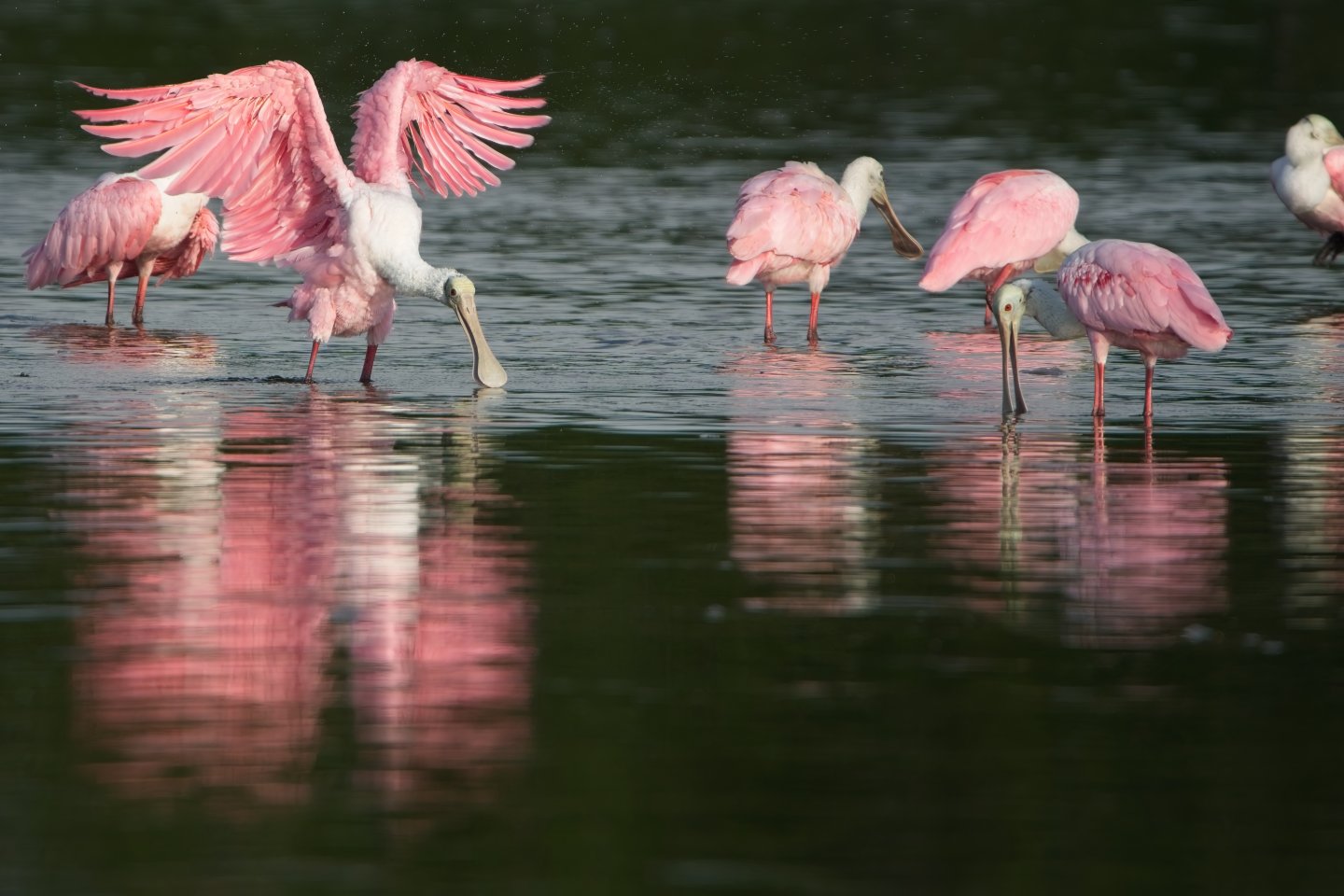
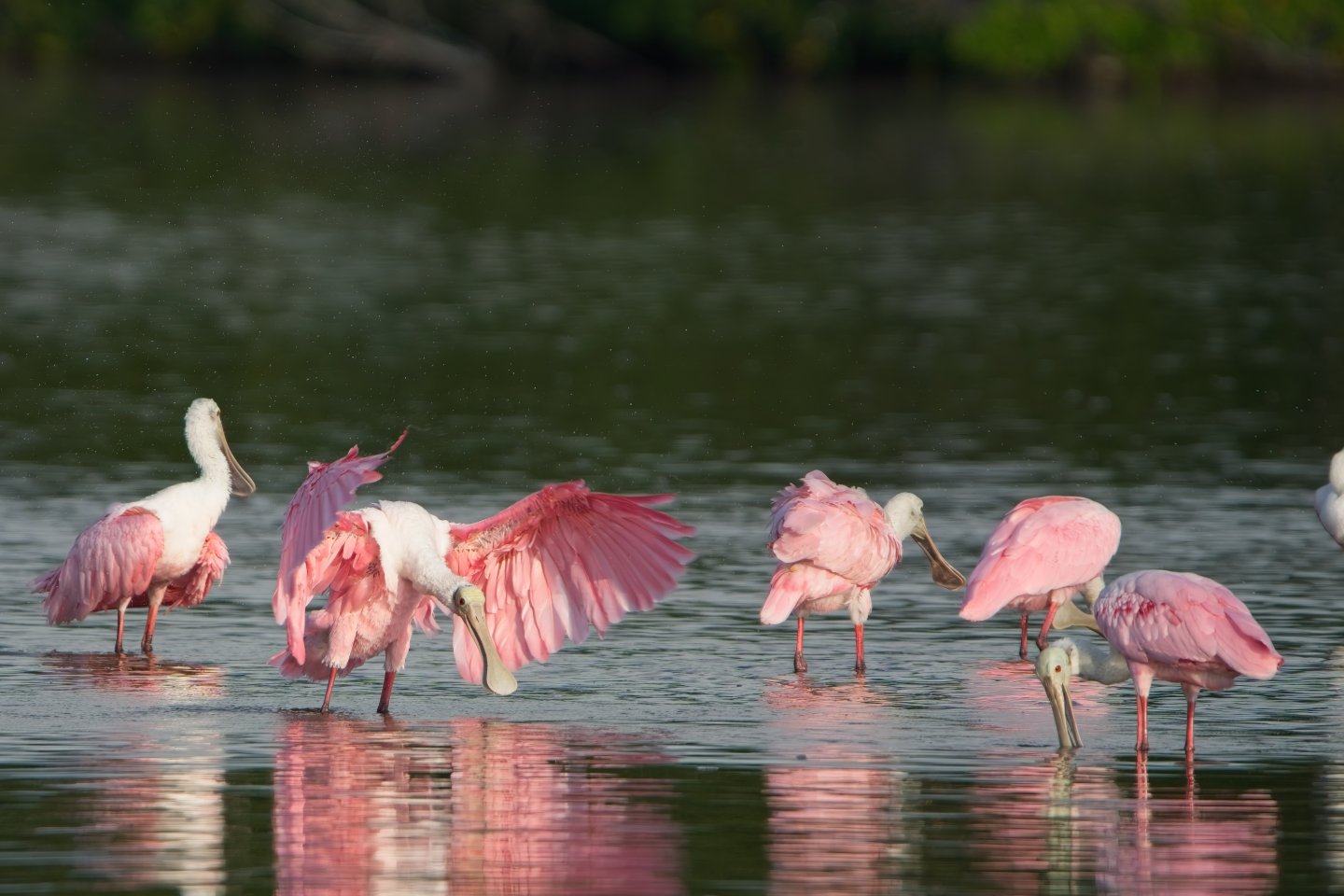
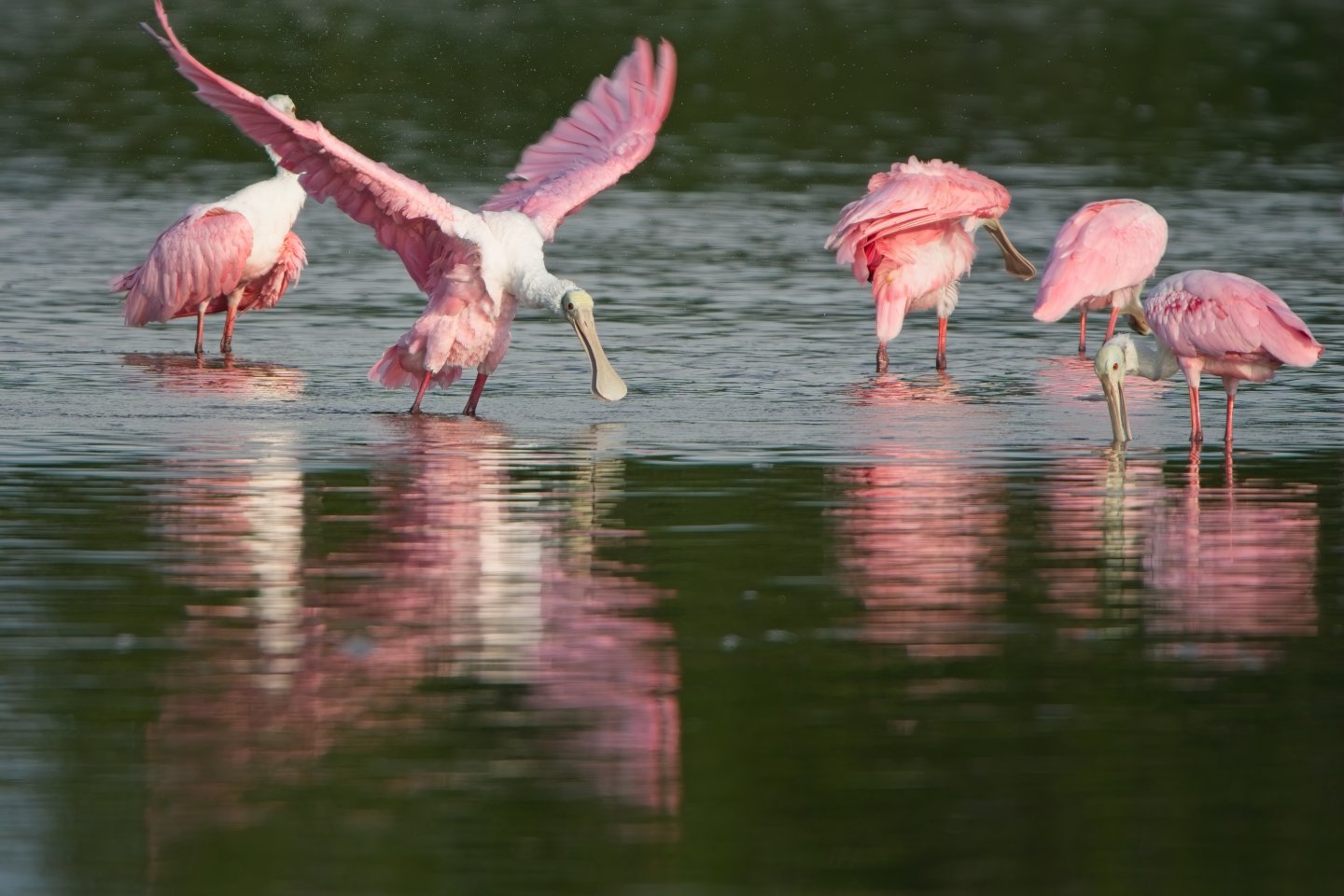
The Roseate spoonbill actively sweeps its partially opened bill back and forth through shallow water to detect hidden prey by touch. This specialized motion is how the bird finds food in the marsh edges of the J.N. Ding Darling National Wildlife Refuge. These large wading birds rely on the optimal foraging conditions found in the shallow open waters and marsh edges of the refuge.
The refuge provides essential wetland habitats that support significant populations of Roseate Spoonbills throughout the year. These environments are vital for sustaining large, healthy populations of the species.
When the bird takes flight across the open marshlands, the Roseate Spoonbill displays a broad, rounded wing design and executes its movements with slow, deliberate wingbeats. This manner of flight is often described as remarkably graceful despite the bird's large size.
The ability of these spoonbills to navigate both the dense marsh vegetation and the open water speaks to their resilience in complex wetland environments. Their presence in these areas indicates they utilize the refuge for specialized feeding techniques.
The complex life cycles of wading birds depend heavily on undisturbed wetland resources like those found at J.N. Ding Darling National Wildlife Refuge. These habitats are critical for supporting the health of the entire ecosystem.
#RoseateSpoonbill #Wetlands #WildlifePhotography
No comments:
Post a Comment