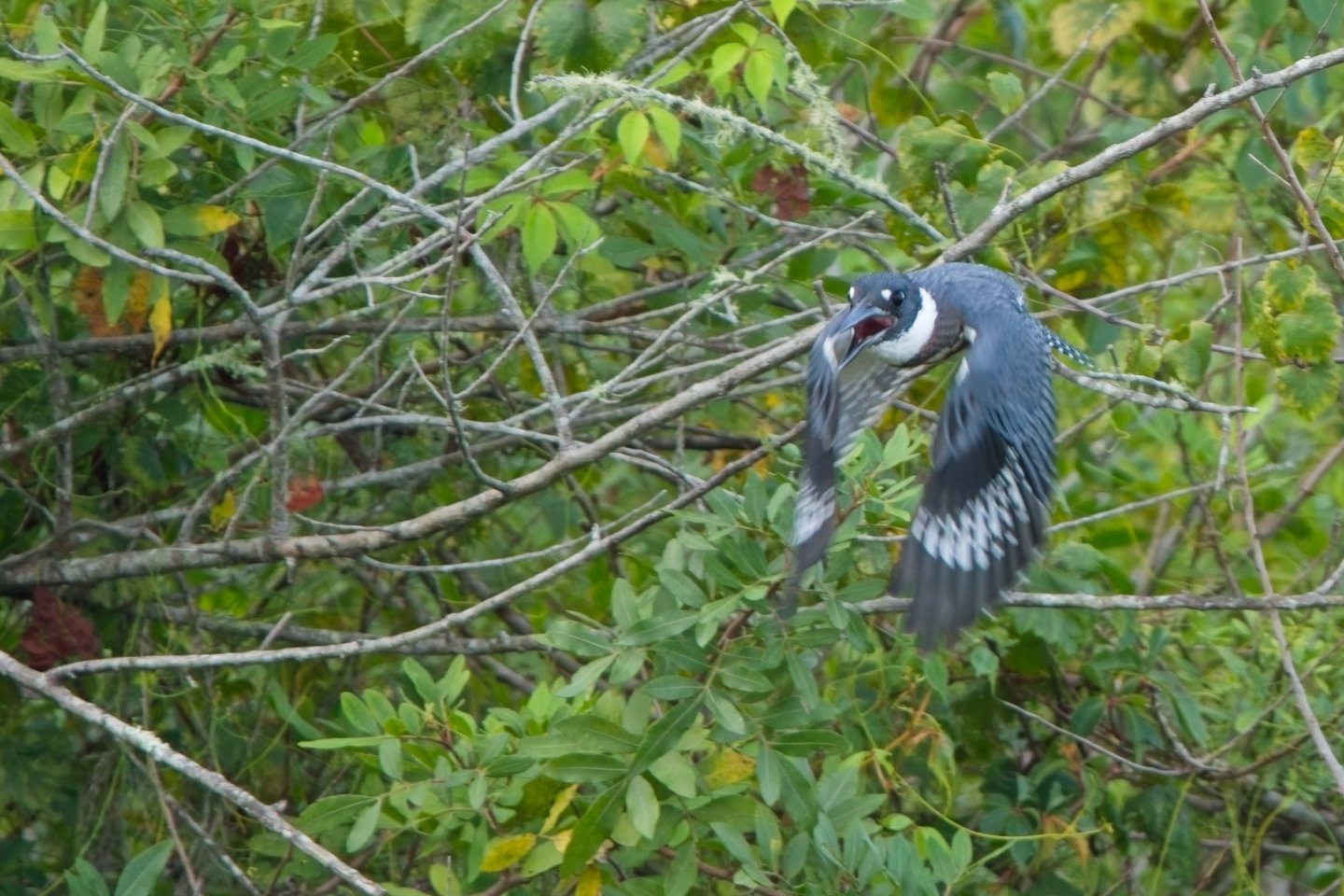
A flash of blue-gray cuts through the humid air as a Belted Kingfisher descends through the dense green foliage and intertwining branches of Harns Marsh Preserve. With its wings widely spread, the bird reveals a distinctive white patch at the base of its primary flight feathers, a striking beacon in dynamic motion against the natural backdrop. This powerful flight is characterized by rapid wingbeats, allowing for the precise maneuvering necessary to navigate through this dense world.
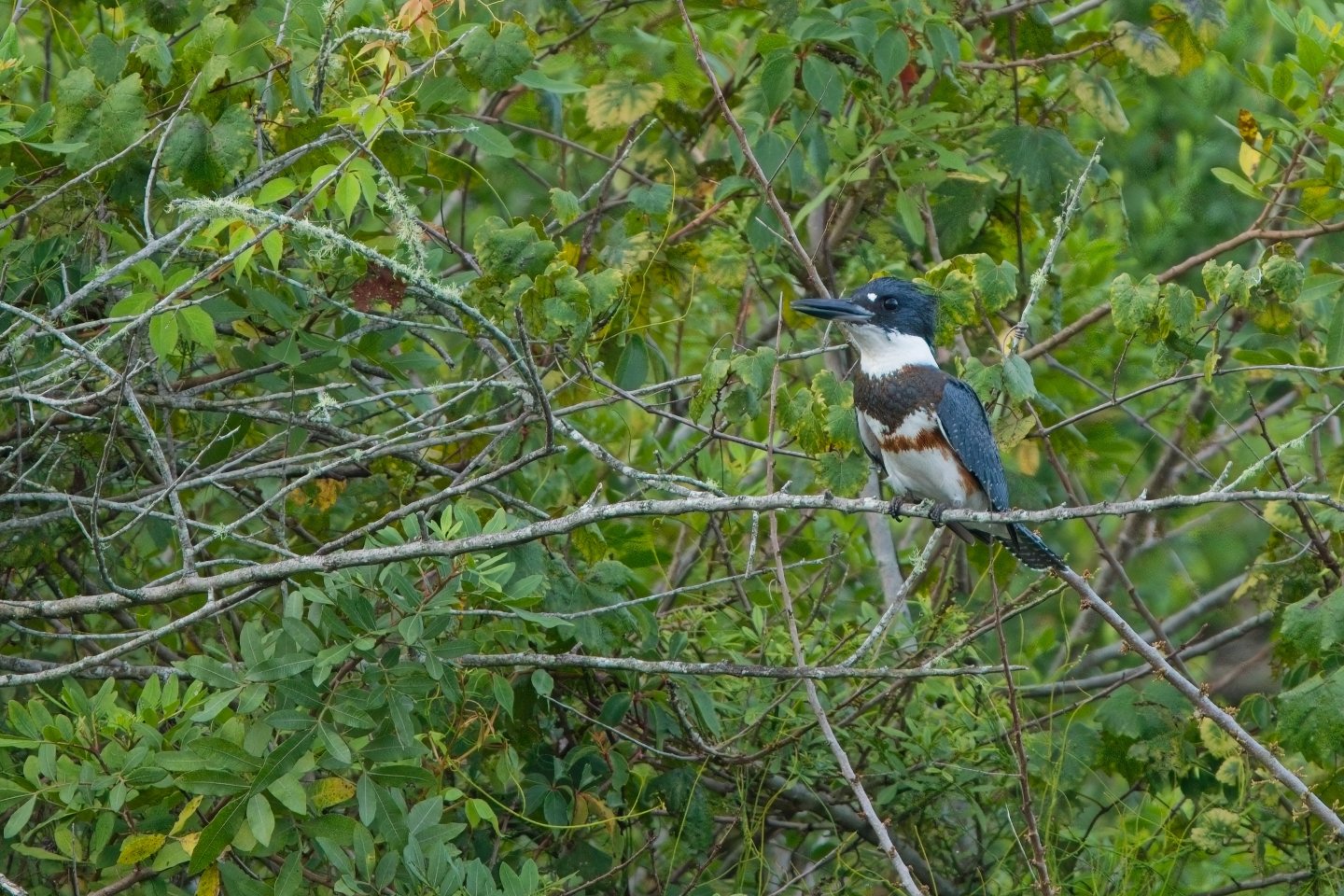
Here, amidst the layered structure of the Harns Marsh vegetation, these birds use the intertwining branches as strategic hunting perches, scanning the clear water below for life. Belted Kingfishers are permanent residents throughout Florida, relying on these vital wetland habitats for their survival. They possess a unique ability among many species to hover stationary over the water before executing a remarkable headfirst plunge-dive to catch prey.
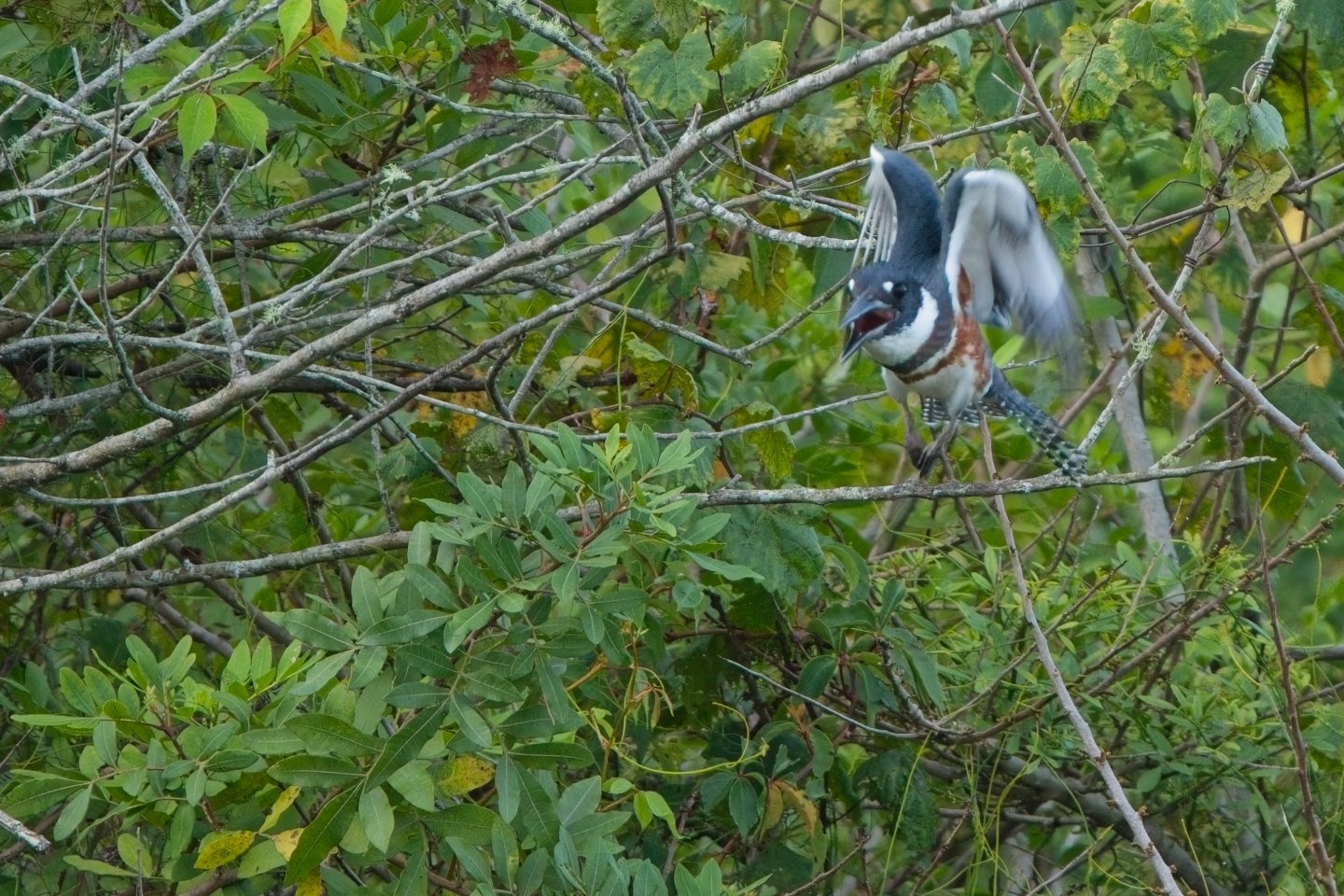
As the bird prepares for its strike, it often utters a loud, rattling call while in flight, signaling its presence or departure from its hunting spot. When it dives, a transparent nictitating membrane protects its eyes, allowing its keen vision to adjust instantly from air to water. Its stout bill is perfectly adapted for spearing fish or crustaceans upon impact with the water.
The world of the kingfisher holds subtle biological details; a female can be uniquely identified by an additional rusty-colored band across her lower belly, a feature absent in males. After a successful plunge, the bird will often shake its head and body vigorously in flight to shed excess water from its plumage before continuing its vigilant patrol. The presence of these specialized predators enriches the entire ecosystem of Harns Marsh Preserve.
No comments:
Post a Comment