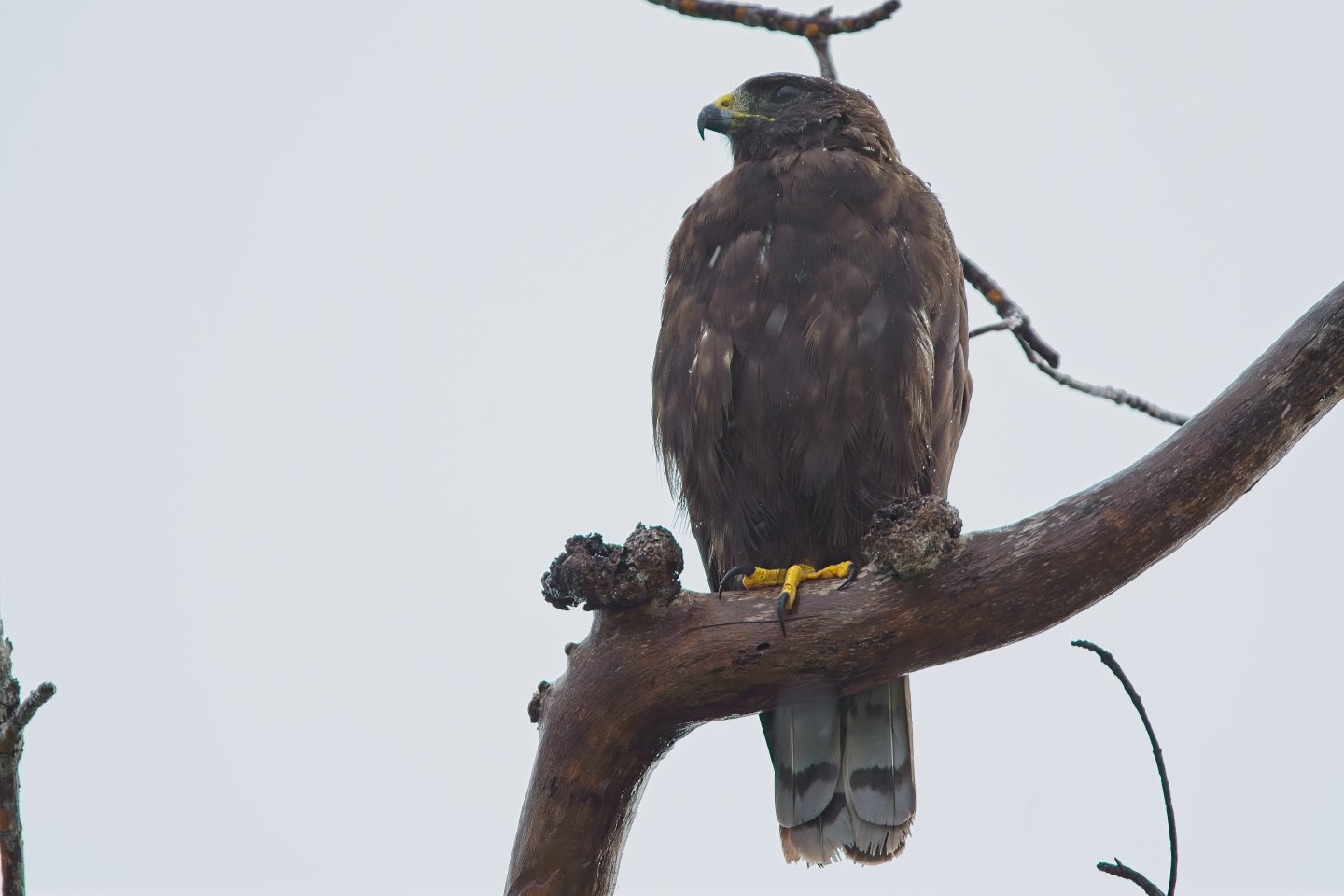
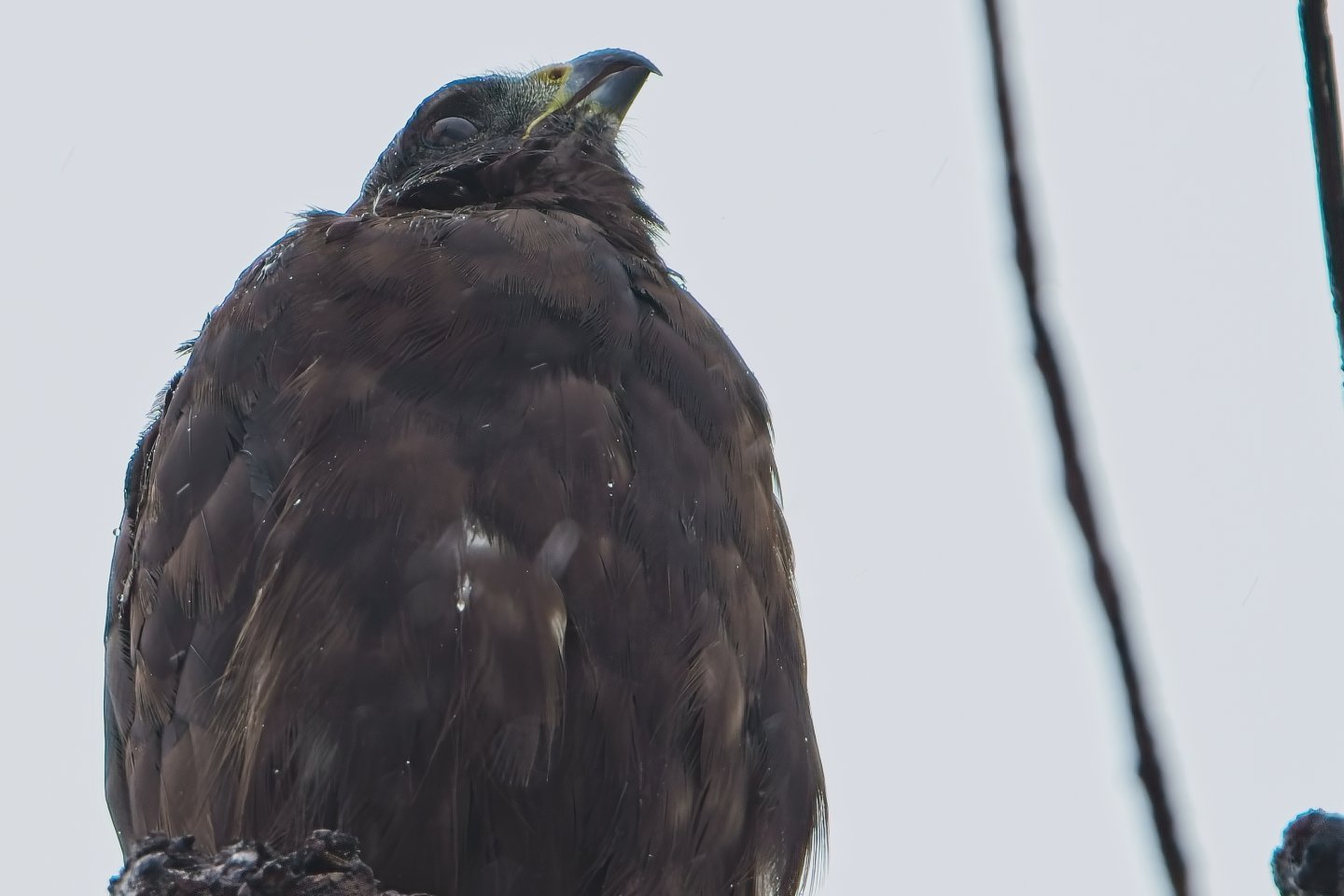
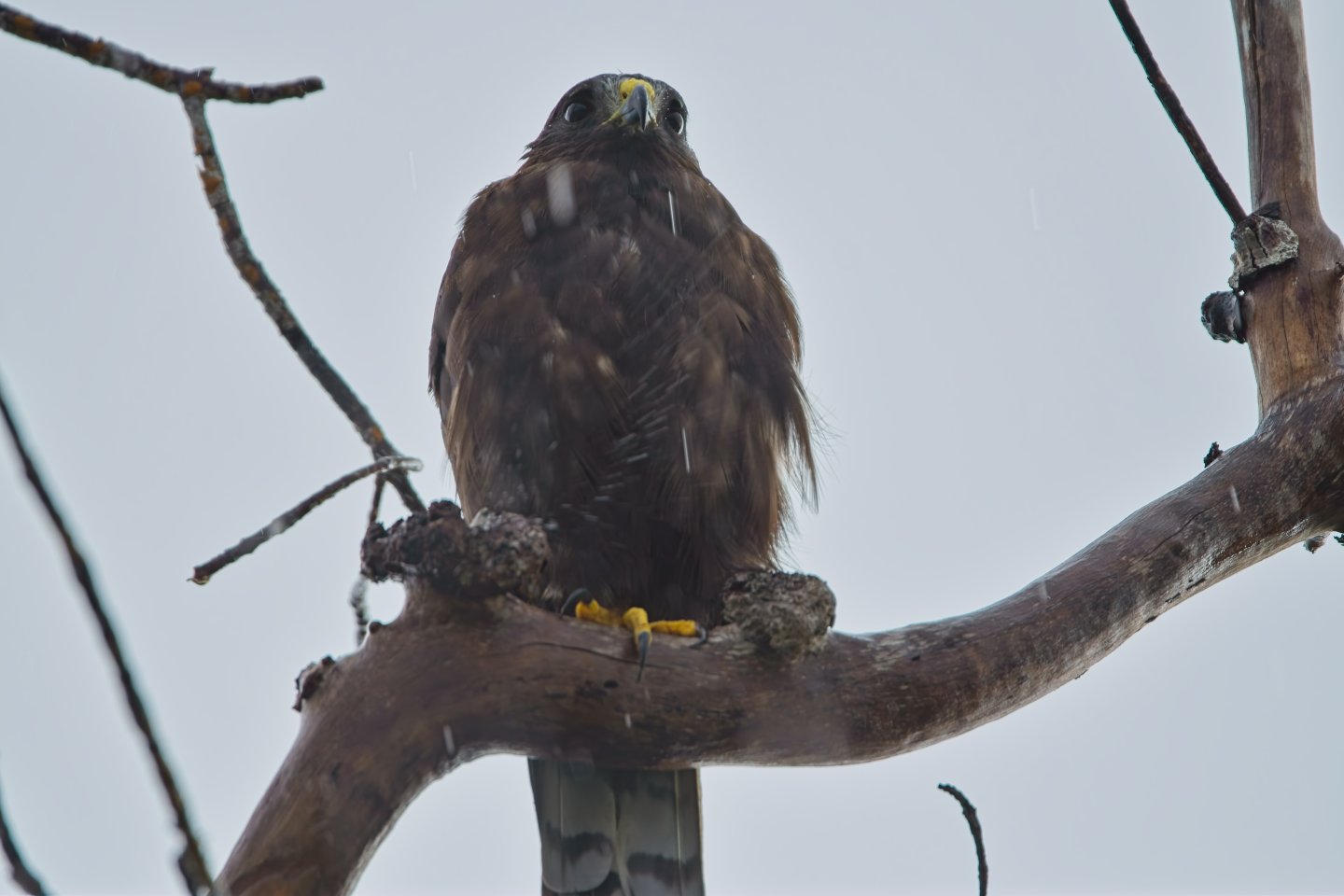
Rain beads cling to dark feathers as a short-tailed hawk rests against a thick branch in the J.N. Ding Darling National Wildlife Refuge. The diffused light of the overcast sky highlights the subtle contrast between its deep plumage and the wet perch. This scene captures a moment of quietude, showcasing the resilience of nature amidst the Florida landscape.
The dark morph of this raptor displays a rich sooty-brown tone, sharply contrasted by the white base of its tail and a distinct dark band at the very tip. Such uniform dark plumage can offer excellent camouflage against the dim forest or an overcast sky, perhaps aiding in surprise hunting strategies.
These hawks are masters of patience, frequently spending extended periods perched motionlessly. This behavior is vital for conserving energy, allowing them to patiently scan the environment for hidden prey, especially when weather conditions are unfavorable.
In this specific refuge, the short-tailed hawk thrives within a mosaic of open woodlands, mangrove forests, and cypress swamps. J.N. Ding Darling serves as a key wintering ground for these non-breeding residents in Florida, connecting them deeply to their diverse habitat.
This species employs a unique hunting method known as soaring-glide-perch, often utilizing lower perches within the tree canopy before making a swift dive. The hawk’s outer feathers possess remarkable water-repellent qualities, allowing it to remain largely dry even when exterior plumage is beaded with raindrops.
No comments:
Post a Comment