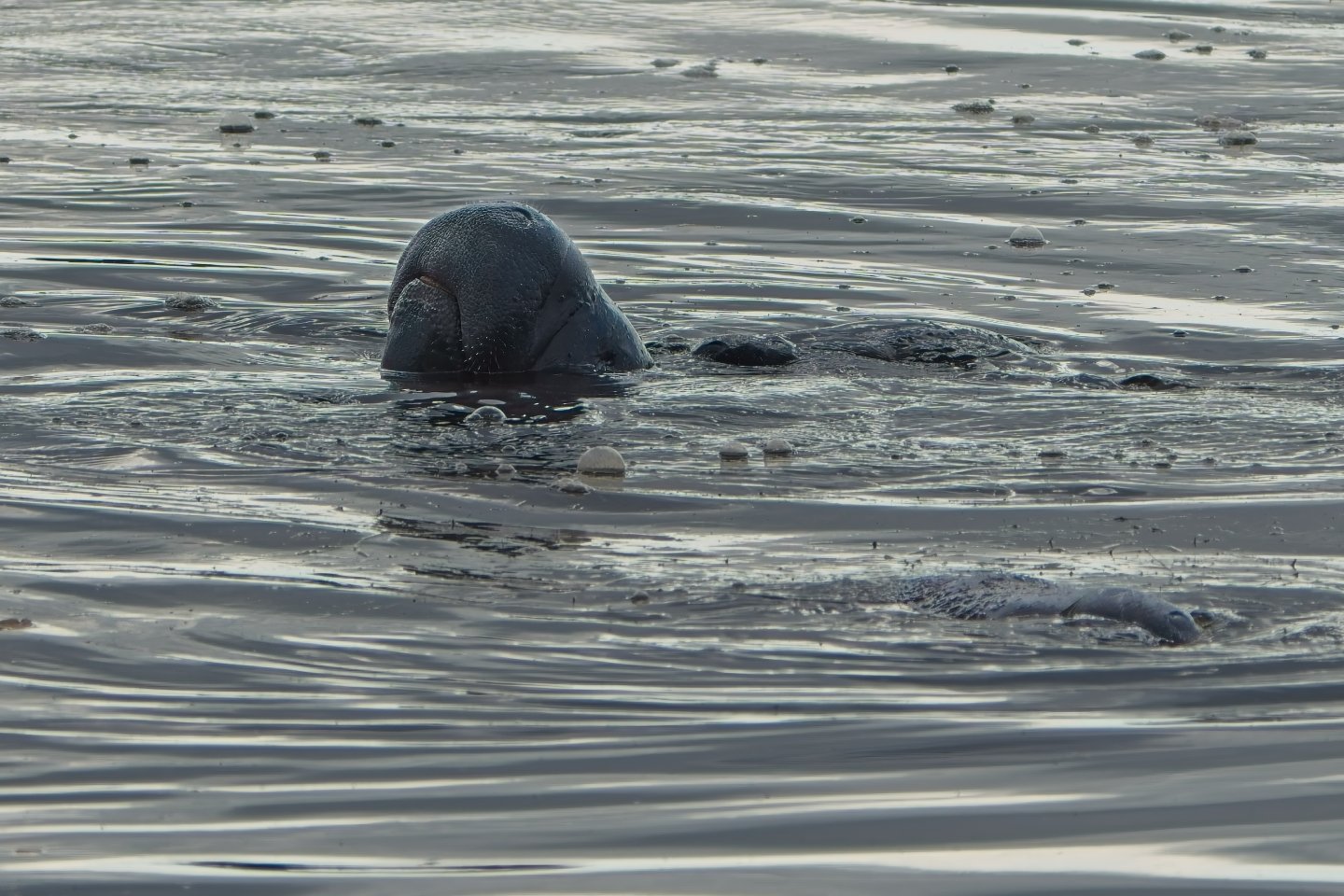
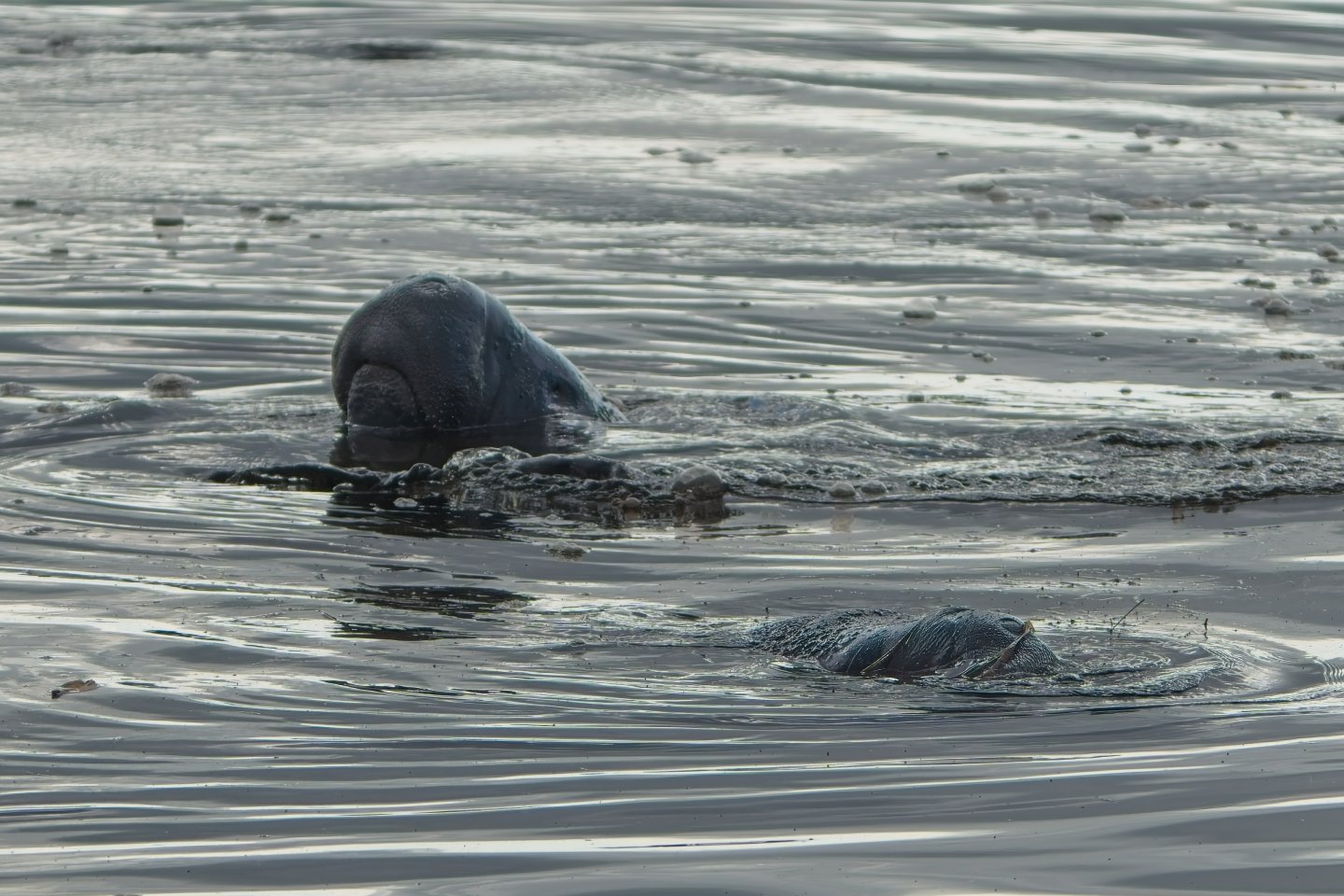
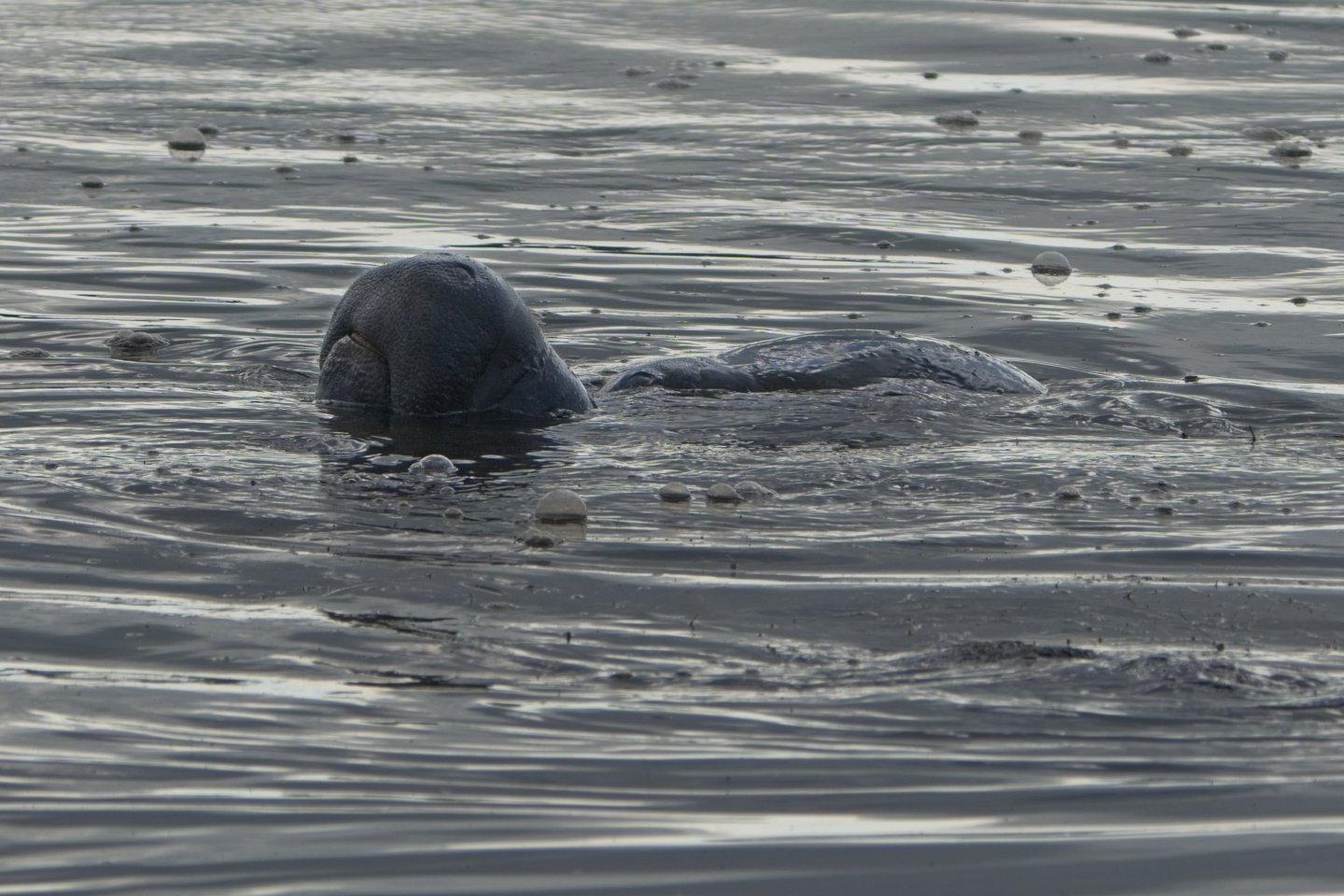
The calm waters of the J.N. Ding Darling National Wildlife Refuge cradle a quiet spectacle as manatees emerge from the surface. Their dark, textured heads and upper backs break the water in soft ripples, catching the diffused light and highlighting the gentle movement of the surface. Bubbles bloom around their bodies as they surface to breathe, a rhythmic display of life in the tranquil shallows.
These gentle giants navigate the calm, shallow waters of the refuge, finding sanctuary within the mangrove estuaries that provide crucial warm-water habitat. The peaceful environment here allows these slow-moving creatures to rest and feed freely throughout the year. Manatees spend much of their time grazing on seagrass and other aquatic vegetation, utilizing the rich underwater landscape for sustenance.
The skin of a manatee is a testament to its life in the water; it is thick, wrinkled, and sparsely covered with short hairs, giving them a uniquely textured appearance. This gentle hide often displays a brownish or greenish hue due to natural algal growth clinging to their skin as they move through the environment.
To explore this underwater world, manatees rely on remarkable sensory tools. They possess highly sensitive vibrissae, or whiskers, densely concentrated around their mouths and faces, which help them explore their surroundings and grasp food among the aquatic plants. Furthermore, despite their seemingly leisurely pace, these animals possess excellent underwater hearing, enabling them to detect subtle sounds in their environment.
Beneath the surface, manatees possess a unique dental structure perfectly adapted to their diet. They have a fascinating characteristic known as marching molars, where their teeth are continuously replaced from the back of the jaw, steadily moving forward as they graze on aquatic vegetation. Within this protected refuge, these magnificent creatures embody a peaceful strength, thriving in the waters that sustain them.
No comments:
Post a Comment