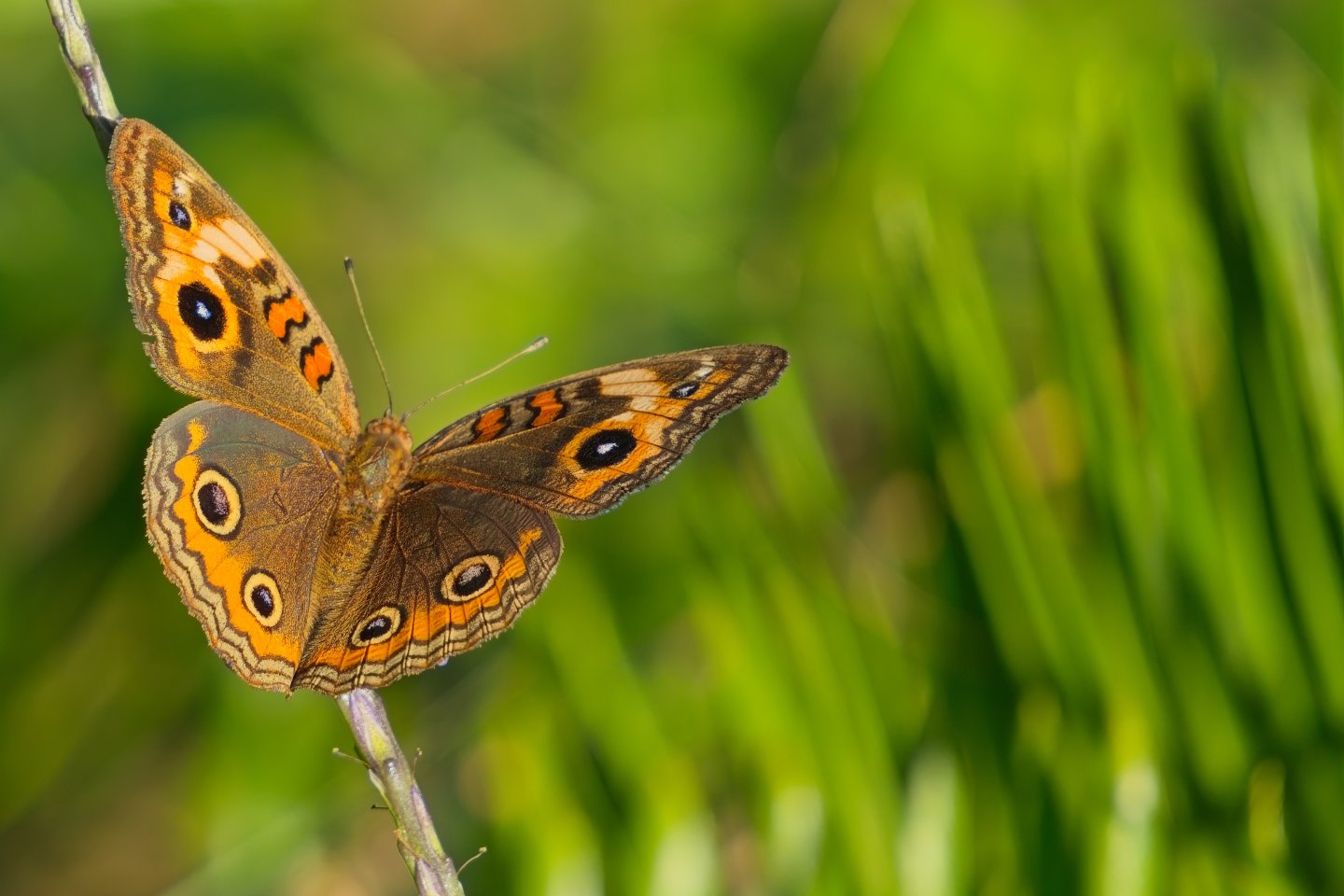
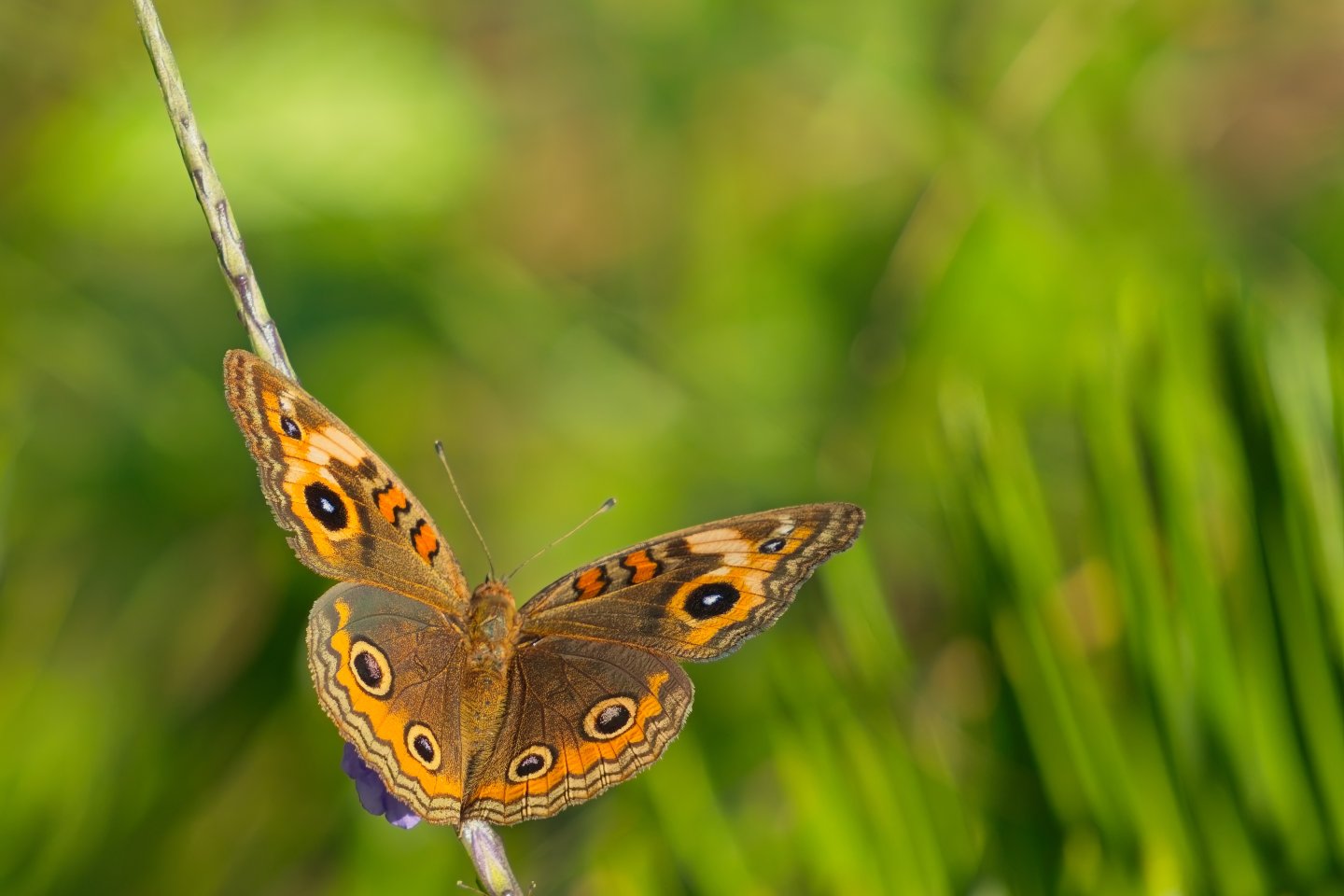
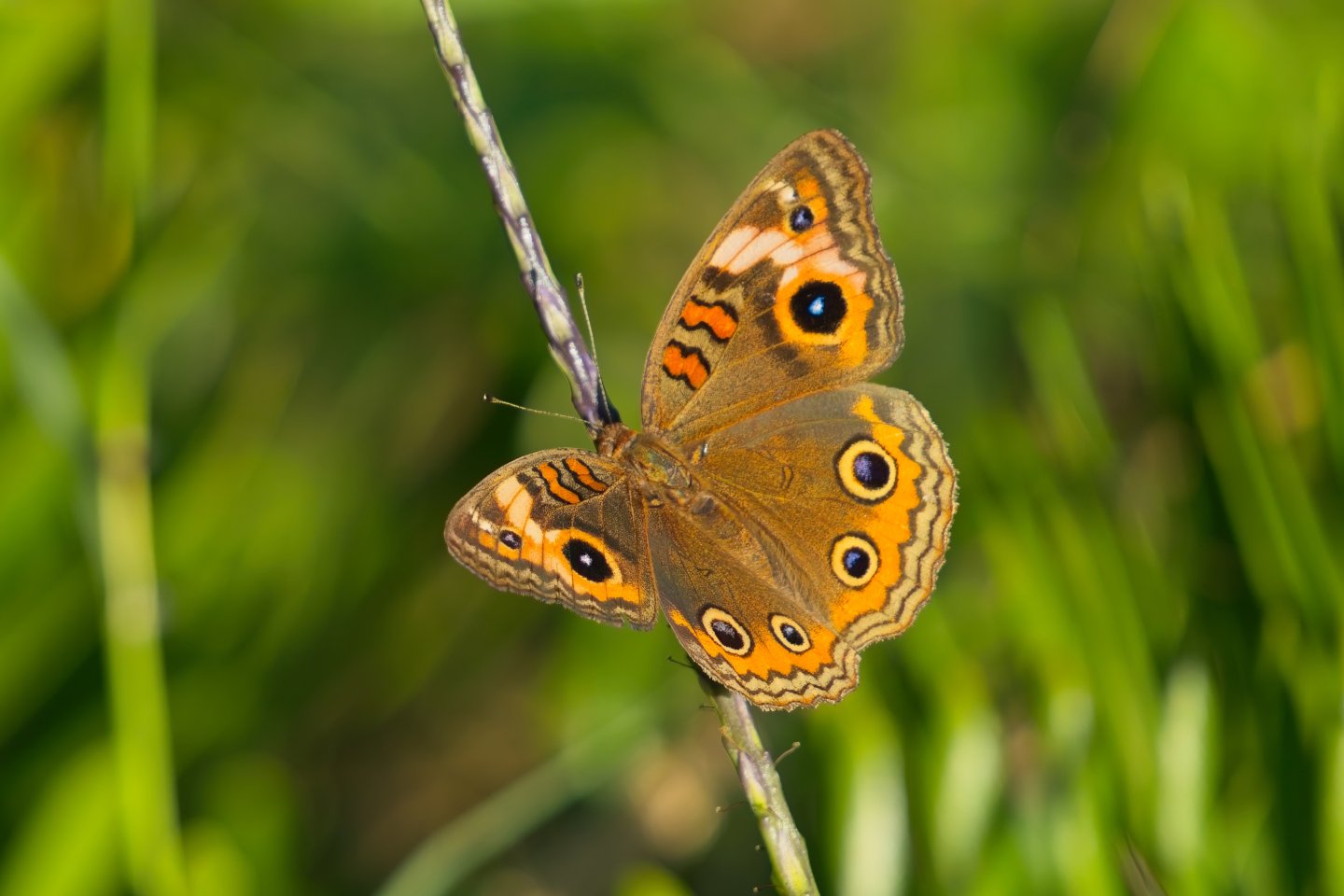
A West Indian Mangrove Buckeye is captured in a close-up view, resting delicately on a slender green stem within Rotary Park. Its wings are spread wide, showcasing intricate patterns of rich orange and brown markings that are sharply detailed against the vibrant green backdrop of the surrounding foliage. The scene is bathed in bright natural light, highlighting the butterfly’s delicate structure as it interacts with its coastal habitat.
These mesmerizing wing patterns serve a purpose beyond beauty. The prominent eye-spots on the wings are believed to deter predators by mimicking the gaze of larger animals, a clever visual trick that ensures survival for this unique species. This butterfly is uniquely associated with coastal mangrove habitats, setting it apart from other Buckeye species found elsewhere.
The behavior observed here is also telling. The butterfly frequently perches with its wings fully open, a necessary action to bask in the natural light and regulate its body temperature. Beneath the surface of this environment, its life cycle is deeply tied to the ecosystem; its primary larval host plant is the Black Mangrove, which thrives right within Rotary Park.
This species displays remarkable resilience. Adults feed on nectar from various flowering plants available in their coastal environment and can be observed flying year-round in South Florida. Even the outer margins of its wings exhibit a slightly scalloped appearance, reflecting an intimate connection to the unique coastal mosaic it inhabits.
No comments:
Post a Comment