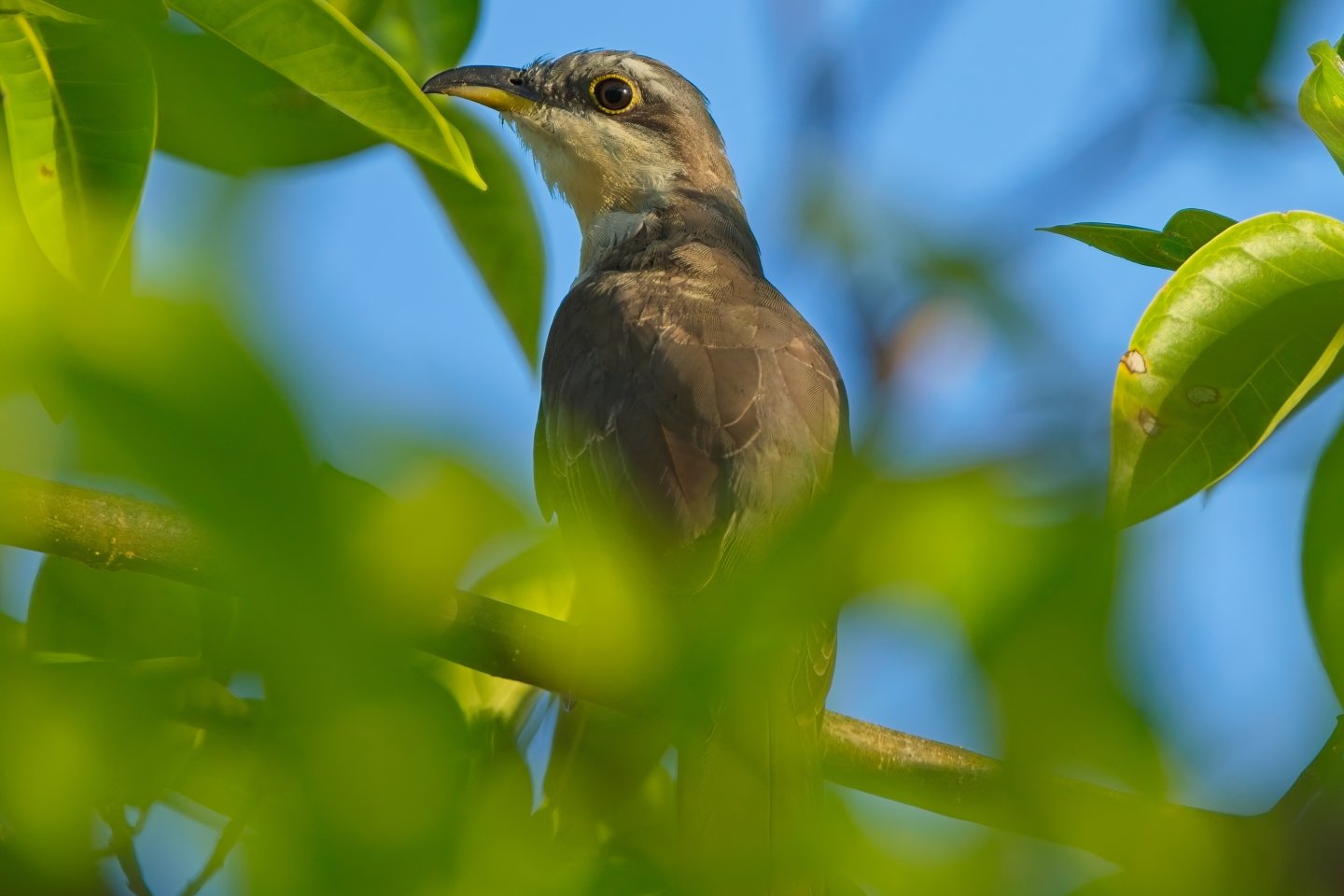
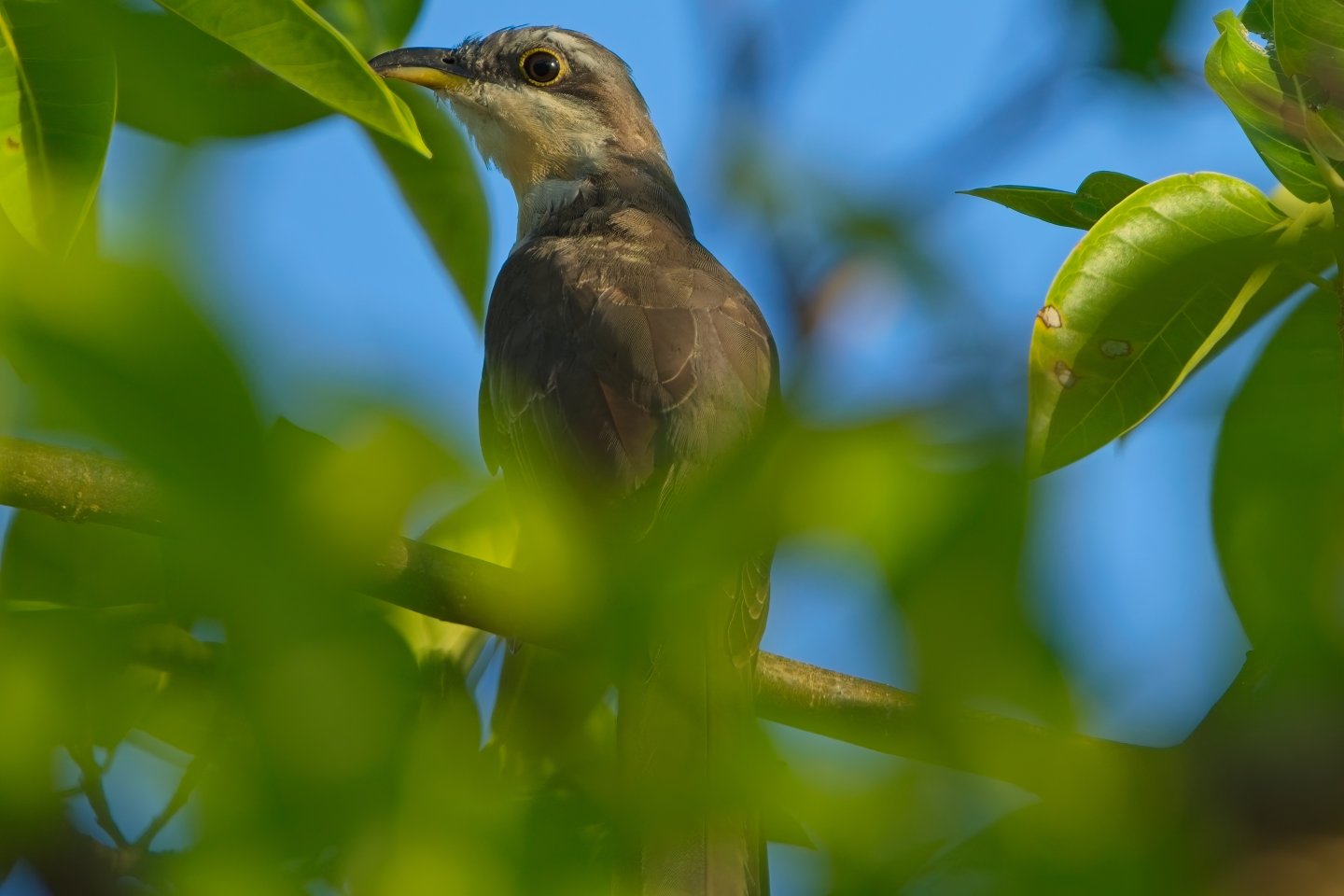
A vibrant yellow eye pierces the humid air as the Mangrove Cuckoo surveys the sun-drenched green canopy of the mangrove forest. Perched amidst the vibrant leaves, this bird offers a quiet glimpse into the intricate ecosystem of Florida's coast. The scene is illuminated by bright sunlight, highlighting the details of the cuckoo and the translucent qualities of the surrounding foliage.
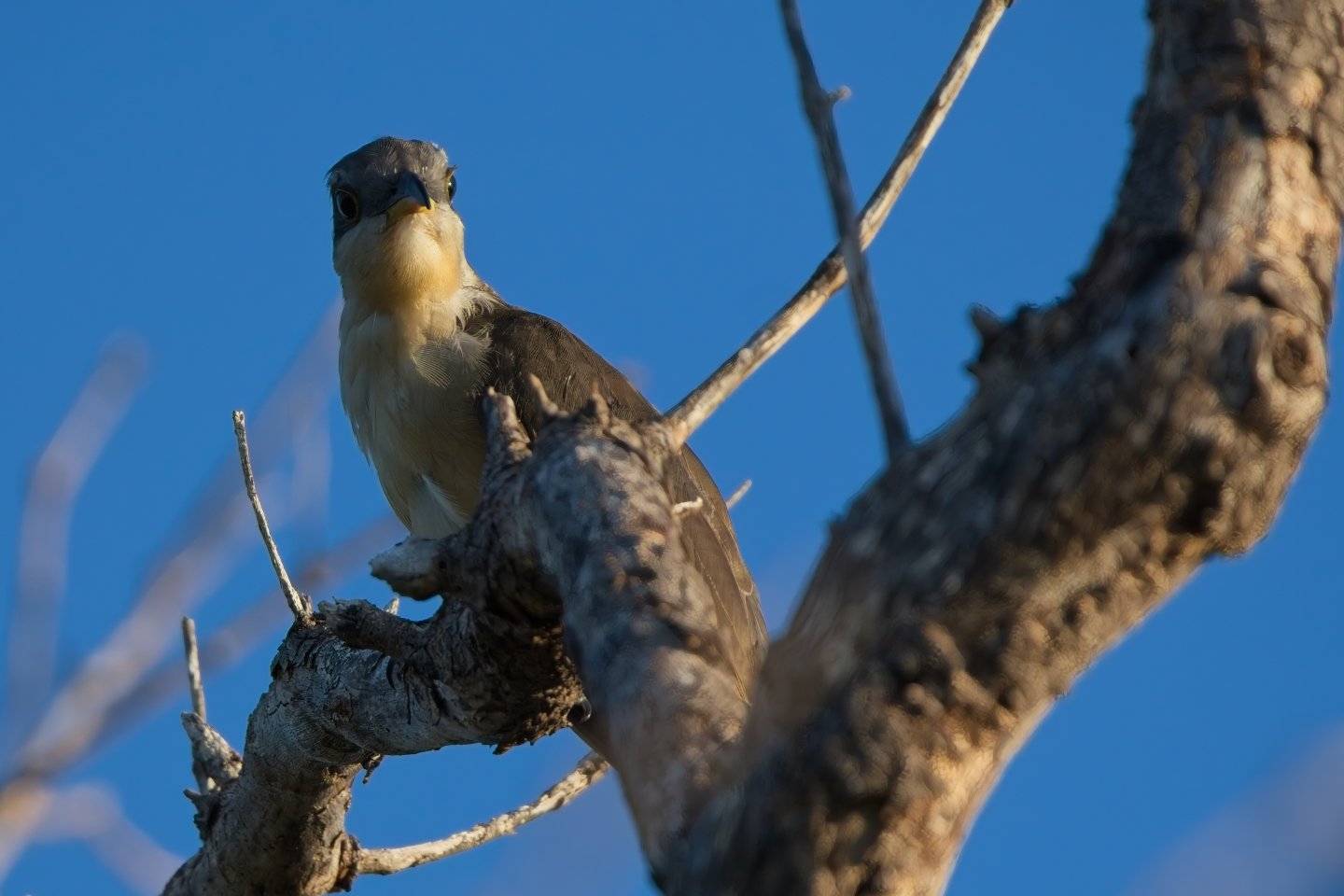
This silent watcher moves with purpose through the dense environment. Its appearance is striking: a muted grayish-brown covers its upperparts, which contrasts beautifully with its clean white breast and belly. A closer look reveals its distinctive features, including a large, bright yellow eye set against a dark black mask, and a bill that is bicolored, featuring a yellow base that transitions to a black tip.
The Mangrove Cuckoo is almost exclusively found within these intricate mangrove forests, particularly in areas dominated by Red Mangroves. It patiently scans its surroundings, an instinct honed by life in this unique habitat, searching for prey before making a swift movement to capture it.
Life among the roots and branches sustains this bird. Its diet includes large insects such as katydids, grasshoppers, and caterpillars, but it also preys on small crabs, lizards, and frogs. These coastal wetlands provide the essential food sources that allow the cuckoo to thrive in their environment.
Within these dense waterways, nests are carefully constructed, typically positioned between five and ten feet above the water, blending seamlessly into the mangrove branches. The health of this ecosystem is crucial for the survival of the cuckoo and all its inhabitants.
The J.N. Ding Darling National Wildlife Refuge on Sanibel Island serves as a prime location for observing these remarkable birds, offering a critical sanctuary within Florida's coastal landscape.
No comments:
Post a Comment