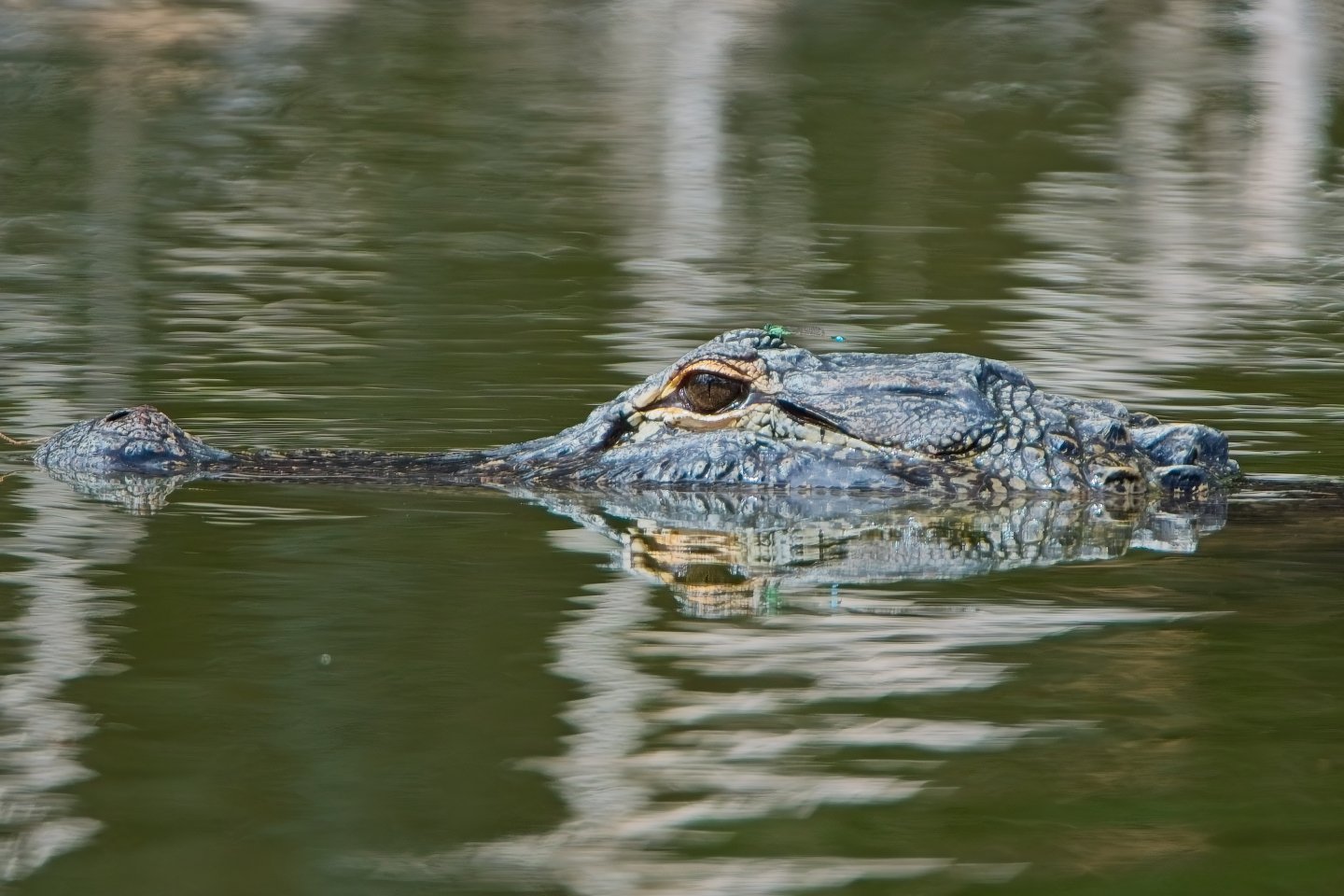
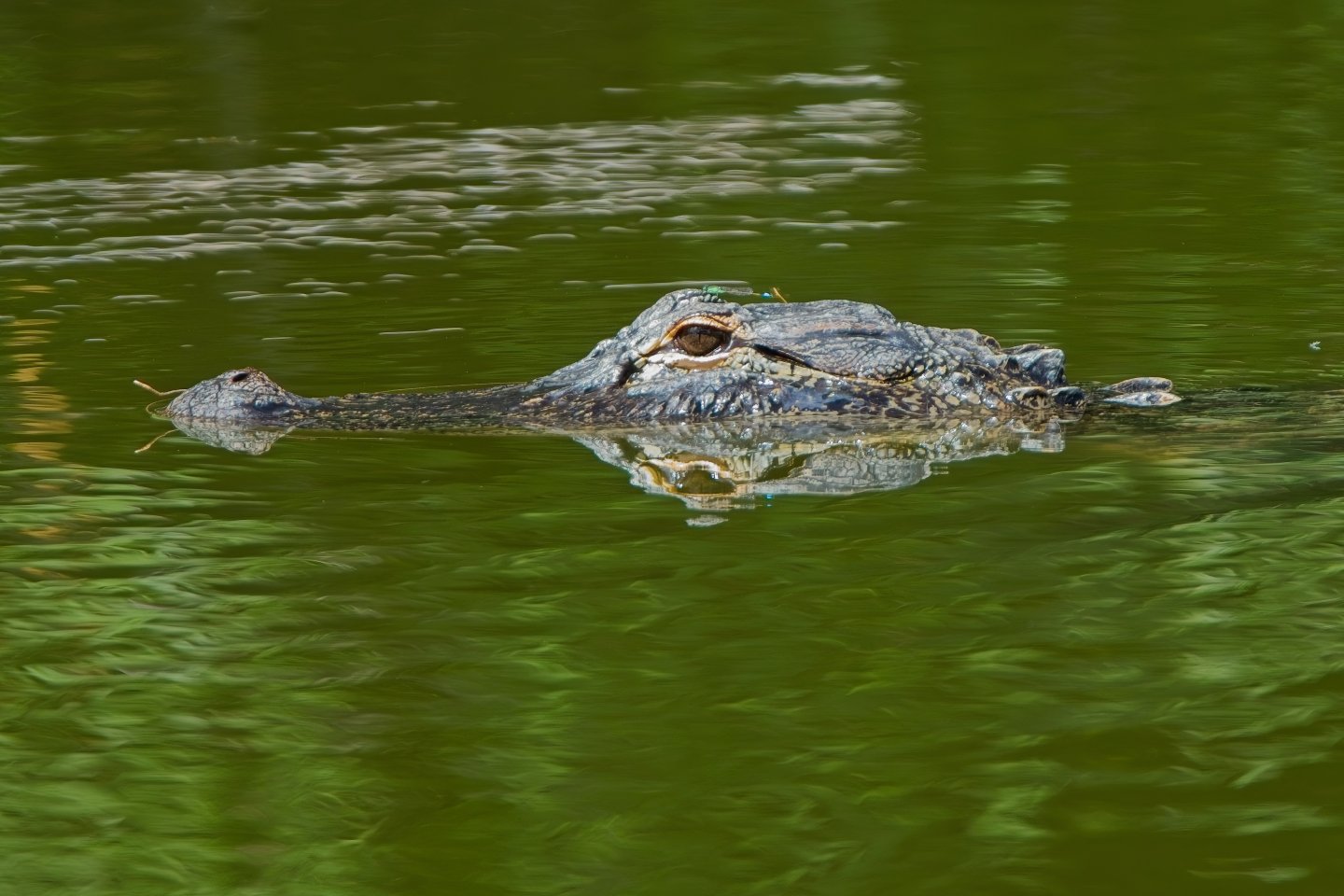
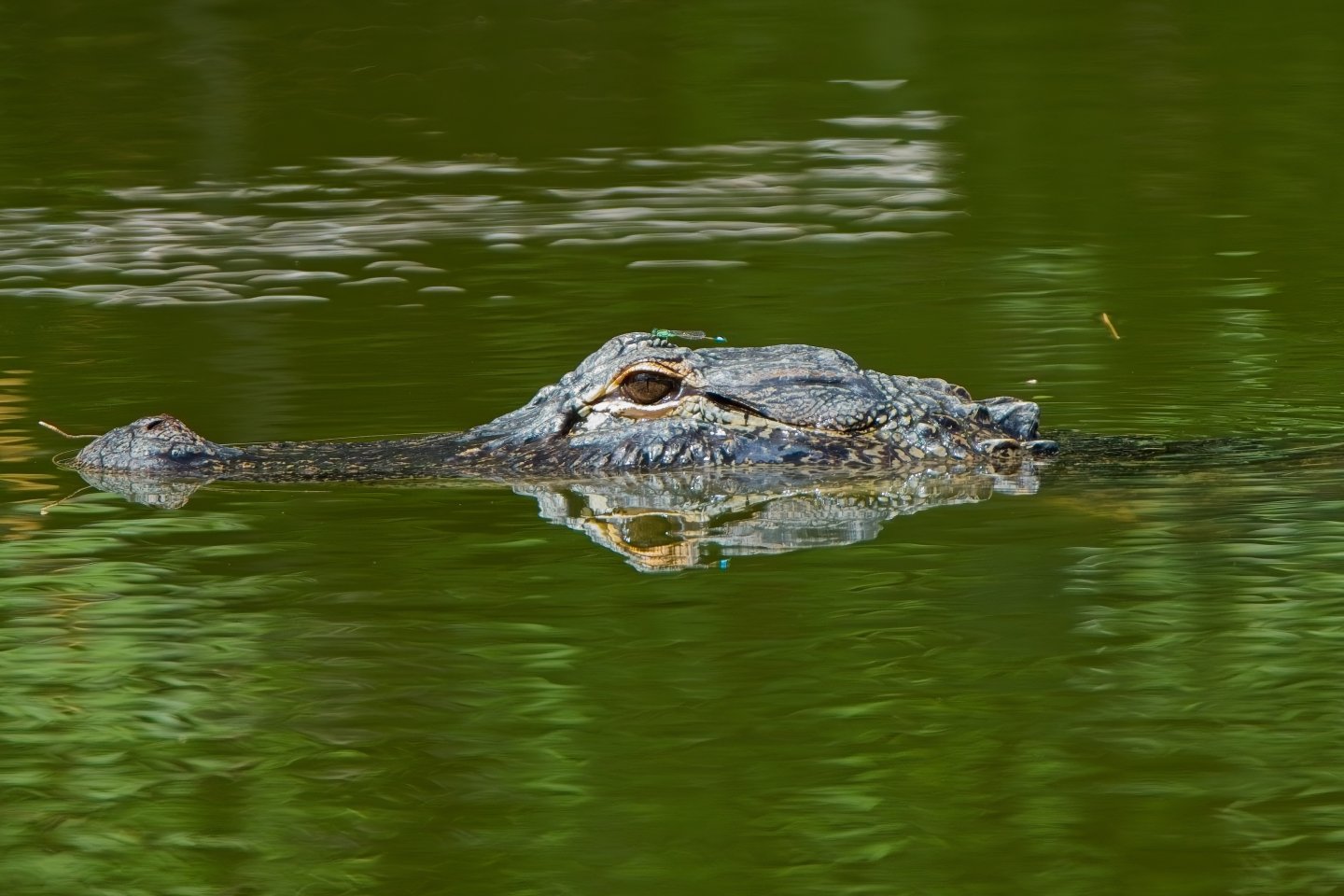
Green damselfly clings to ancient, textured skin as it finds purchase on the surface of murky green water in Lakes Park. A dominant eye breaks the water's surface, reflecting perfectly on the gently rippling surface—a silent sentinel waiting beneath the surface.
Below the water, the massive body remains almost entirely hidden, defining the freshwater habitats of Florida. The American alligator masters the art of stillness, remaining motionless for extended periods to serve as a stable basking platform for insects like damselflies that perch upon its back. This prolonged stillness allows for pristine reflections on calm water surfaces, perfectly masking the presence of this powerful ambush predator.
The texture of the head and jaws is remarkable; these areas are covered with bony plates called osteoderms embedded in leathery skin. Furthermore, specialized integumentary sensory organs aid detection in murky conditions, allowing the reptile to perceive subtle vibrations and pressure changes in the water while submerged.
Alligators possess excellent vision, even in low light, thanks to a special reflective layer in their eyes that helps them see what others cannot. Their eyes, ears, and nostrils are positioned high on the head, enabling them to remain mostly submerged while still perceiving their surroundings and breathing effortlessly.
As ectotherms, these reptiles expertly regulate their body temperature by moving between sun and water, often exposing parts of their bodies for heat exchange or cooling. The American alligator is a common sight in this region, with an estimated 1.3 million individuals found across Florida.
No comments:
Post a Comment