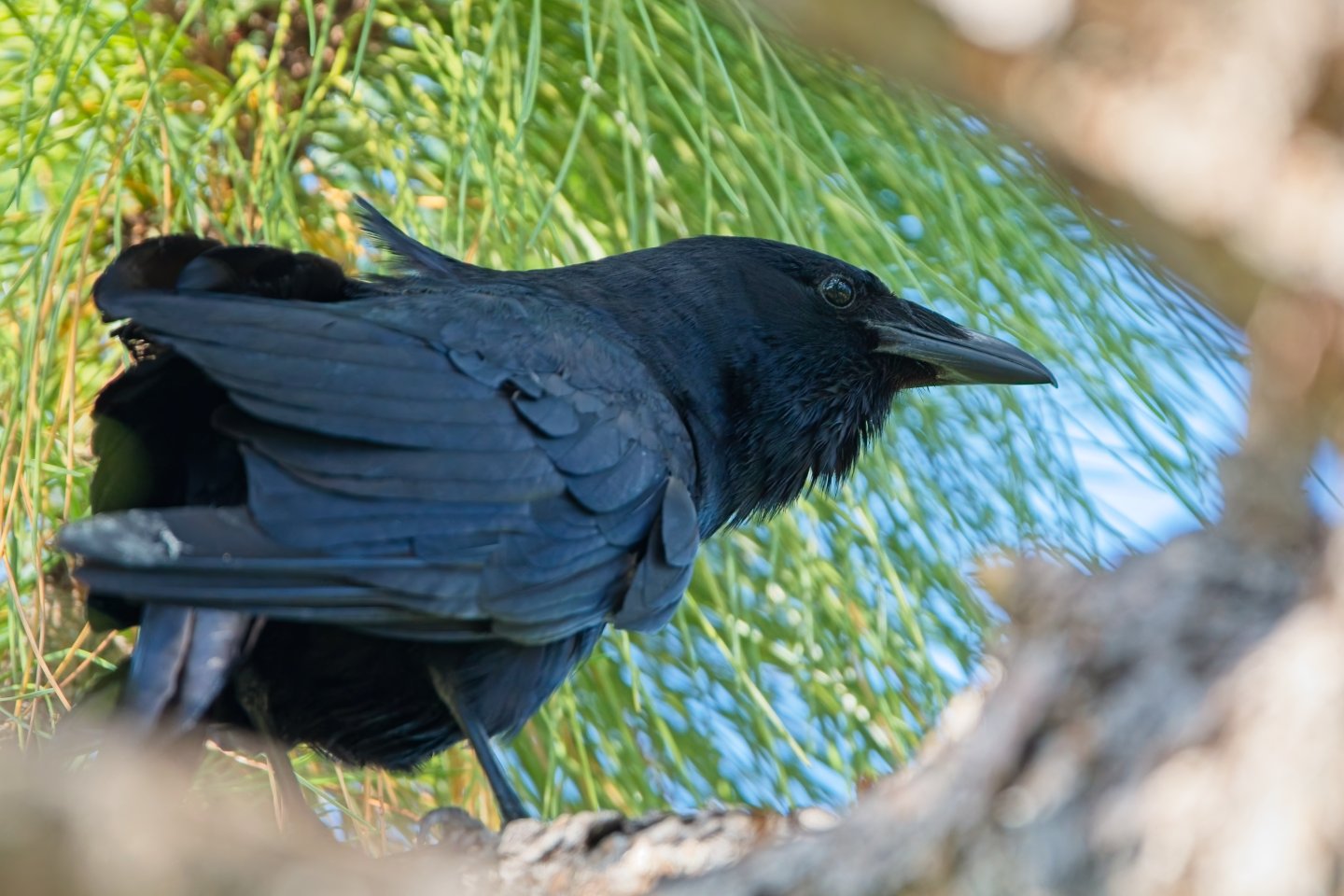
Light dances on the dark feathers of an American Crow perched high on a branch at Lakes Park. A subtle blue and purple iridescence ripples across its plumage as the bird looks to the right with an expression of keen alertness. This fleeting shimmer is not caused by actual pigment, but rather by the microscopic structure of the feathers which scatters and refracts the light around it.
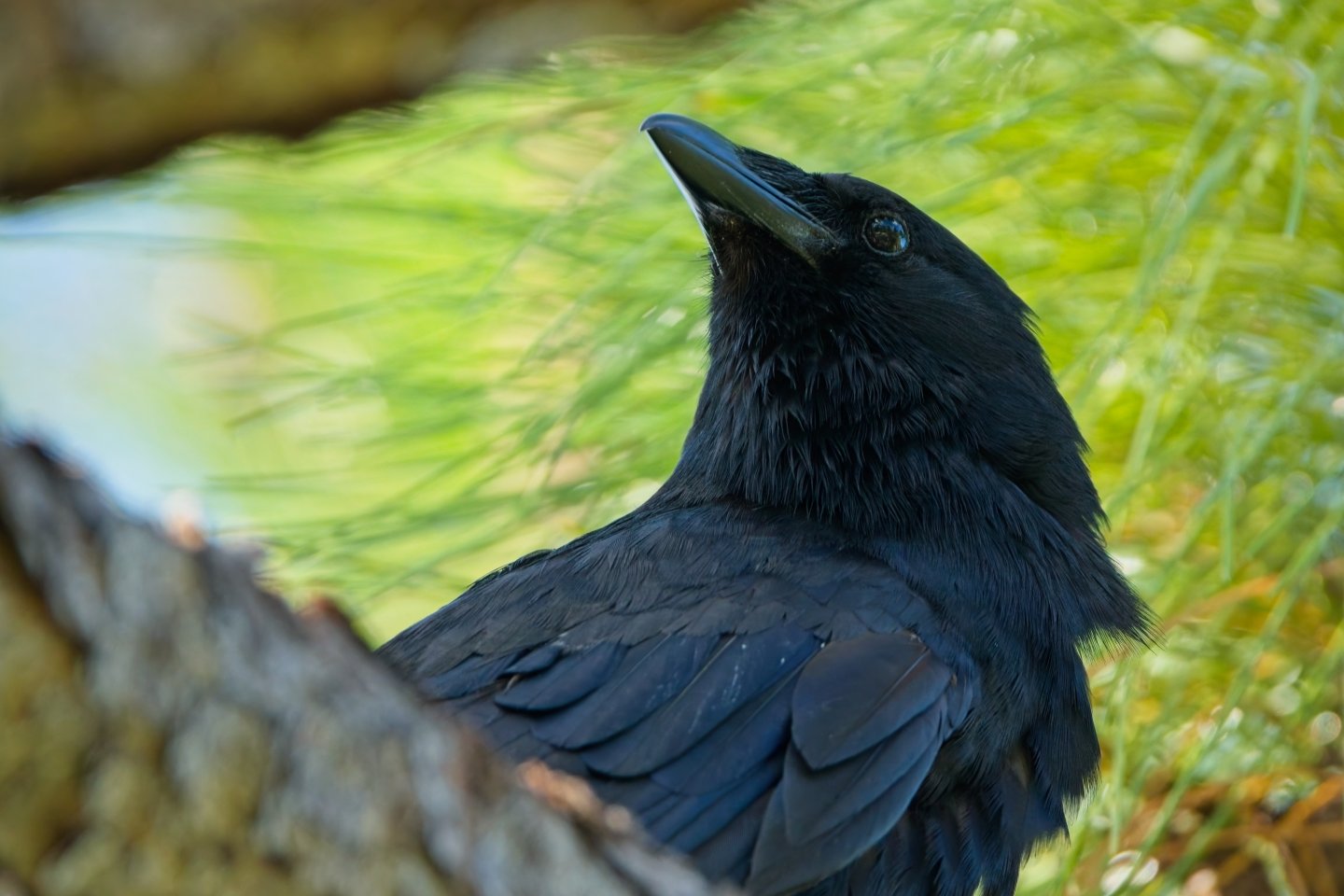
From this elevated vantage point, the crow surveys the green foliage and the bright blue sky above. American Crows frequently choose to perch on elevated branches like this to gain a superior view of their surroundings, scanning for potential threats or promising food sources within the landscape. They thrive in diverse urban green spaces like Lakes Park, demonstrating an incredible adaptability in how they utilize available nesting sites.
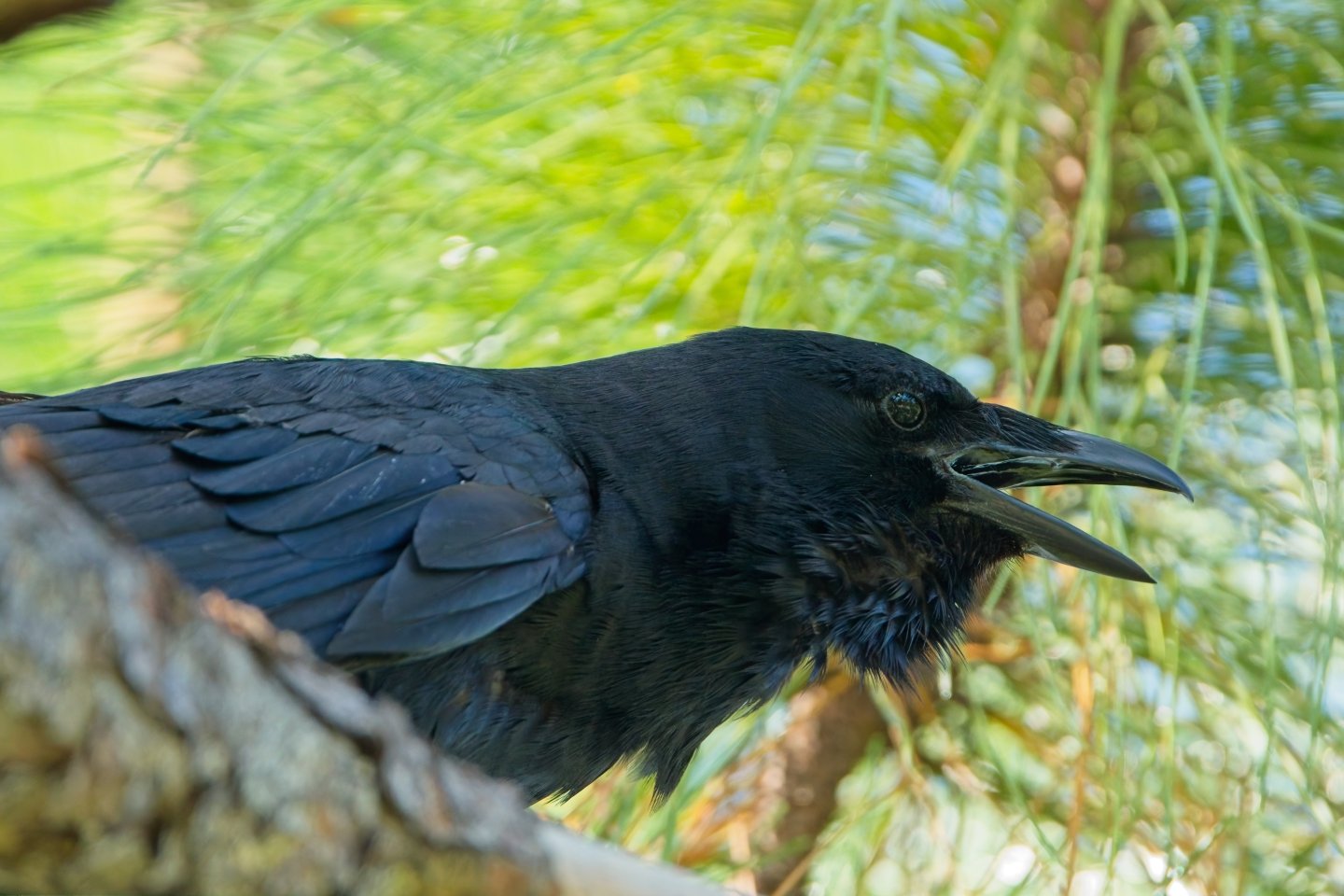
These highly social birds engage in cooperative breeding practices, where offspring from previous years often remain with their parents to help raise subsequent broods, strengthening family bonds as they navigate their world. An alert posture like this can precede a complex series of caws used to communicate specific threats to other crows, helping them differentiate between various predators in their environment.
As opportunistic omnivores, American Crows forage widely for insects, seeds, fruits, and even human food scraps within the park setting. Outside of the breeding season, they display remarkable social behavior, sometimes forming large communal roosts that can number thousands of individuals for increased safety and information exchange.
No comments:
Post a Comment