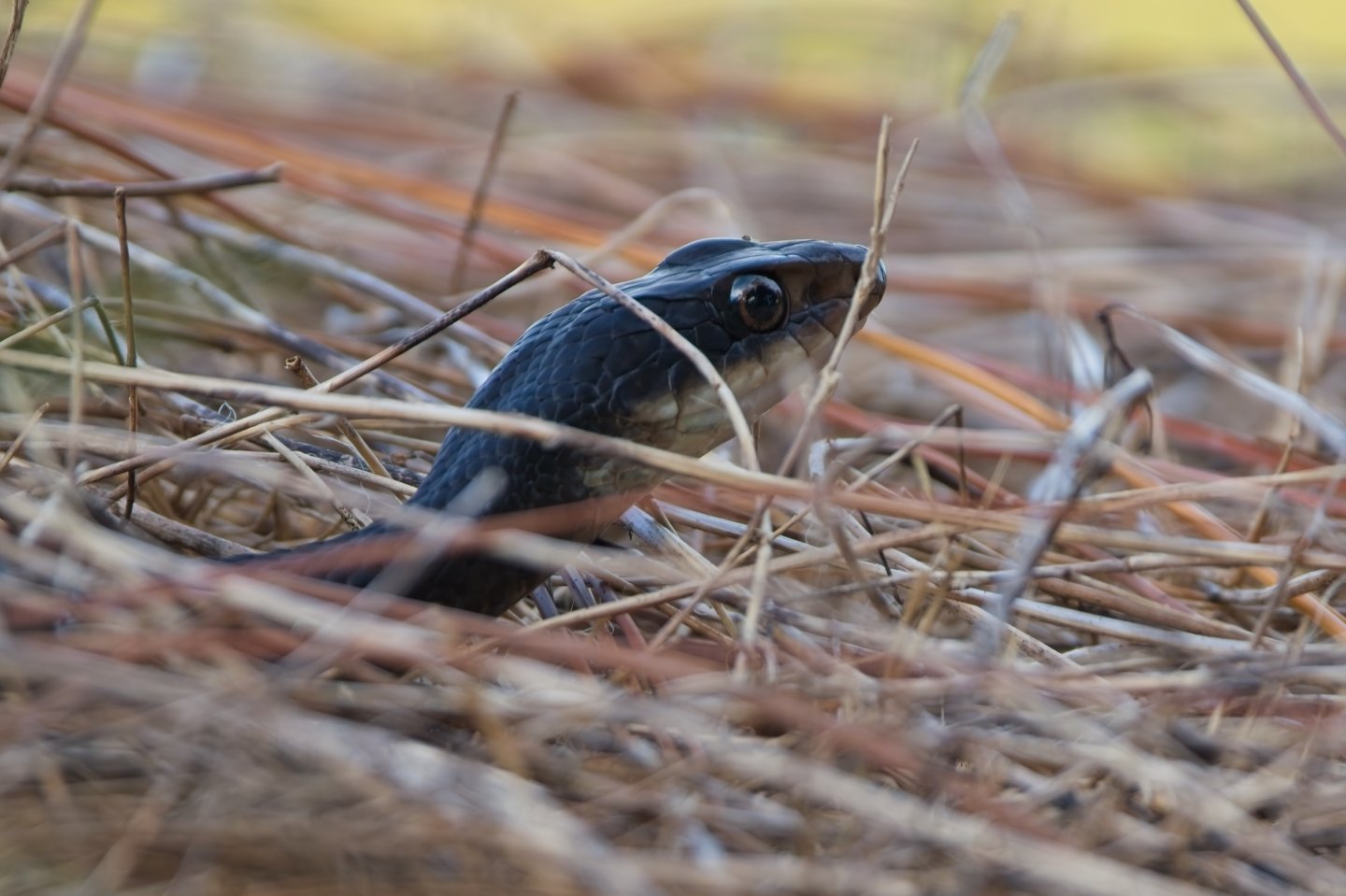
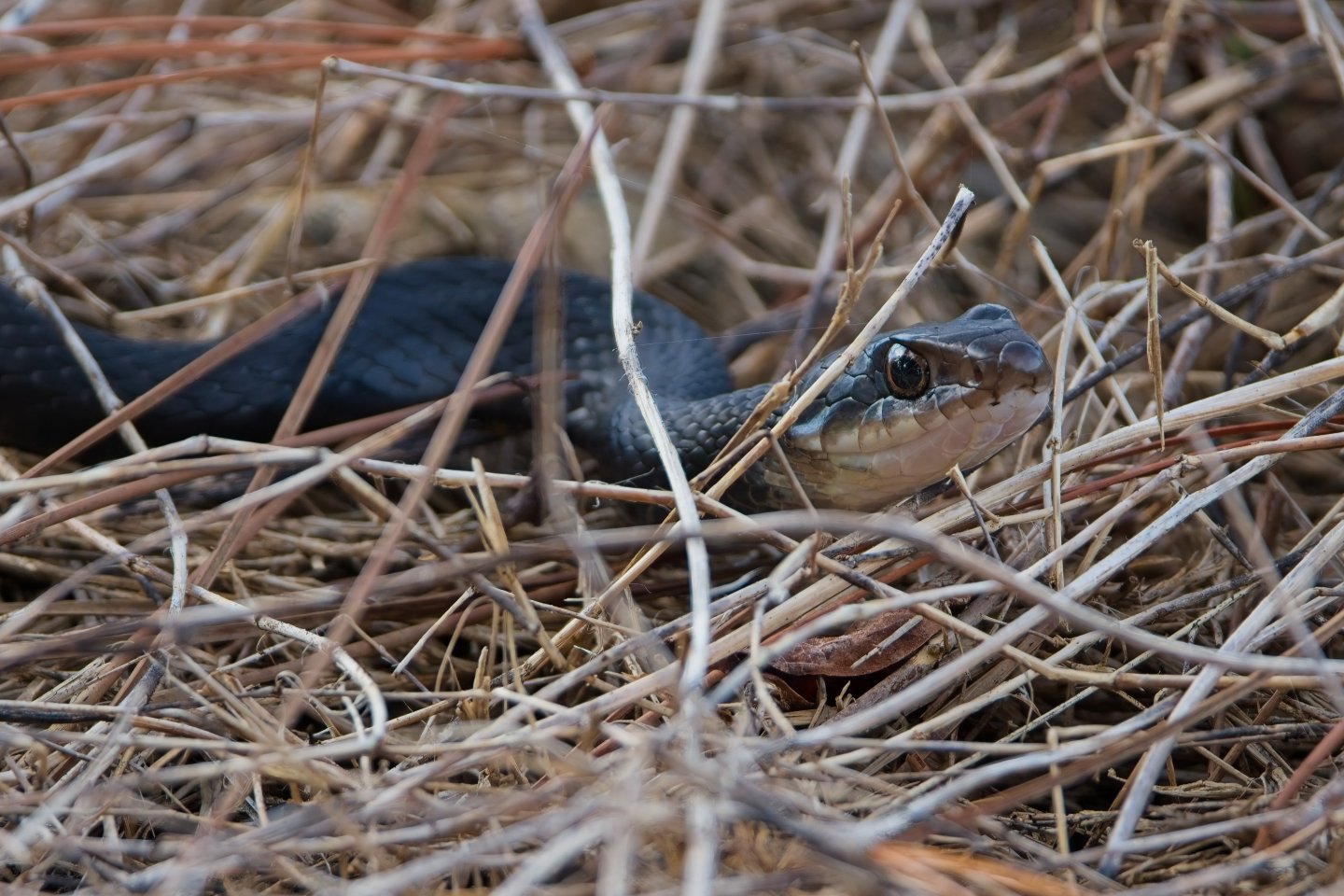
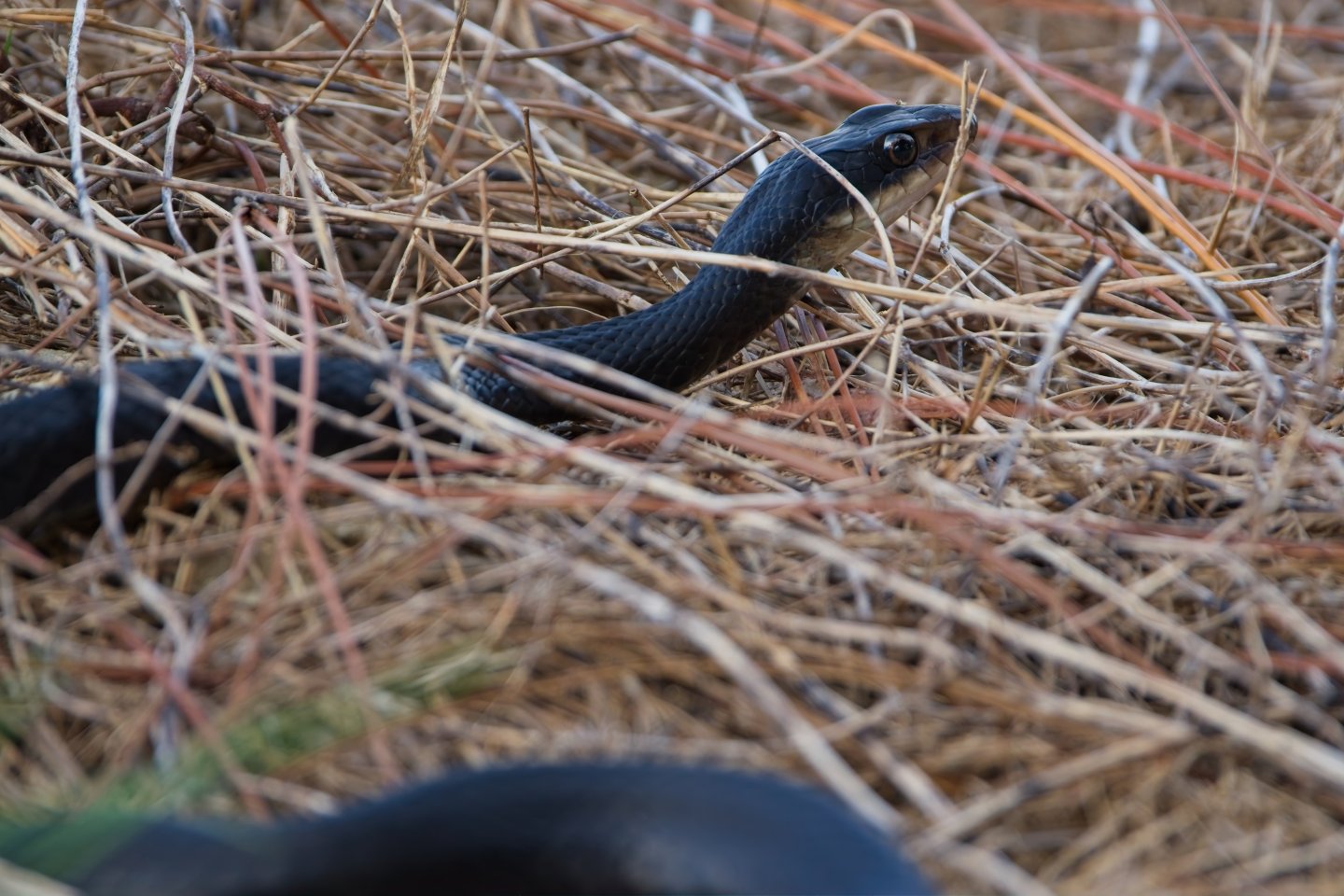
The Southern Black Racer is often found moving through dense reeds and straw-like grasses at Harns Marsh Preserve. If you are looking for specific markers of this species while hiking here, note that its glossy black coloration provides a striking contrast to the pale appearance of its chin and throat. Observing how it utilizes the natural camouflage of the dry grass allows researchers to understand how effectively ground-dwelling reptiles forage in this environment.
These snakes are highly skilled foragers; they operate primarily as diurnal hunters, meaning their most active hours are during daylight. Their ability to slither at considerable speeds across varied terrain makes them efficient hunters throughout the sunlit hours. The dry, straw-like grasses here provide excellent cover that aids the racer both in ambushing meals and avoiding potential threats within this freshwater marsh ecosystem.
The diet of the Southern Black Racer is quite diverse. They are known for consuming a wide variety of small animals, including birds, amphibians, small mammals, and even other reptiles, such as other snakes. When viewed closely while coiled in the grasses, you may also notice that the pale belly can sometimes be seen peeking out from beneath the dark markings.
Beyond hunting, raccoons are adaptable. If they feel threatened, these racers have a defense mechanism of flattening their bodies to appear larger and more imposing than they actually are. Furthermore, this species is oviparous, meaning they reproduce by laying clutches of eggs typically in sandy soil or decaying logs within areas like Harns Marsh Preserve.
#SouthernBlackRacer #HarnsMarshPreserve #WildlifeFlorida
No comments:
Post a Comment