Green Herons are specialized hunters that thrive in the freshwater wetlands of Lakes Park. This species utilizes the park's canal edges and dense vegetation as essential areas for finding food and resting. Observing the Green Heron allows us to understand how compact size aids in navigating complex wetland habitats.
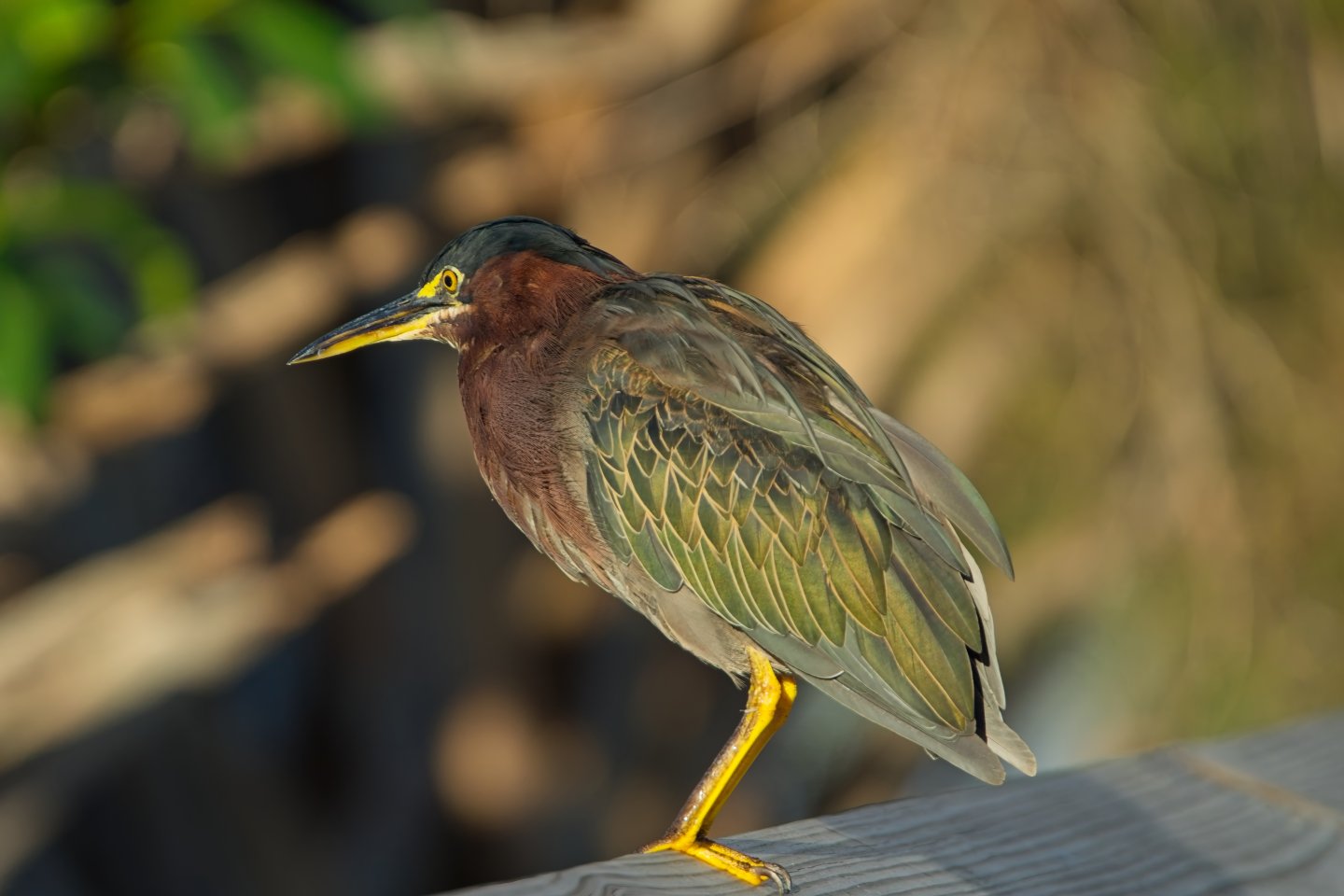
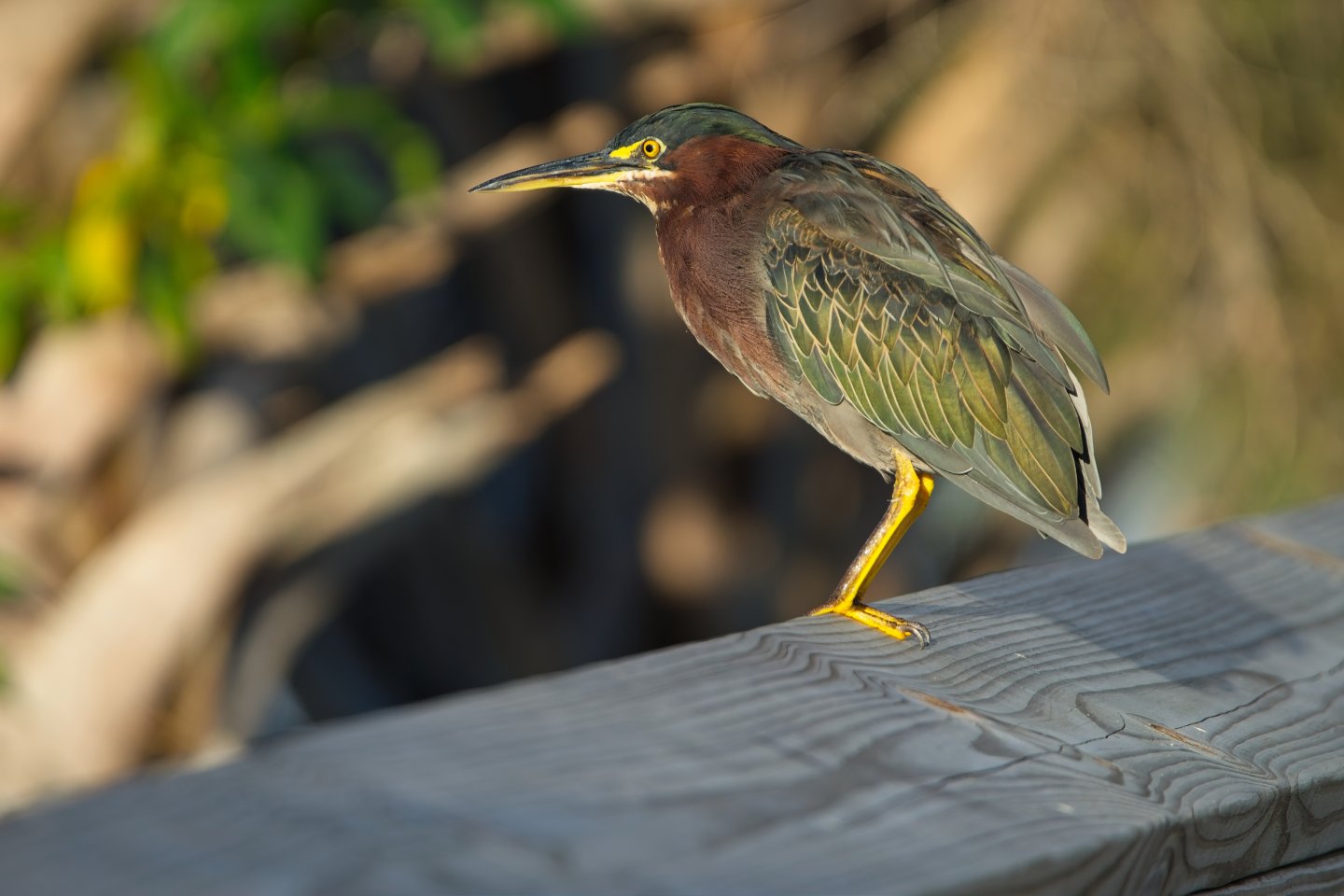
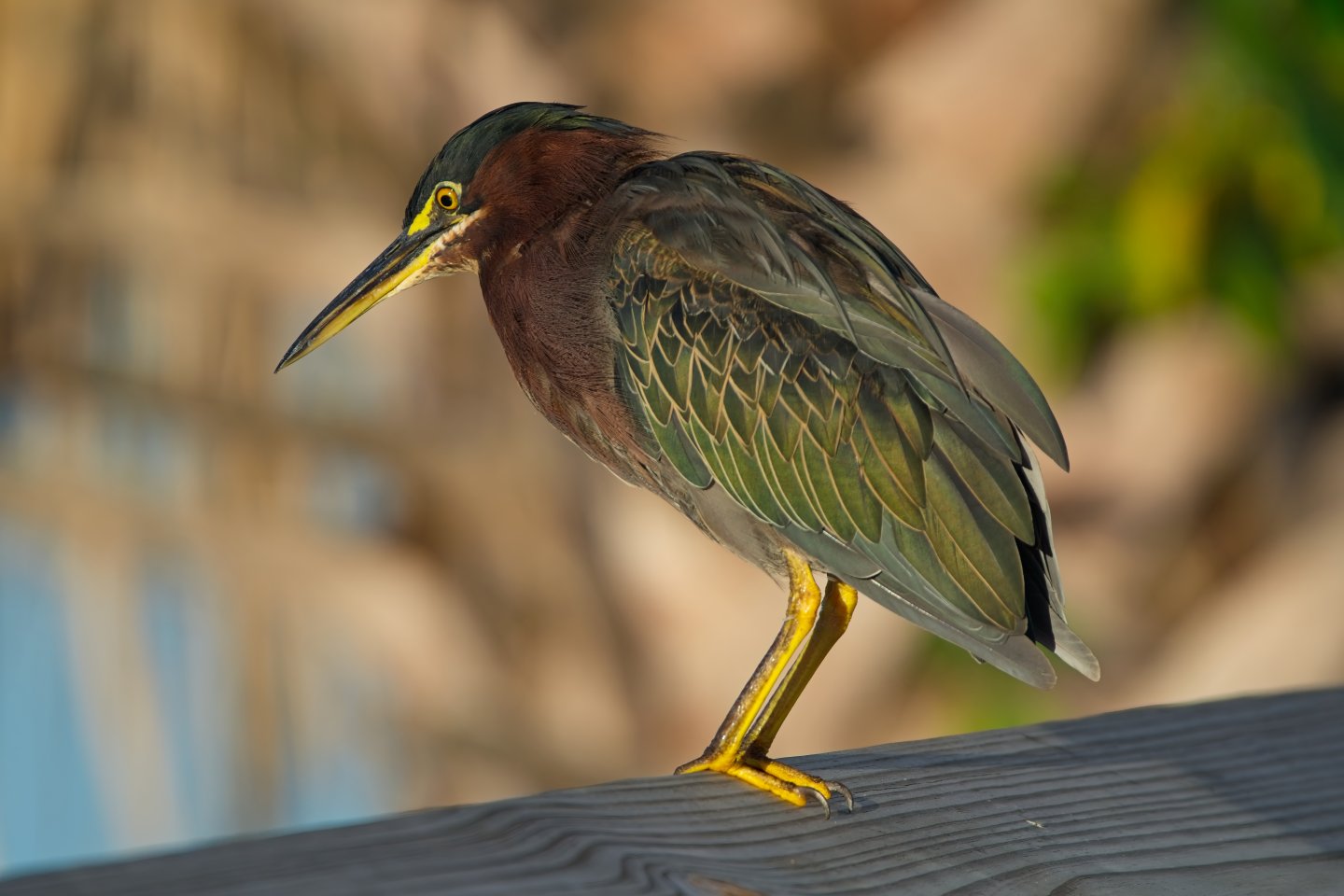
The Green Heron often draws its neck into an S-shape when resting or waiting, which creates a compact, hunched profile in profile. This behavior helps the bird blend into the surrounding dense vegetation, offering excellent cover in the wetland environment. This ability to remain low and compact is a key adaptation for its lifestyle in these rich habitats.
Lakes Park, with its freshwater lakes and canal edges, provides an ideal wetland habitat for Green Herons, as they strongly prefer areas with dense vegetation for cover. These crucial wetland areas are vital for both their meticulous hunting activities and for establishing secure nesting sites.
Green Herons are primarily active during the day, yet they frequently concentrate their most intense foraging efforts around the transitions of dawn and dusk. This means that peak activity often aligns with the late afternoon sun, when they are actively seeking food.
The plumage of the Green Heron displays a subtle yet striking beauty, often showing a metallic greenish or bluish sheen on its back and wings. This iridescence can appear especially vibrant when bathed in the warm, golden light of the late afternoon sun.
The compact size of the Green Heron is not a limitation but a specialized adaptation. This small stature enables the bird to forage effectively from narrow perches, such as wooden railings, which larger wading birds cannot access. This unique attribute allows the heron to maneuver effectively through thick plant life to find ample food sources.
#GreenHeron #LakesPark #WetlandWildlife
No comments:
Post a Comment