Black Skimmer hunts by flying just above the water's surface, using its specialized bill to slice through the water and snatch small fish. This behavior is crucial for survival in the coastal environment of Carlos Point, where Black Skimmers utilize the area as a vital nesting and roosting site for various seabirds. Understanding how these birds feed reveals much about their adaptation to the Florida coast.
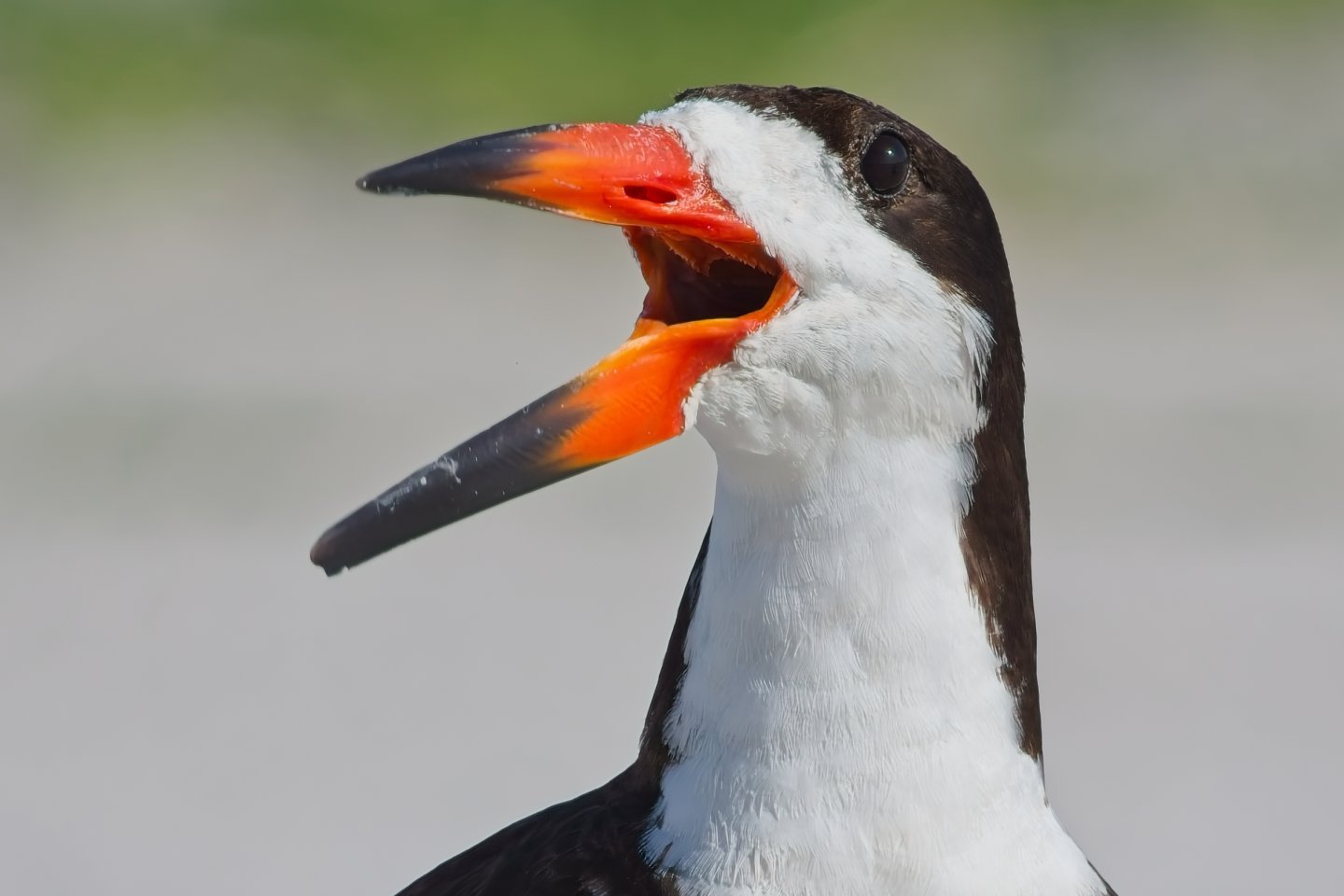
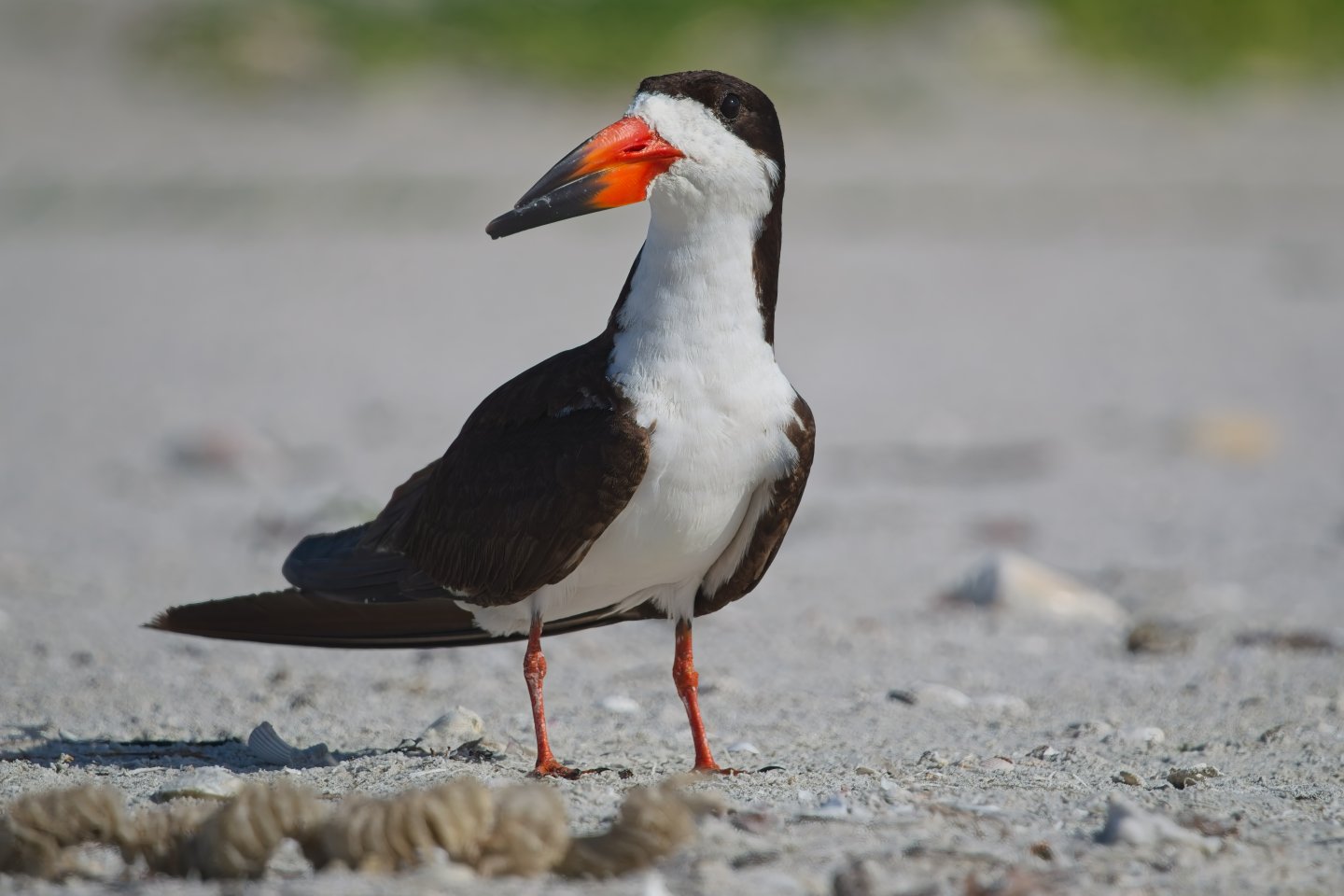
The Black Skimmer possesses a uniquely adapted bill where its lower mandible is notably longer and more prominent than its upper one. This structure allows the bird to detect prey by touch as it cuts through the water, which enables successful hunting even in murky conditions. This specialized feeding method is essential for locating small fish beneath the surface.
These birds often focus their feeding efforts during dawn, dusk, or at night, which is when prey fish are more likely to be found closer to the water's surface. Black Skimmers have developed vertically elliptical pupils, a rare feature among birds, which improves their vision and aids in their low-light foraging techniques.
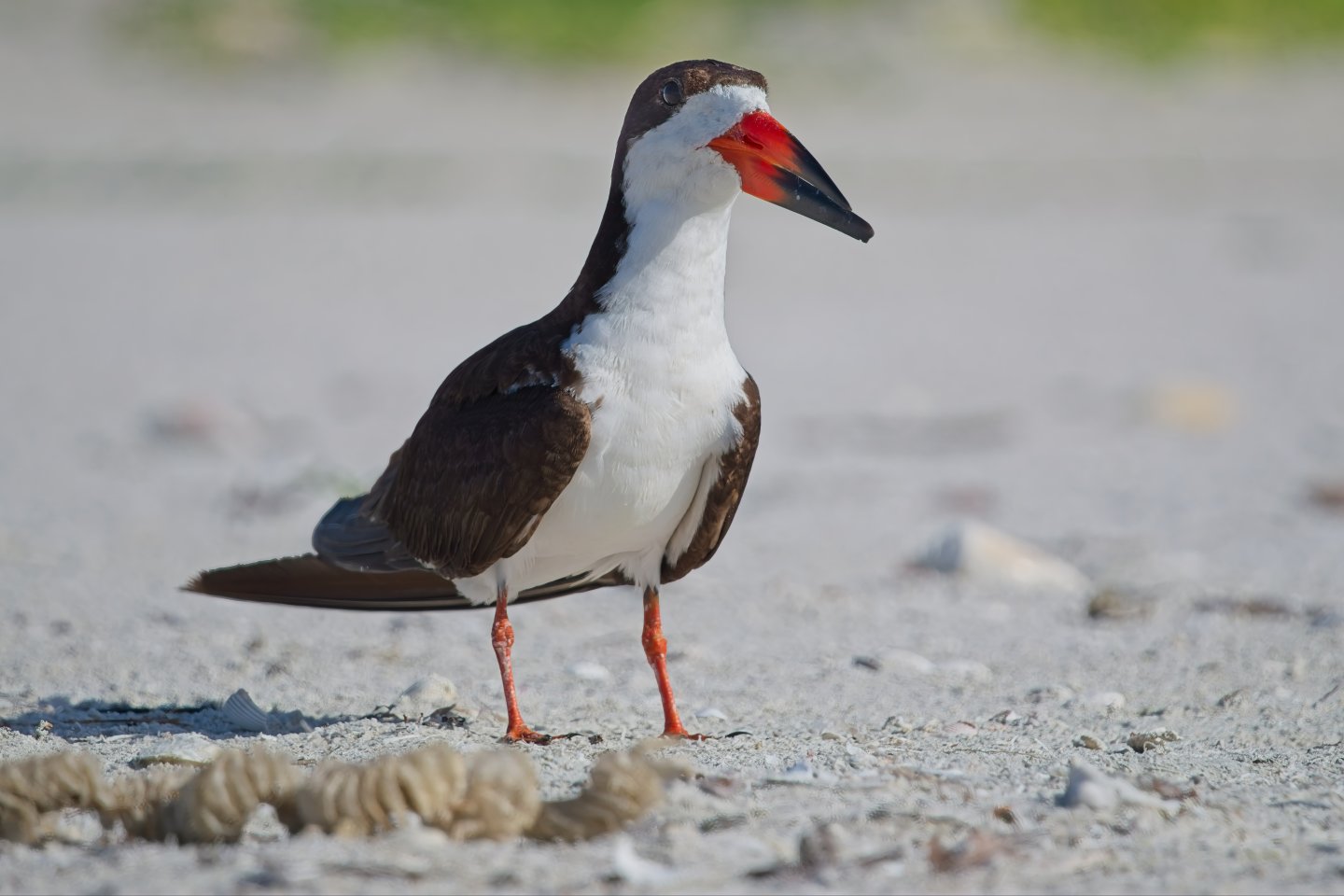
The striking plumage of the Black Skimmer, featuring a glossy black back and a stark white underside, offers effective countershading camouflage when viewed against the water. As colonial nesters, Black Skimmers prefer to lay their eggs in shallow scrapes on open sandy beaches and sandbars, often coexisting with other bird species in the area.
When feeling alert or disturbed, a Black Skimmer typically emits a distinctive series of sharp, yelping calls. These calls help communicate their presence in the coastal habitat of Carlos Point.
#BlackSkimmer #CarlosPoint #FloridaWildlife
No comments:
Post a Comment