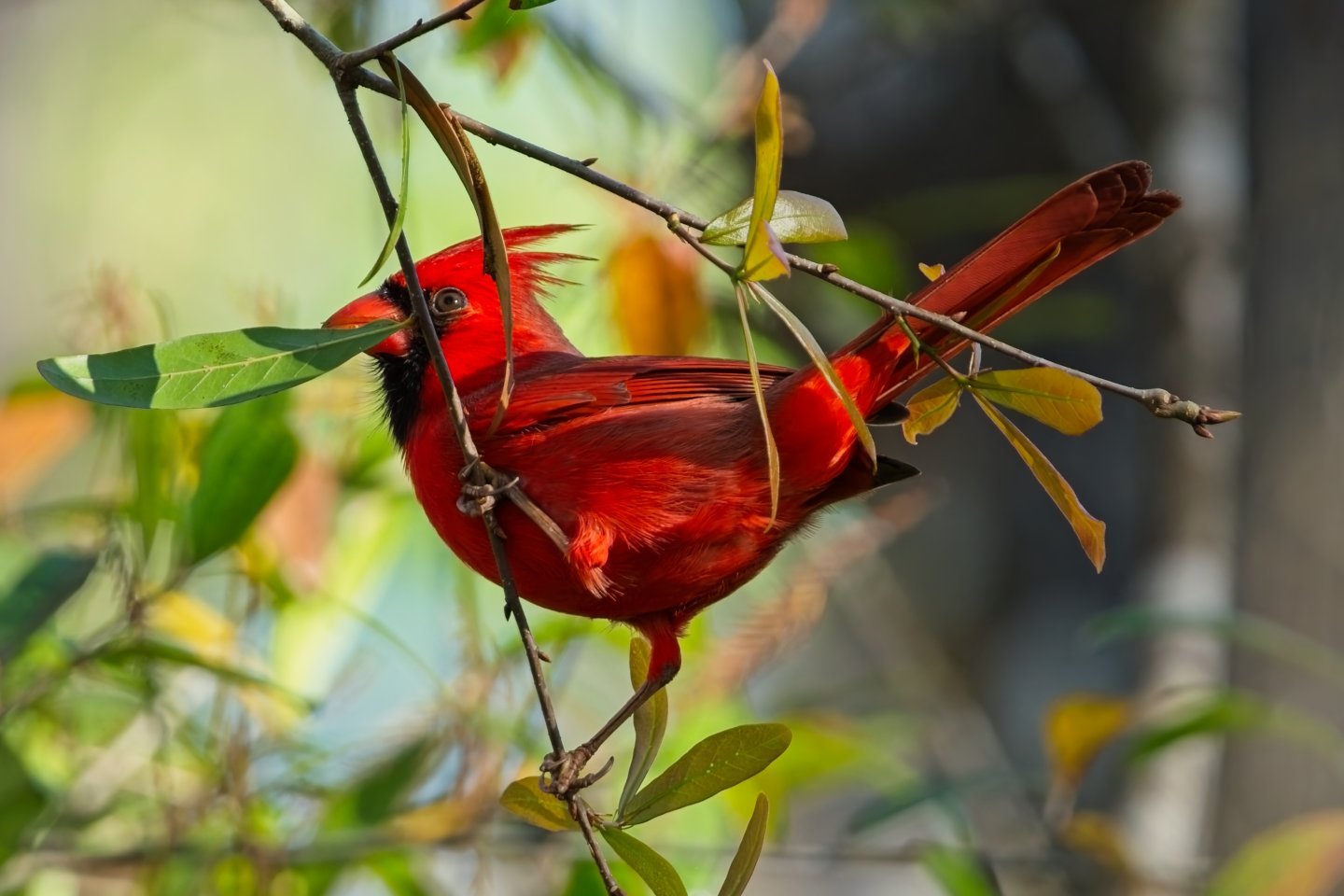
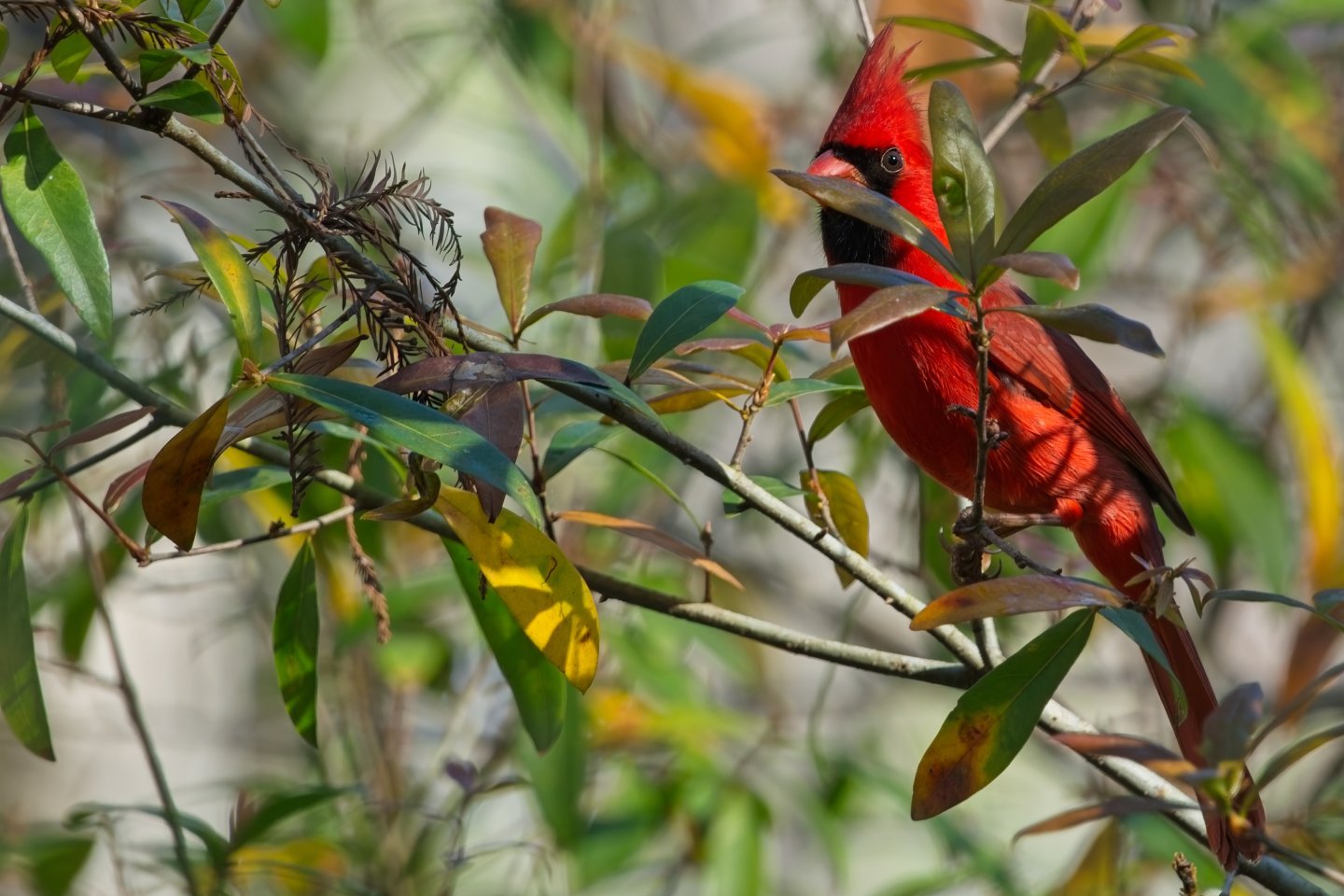
Northern Cardinals frequently select perches on robust, intertwining branches when surveying their surroundings within slough environments. This behavior provides stable vantage points for the birds to observe their territory. The dense, multi-layered vegetation of places like Six Mile Cypress provides constant cover and interconnected pathways for Northern Cardinals to move safely through their territory.
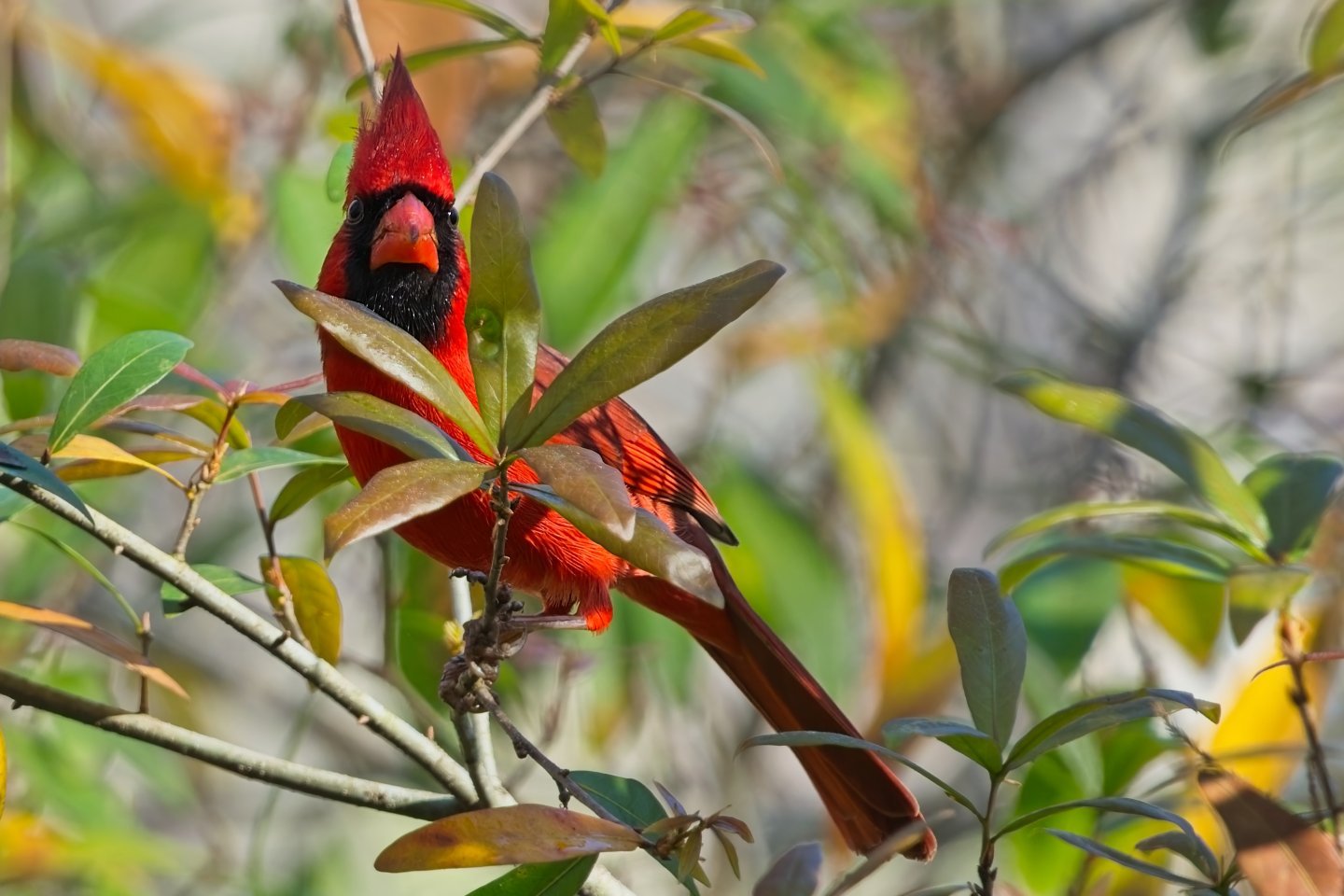
The male Northern Cardinal's vivid red plumage is enhanced by the feather's microstructure when exposed to direct sunlight. This feather design intensifies the bird's brilliant coloration. A striking black mask around the Northern Cardinal's eyes and bill serves as a distinct field mark for identification against the surrounding foliage.
Cardinals primarily feed on a varied diet of seeds and ripe fruits. In slough ecosystems, they readily supplement this with available insects and spiders found within the wetland foliage. These additional protein sources are found within the rich wetland foliage of the slough.
While at rest, a cardinal employs highly developed monocular vision to perceive its world. Each eye can independently scan for subtle movements within the dense undergrowth.
Male Northern Cardinals use strong, melodious whistles to declare their territory, particularly common during the longer daylight hours of the breeding season. This vocal display is particularly common during Florida's extended breeding season.
Southwest Florida's favorable climate allows Northern Cardinals to raise multiple broods each year. They utilize the secure nesting sites offered by the slough's dense vegetation for this purpose. After breeding, typically in late summer, cardinals undergo a complete annual molt, which allows them to renew their vibrant plumage.
#NorthernCardinal #SixMileCypressSlough #FloridaWildlife
No comments:
Post a Comment