Yellow-crowned Night Heron at Six Mile Cypress Slough Preserve
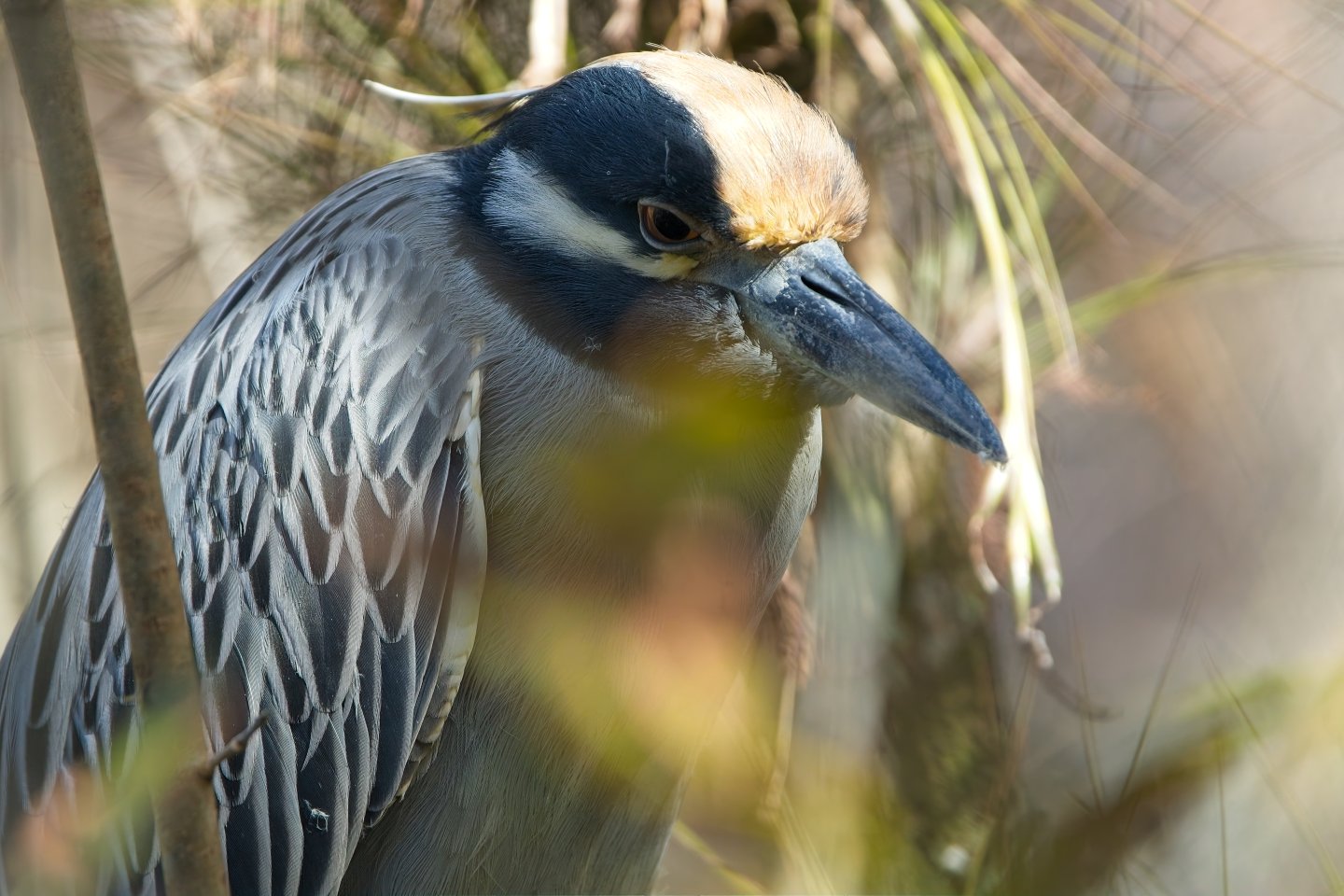
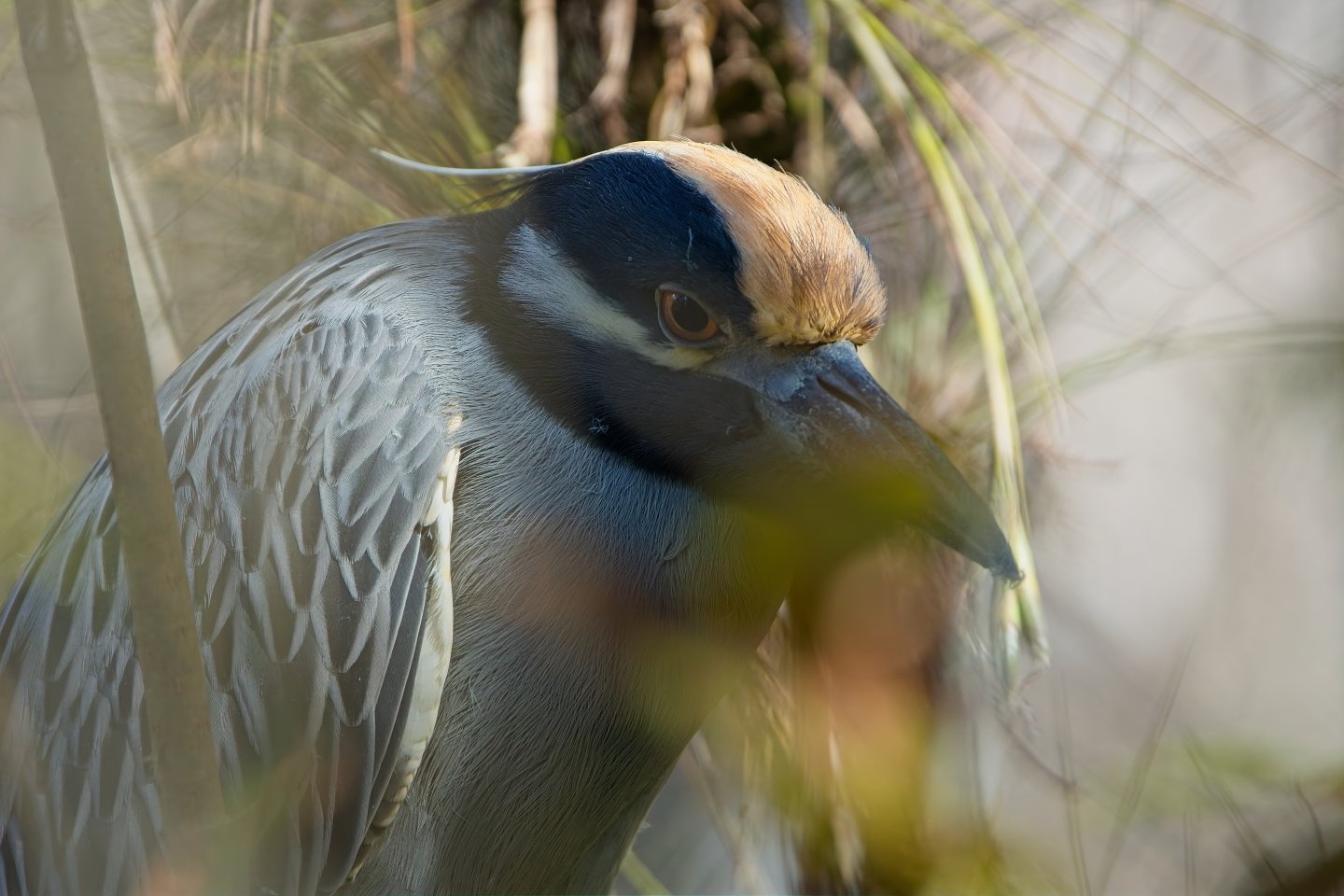
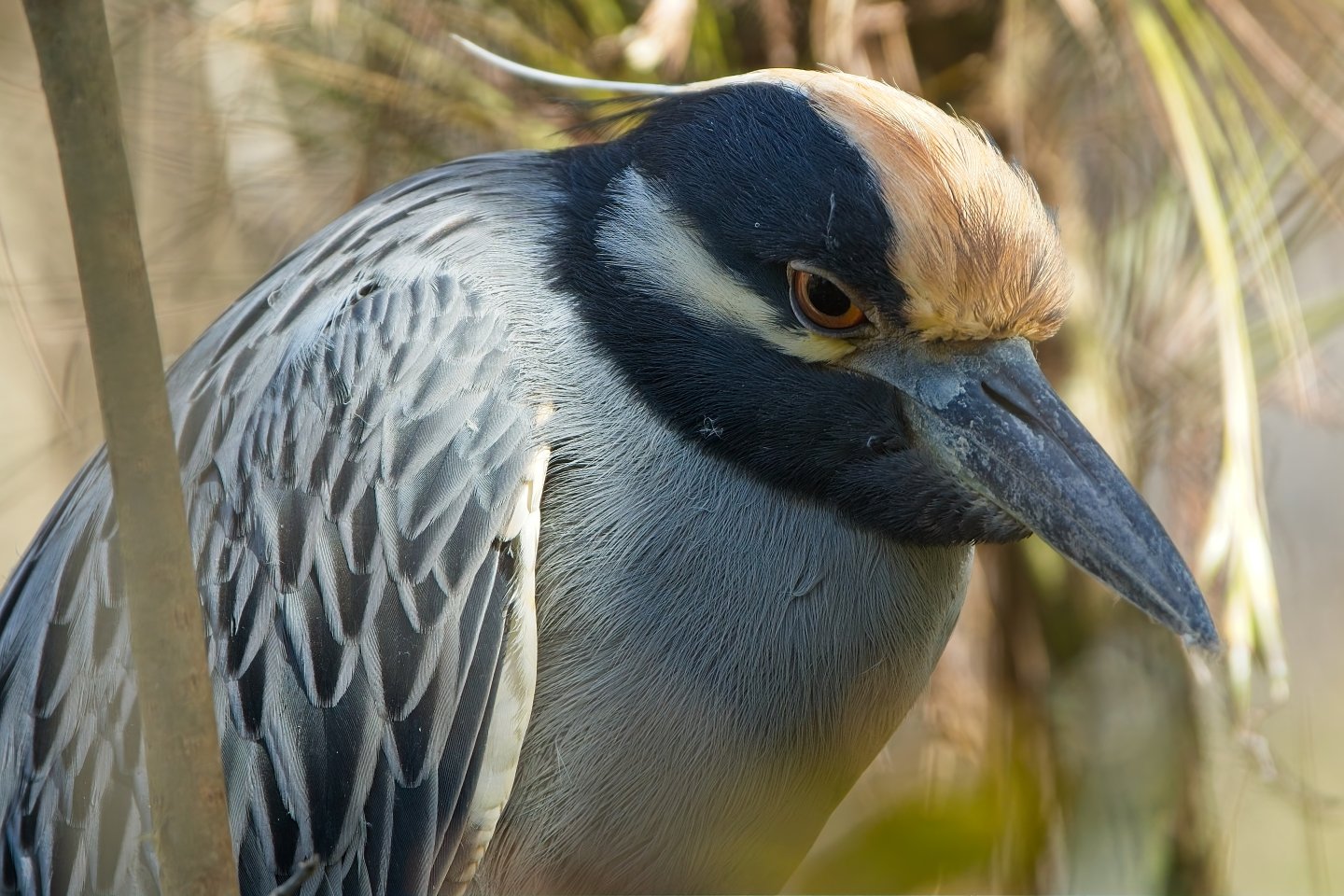
Protecting wetland habitats like the Six Mile Cypress Slough Preserve is essential for the survival of the Yellow-crowned Night Heron. This heron spends time resting in the dense vegetation along the slough edges, utilizing the structure of the reeds and branches for repose. The bird's thick neck and stockier body are physical designs that allow it to move through and perch within dense wetland habitats with ease.
Yellow-crowned Night Herons rest during the day hidden within the dense vegetation found along slough edges. The dense root systems of sloughs provide crucial structural support for these herons to perch and find camouflaged resting spots. Aquatic vegetation also offers critical resting spots, which are essential for their repose in these environments.
The adult Yellow-crowned Night Heron displays a uniform slate-gray body plumage, which lacks the extensive streaking seen on younger birds. When disturbed or in flight, this bird typically utters a sharp, high-pitched call, often described as a quark or a squawk. This distinctive vocalization marks its presence in the wet landscapes.
The Yellow-crowned Night Heron is designated a Species of Special Concern in Florida, highlighting the importance of protecting these wetland habitats. Six Mile Cypress Slough Preserve provides ideal foraging and roosting grounds for these herons, demonstrating how protected lands ensure vital areas remain intact.
Nests for these herons are typically constructed from sticks in trees or shrubs near the water. These nesting sites can appear as solitary pairs or small colonies within the complex slough environments.
#YellowcrownedNightHeron #FloridaWetlands #SixMileCypress
No comments:
Post a Comment