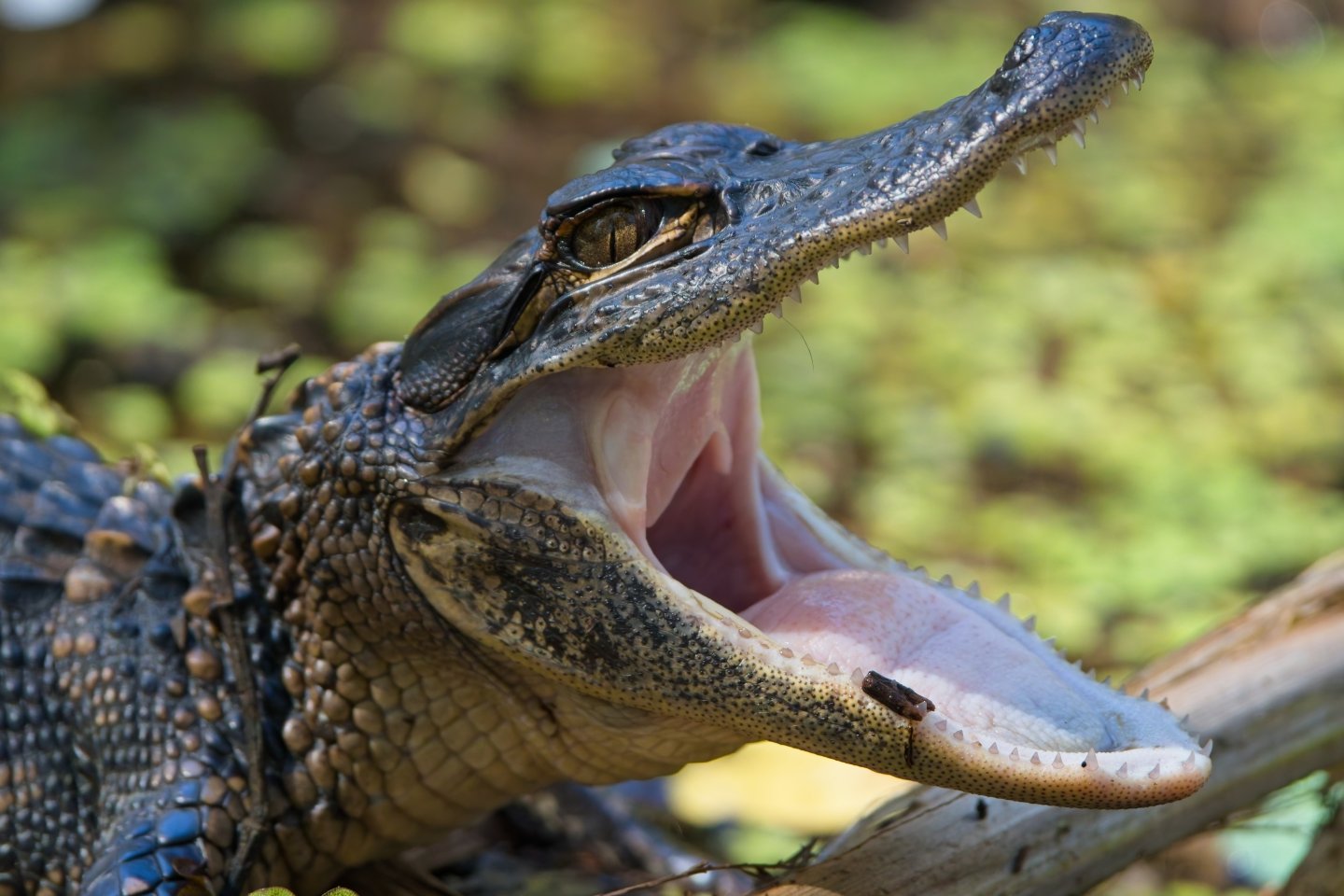
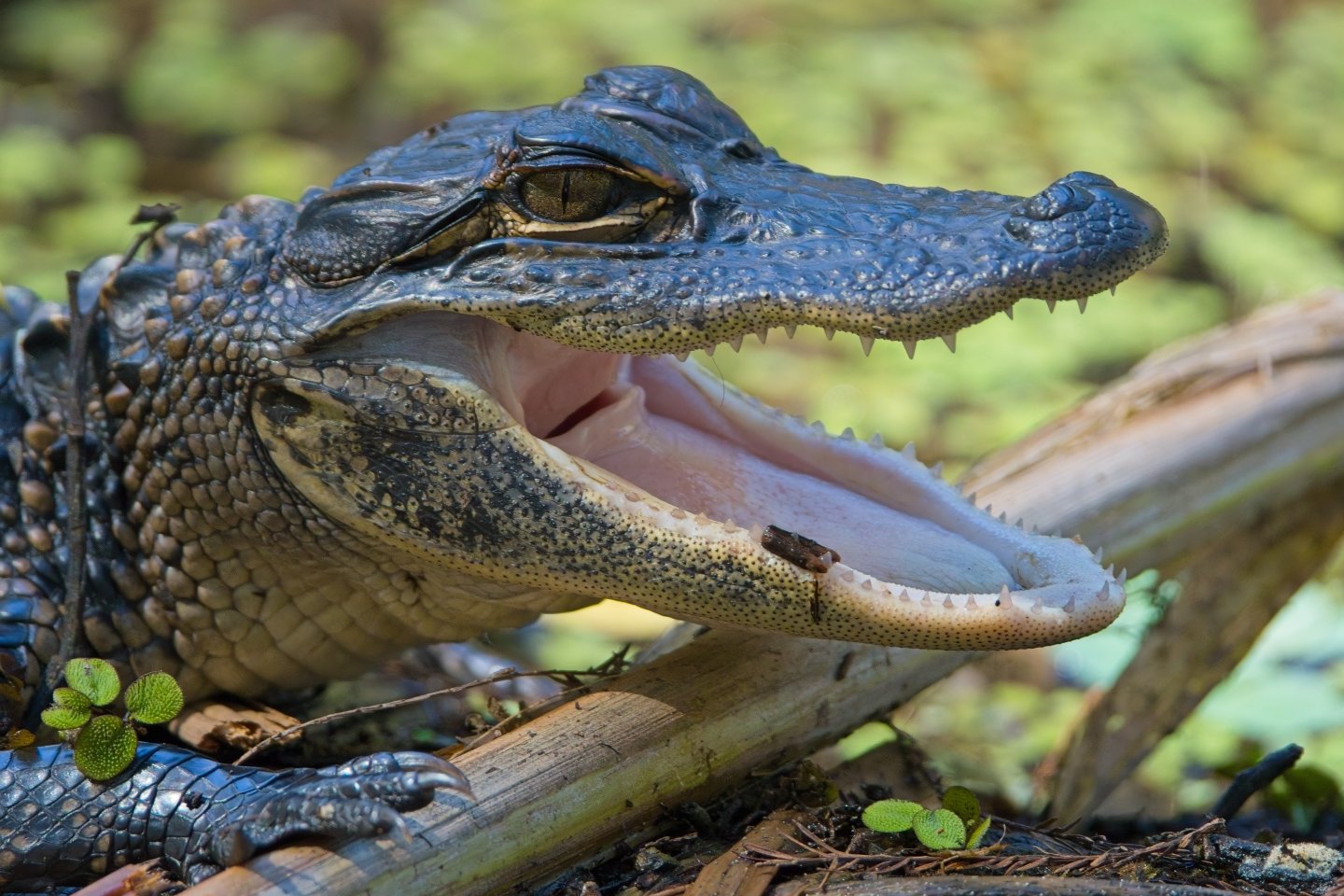
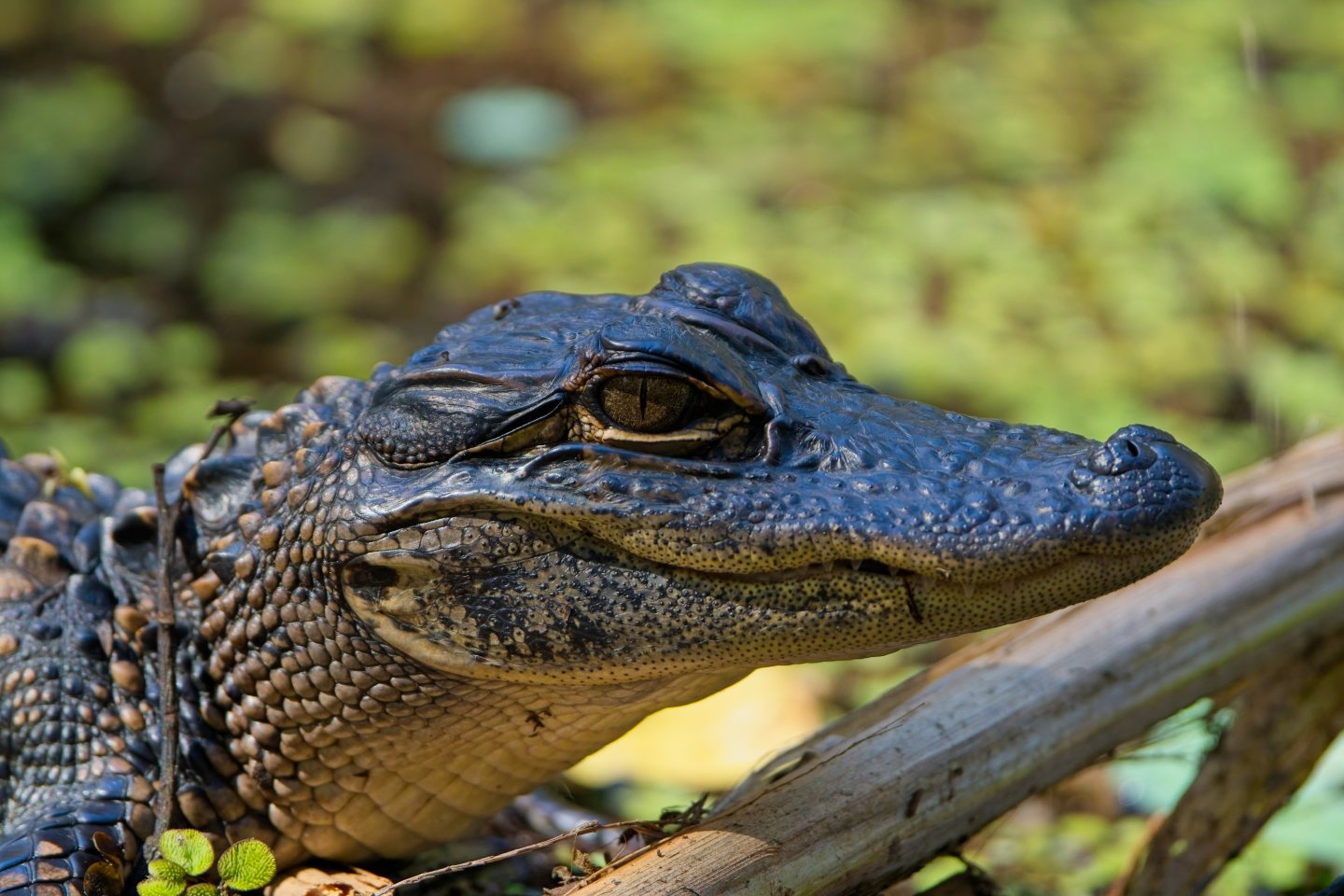
American Alligator at Audubon Corkscrew Swamp Sanctuary
Female American Alligators construct large mound nests from marsh vegetation, mud, and other debris found in their swampy surroundings. This behavior highlights the complex relationship between the alligator and its wetland environment. The natural hydrology of Audubon Corkscrew Swamp Sanctuary, with its deep sloughs and ponds, provides crucial, stable water habitats for American Alligators, especially during drier periods.
American Alligators vocalize with deep, resonating bellows, often during mating season, which carry far across their wetland habitats and can cause the water around them to vibrate. This vocalization is a significant way the species communicates within its ecosystem. The texture visible on the alligator's snout consists of scales embedded with thousands of integumentary sensory organs, which are highly sensitive to pressure changes and vibrations in the water.
When an alligator is in a stalking posture in water, it can launch a powerful lunge with surprising speed, using its robust tail for propulsion to quickly cover short distances to capture prey. This swift movement demonstrates the physical capabilities of the reptile in its aquatic habitat. The robust, dark scales visible on an alligator's back conceal osteoderms, which are bony plates embedded in their skin that provide protection and serve as a reservoir for calcium.
The area's freshwater systems provide suitable year-round habitat for American Alligators, which are a common resident species in the region. Maintaining a respectful distance is critical for human safety and the well-being of these reptiles in public recreational areas.
#AmericanAlligator #AudubonSwampSanctuary